



Of course. Here is a new article crafted from the provided post content, complete with an added FAQ section and a conclusion section.
***
## **Redefining IoT Edge: Silicon Labs BG2B Aims for Ultimate Low-Power Efficiency and Security**
By Marc Kavinsky, Lead Editor at IoT Business News
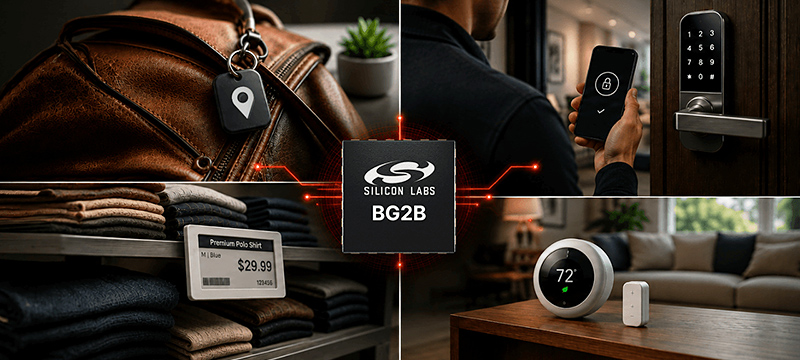
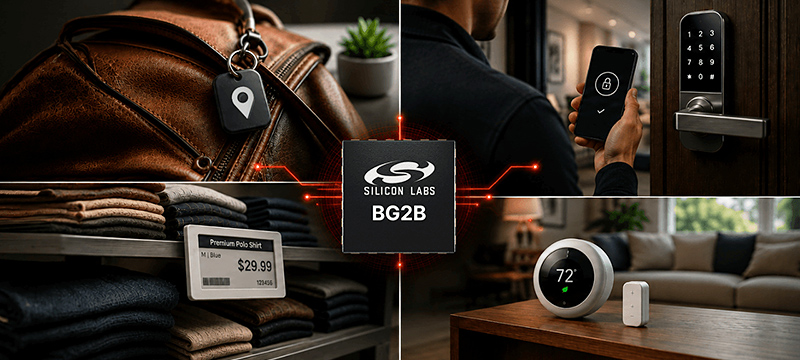
Silicon Labs has unveiled its latest innovation, the **BG2B**, a Bluetooth Low Energy (LE) system-on-chip (SoC) that the company hails as its lowest-power Bluetooth LE solution to date. This announcement marks a significant shift in focus for IoT device makers, who are often caught in a difficult balancing act concerning battery life, security, and system integration at the device endpoint.
For many IoT products, the most critical engineering decisions are not made in the cloud but at the very edge of the network. A sensor, a smart tag, or a connected peripheral might be judged by its user experience, but its commercial success can hinge on board-level choices related to radio power consumption, security architecture, component count, and the amount of integration work the Original Equipment Manufacturer (OEM) must handle.
With the BG2B, Silicon Labs is directly addressing these challenges at the component level. The company is positioning the device not merely as a Bluetooth LE radio, but as a comprehensive endpoint solution designed to handle the multifaceted demands of modern battery-operated IoT devices. The core pillars of this new SoC are clear: maximize power efficiency, fortify security, and simplify integration.
### Why the SoC Choice Matters
Selecting a Bluetooth LE SoC is a fundamentally different decision from using a pre-certified wireless module. While a module can expedite radio frequency (RF) integration and potentially simplify certain regional certifications, a SoC offers product designers greater control over the board layout, bill of materials, and the final form factor. This flexibility, however, comes with a requirement for deeper hardware and RF engineering expertise.
This distinction is central to understanding the BG2B’s target audience. The announcement is squarely aimed at device makers who want to optimize the endpoint itself, rather than treating connectivity as a self-contained black box they can simply plug in.
The practical implication is that the BG2B will be evaluated by engineering teams on far more than just its Bluetooth LE functionality. Its viability will be determined by how well its power, security, and integration profile aligns with the specific mechanical and energy constraints of the final product. In battery-powered IoT devices, even minor improvements in radio and system power can have cascading effects, influencing battery sizing, maintenance intervals, and even enclosure design. These are operational and economic considerations, not just technical specifications.
Security is becoming increasingly inseparable from low-power design. Bluetooth LE devices frequently operate at the edge of an IoT architecture, communicating with smartphones, gateways, or industrial systems before data travels to the cloud. If the endpoint device becomes the weakest link in the security chain, improvements made elsewhere in the network cannot compensate for it. Silicon Labs’ decision to couple a message of power efficiency with a focus on security reflects this industry reality, although the initial announcement did not include detailed specifications on its security features.
### Relevance Beyond Consumer Bluetooth
Although Bluetooth LE is often associated with consumer applications like wireless headphones, its role in industrial and commercial IoT remains indispensable. Asset tracking tags, building automation sensors, medical peripherals, and industrial accessories frequently rely on Bluetooth LE for the crucial “last few meters” of connectivity, with gateways or mobile devices handling the broader network connection, such as cellular, Wi-Fi, or LPWAN.
In this context, endpoint power consumption has a direct financial impact, as battery replacements and physical device access can represent a significant portion of a deployment’s total cost of ownership over its lifetime.
For system integrators, the BG2B could be particularly relevant for projects where the customer’s requirements extend beyond simple connectivity to include strict demands on space, power, and security. Enterprises and industrial players are less likely to be concerned with the SoC’s brand name and more interested in whether devices built on the platform can reduce maintenance overhead while meeting stringent internal security and performance standards.
Connectivity providers may see a more indirect impact. As Bluetooth LE endpoints become more capable and power-efficient, the design focus can shift back to the device edge, especially for large fleets of small devices that must operate for extended periods without physical intervention.
While the provided source material did not include detailed performance benchmarks, package types, or confirmed customer deployments, the direction of Silicon Labs’ announcement is clear. The era of selecting Bluetooth LE components based solely on protocol support is waning. Instead, component selection is increasingly being driven by the total economics of the endpoint. In this evolving landscape, the BG2B represents Silicon Labs’ flagship effort to address the complete design equation, positioning power efficiency, security, and integration as the core tenets of its Bluetooth LE strategy.
—
### FAQ: Understanding the Silicon Labs BG2B
**Q1: What is the BG2B?**
The BG2B is a new Bluetooth Low Energy (LE) system-on-chip (SoC) announced by Silicon Labs. It is marketed as the company’s lowest-power Bluetooth LE SoC to date, designed specifically for battery-operated IoT devices.
**Q2: What are the key features of the BG2B?**
The BG2B is positioned around three main themes:
* **Power Efficiency:** Designed to be the lowest-power Bluetooth LE SoC available, aiming to extend battery life for IoT endpoints.
* **Security:** Security is integrated into the SoC design, addressing the growing need to secure edge devices without relying on system-level add-ons.
* **Integration:** The SoC is intended to simplify the overall product design by handling more functions on a single chip, reducing the OEM’s integration burden.
**Q3: How is a SoC different from a wireless module?**
A wireless module is a pre-certified, self-contained unit that simplifies RF design and can speed up time-to-market. A SoC, like the BG2B, is a chip that provides more control to the designer over the board layout, component count, and form factor, but it requires more in-depth hardware and RF engineering.
**Q4: Who is the BG2B for?**
The BG2B is aimed at OEMs and engineering teams who are designing battery-powered IoT devices and need to optimize for the strictest power, security, and space constraints. It is less suited for applications where a simple, plug-and-play wireless module is the priority.
**Q5: What kind of devices will use the BG2B?**
The BG2B is intended for a wide range of short-range IoT applications, including asset tags, building and industrial sensors, medical peripherals, smart remote controls, and other connected devices where low power consumption and a compact form factor are critical.
—
### Conclusion
Silicon Labs’ BG2B is more than just another Bluetooth LE chip; it is a strategic statement about the future of IoT endpoint design. By positioning the SoC as a solution that marries extreme power efficiency with integrated security and easier system integration, Silicon Labs is directly targeting the pain points of modern IoT developers.
While technical specifications and real-world performance data are still awaited, the BG2B’s core value proposition is clear. It offers a path for device manufacturers to overcome the traditional trade-offs between battery life, security, and design complexity. For the vast ecosystem of short-range IoT applications, from industrial sensors to smart healthcare devices, the BG2B represents a significant step toward more intelligent, efficient, and secure endpoints at the very edge of the network.
