



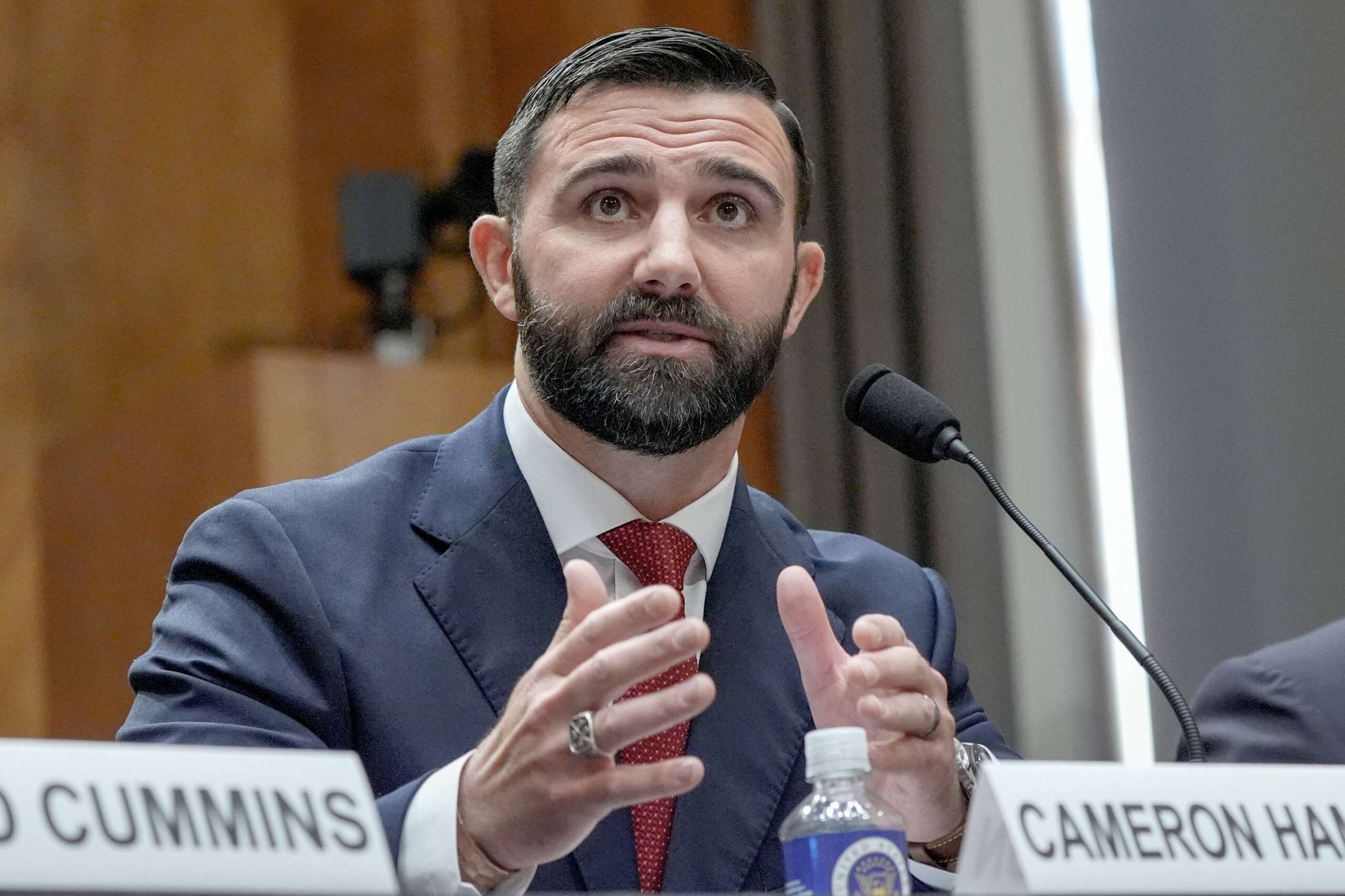
**Cameron Hamilton Confirmed as FEMA Head: Navigating Disaster Relief Challenges**
The Senate has confirmed Cameron Hamilton as the new head of the Federal Emergency Management Agency (FEMA), marking a significant development for the embattled agency. Hamilton, a former Navy SEAL, previously led FEMA temporarily last year but was fired after publicly opposing plans to eliminate the agency. His recent confirmation, alongside other key nominations including David Cummins for the Transportation Security Administration and Daniel Perez as ambassador to Brazil, signals potential shifts in federal disaster response and security operations.
Upon his swearing-in, Hamilton took charge of an agency facing an uncertain future, especially after threats from the Trump administration to dismantle it. While his nomination hinted at a possible retreat from that idea, the administration continues to promise substantial changes in disaster management.
Hamilton now faces the daunting task of leading FEMA through a tumultuous period, overseeing more than 20,000 employees as the agency grapples with the aftermath of leadership upheaval under former Department of Homeland Security Secretary Kristi Noem. During Noem’s tenure, FEMA experienced significant staff departures, disruptions to grant programs, and delays in disaster aid.
In his Senate hearing, Hamilton emphasized the need for a balanced approach that maintains FEMA’s objectivity and fairness while advocating for the agency and its workforce. He acknowledged the bureaucratic challenges that hinder FEMA’s effectiveness and suggested the necessity of reevaluating cost-benefit strategies in disaster response.
This article delves into Hamilton’s confirmation, the challenges he inherits, and the broader implications for FEMA and federal disaster policy.
Hamilton’s Turbulent Tenure and Reappointment
Hamilton’s previous stint as FEMA’s temporary leader was brief and contentious. Despite limited emergency management experience, he was appointed by President Trump in January 2025. Initially seen as a critic of FEMA, Hamilton evolved in his role, asserting the importance of the agency and pledging to serve the American people’s best interests. His tenure took a decisive turn when he opposed the elimination of FEMA, a stance that led to his dismissal but ultimately garnered enough support for his confirmation as permanent head.
His firing drew criticism from emergency management professionals who saw his willingness to challenge partisan decisions as a testament to his leadership. Figures like Pete Gaynor, a former FEMA administrator, have publicly supported Hamilton, emphasizing his resilience and commitment to non-political disaster management.
Challenges Facing FEMA Under Hamilton
FEMA’s challenges are multifaceted and deeply entrenched. The agency is managing over 1,000 open disaster declarations, a surge reflecting an intense summer disaster season marked by wildfires, flooding, and other crises. Additionally, more than 4,300 employees left FEMA in the 2025 budget year, creating a void of institutional knowledge and expertise that Hamilton must address.
While his predecessor, Markwayne Mullin, has attempted to reverse some of the disruptions caused by Noem, allegations of politicized disaster relief linger. Reports indicate that Trump has approved a smaller percentage of disaster requests from Democratic governors compared to Republican ones, raising concerns about fairness and efficacy.
Hamilton’s immediate priorities will likely include streamlining recovery efforts, reducing bureaucratic red tape, and stabilizing FEMA’s operations. However, broader questions about the agency’s future role and funding persist, especially as calls for drastic changes and reduced federal involvement grow louder.
Senate Approves Key Nominees Amidst Broader Challenges
Hamilton’s confirmation was part of a broader Senate approval of 74 nominations, including David Cummins for the Transportation Security Administration. Cummins, a former executive at government contractor Serco, will face the challenge of reforming TSA following a funding lapse that led to significant staff shortages and disruptions. The Senate also confirmed Daniel Perez as ambassador to Brazil, a move that has further strained U.S.-Brazilian diplomatic relations.
FAQ
- Why was Cameron Hamilton fired from his temporary role leading FEMA?
- Hamilton was fired after publicly opposing the elimination of FEMA, a stance that conflicted with then-DHS Secretary Kristi Noem’s agenda.
- What challenges does Hamilton face as the head of FEMA?
- Hamilton must address staffing shortages, manage over 1,000 open disaster declarations, and navigate political pressures to reform or reduce FEMA’s role in disaster response.
- How has FEMA’s staffing changed under the previous administration?
- FEMA saw the departure of over 4,300 employees, resulting in a loss of institutional knowledge and experienced personnel, according to a Government Accountability Office report.
- What are the implications of Hamilton’s confirmation for disaster relief policy?
- While Hamilton’s confirmation suggests a shift from eliminating FEMA, his administration will likely focus on cost-efficiency and reducing bureaucratic hurdles, though significant challenges remain.
Conclusion
Cameron Hamilton’s confirmation as FEMA administrator brings a mix of hope and uncertainty to an agency at the crossroads of policy and practicality. As he steps into this pivotal role, the nation will be watching closely to see how he balances the competing demands of disaster relief, political pressures, and institutional reform. For now, his immediate focus will be on stabilizing FEMA and setting a clear, nonpartisan course for the critical work it does to protect and serve Americans in their greatest hours of need.
