




Satellite IoT connectivity aims to reduce costs and expand wireless access worldwide, opening up fresh global applications and use cases, according to Martin Lesund, Technical Product Manager – Cellular IoT at Nordic Semiconductor.
The Internet of Things first emerged as a concept to tackle supply chain challenges by enabling goods and sensors in transit to exchange data automatically. That concept evolved into a broader vision of making homes, factories, and cities smarter by integrating sensing, networking, and computing into everyday objects — yet the IoT has always maintained its roots in supply chain management.
In 2024, the supply chain IoT market was worth $21.36 billion and is projected to hit $55.58 billion by 2031[1]. This expansion is driven by the push to build intelligent, interconnected supply chains that boost productivity and cut costs for providers, along with growing customer expectations for transparency and traceability. At the end of the day, delivering the right product to the right place, at the right time, in the right condition, and at the right cost is essential — and that’s only possible with dependable IoT technology backing it up.
Reshaping supply chains
Cellular IoT has become a key force in reshaping supply chain management, delivering unprecedented levels of visibility, efficiency, and responsiveness to what used to be a largely opaque process. Before cellular IoT, supply chains were typically slow, disjointed, and reliant on manual record-keeping. Companies tracked shipments using paper documents, phone calls, and periodic updates, leaving major gaps in visibility. Documents traveled alongside the goods, so tracking was only possible at specific checkpoints — like when a container departed a port or reached a warehouse.
Cellular IoT has completely changed this landscape by introducing real-time visibility and a continuous stream of data into supply chain operations. By linking assets through connected devices and mobile networks, businesses can monitor and manage shipments across the globe in real time. These devices don’t just provide accurate location information — they also track environmental conditions like temperature, humidity, and vibration. This capability is vital for sectors such as food, pharmaceuticals, and electronics, where spoilage or damage can happen if conditions fall outside acceptable ranges.
Operational efficiency has seen major gains as well. IoT-powered fleet management systems optimize delivery routes, minimize idle time, and reduce fuel usage. Warehouses leverage connected devices to keep inventory levels updated automatically, avoiding the overstocking or shortages that were once typical under manual systems.
Filling the gaps
As impactful as cellular IoT has been for supply chains and many other industries, it does come with its limitations. While 4G/LTE reaches 90 percent of the world’s population, it covers only about 15 percent of the Earth’s surface geographically. Factoring in 2G and 3G pushes that figure to between 30 and 35 percent, but that number shrinks each year as carriers around the world retire those older networks.
This coverage gap is even more pronounced for IoT solutions, which — unlike people — may need to function anywhere on Earth. Consider the bulk carriers and cargo vessels that travel the South Pacific Great Circle route between South America, New Zealand, and Australia. This shipping lane passes near Point Nemo, a spot in the ocean nearly 3,000 km from any landmass, so remote it serves as a disposal site for deorbiting satellites and space stations. The container ships on this route transport valuable cargo such as mining and industrial equipment destined for South American mines, along with luxury vehicles, electronics, and other specialty consumer goods. Yet near real-time tracking of these shipments’ location and condition from origin to destination was once out of reach, even with cellular IoT.
There are also critical tracking and monitoring needs in far-flung areas on land. Northern Canada, Australia, Patagonia, and Central Asia all host vast cattle ranches located far from any cellular network, where tracking individual animals can greatly improve livestock management. Additionally, there are up to 10 million km of high-voltage transmission lines and 7 million km of oil and gas pipelines running in long, linear corridors across the planet — often through remote or harsh terrain — yet the need to detect leaks and faults along these routes is just as urgent.
Cellular IoT devices like Nordic Semiconductor’s nRF91 Series, combined with a Bluetooth LE transceiver and sensors, are purpose-built for these asset tracking and monitoring applications. They’re reliable, secure, energy-efficient, and affordable enough to deploy at the individual parcel (or animal) level, or at regular intervals along a transmission line or pipeline — but they do have their limits. They deliver connectivity across cities, countries, and much of the populated world, but not in the middle of the South Pacific or along a trans-Alaskan pipeline. So how can manufacturers of IoT tracking solutions offer customers seamless global coverage when 70 percent of the planet lacks cellular IoT coverage?
A space-based answer
One answer lies in the 3rd Generation Partnership Project’s (3GPP) Non-Terrestrial Network (NTN) technology. While satellite communication has been around for decades, it operated separately from mobile network standards until 3GPP incorporated NTN into its global cellular framework. NTNs support NB-IoT through satellites instead of relying on ground-based cellular infrastructure. The technology is powered by a satellite constellation, supplemented by cellular IoT infrastructure where available. The outcome is access to global cellular networks that function much like terrestrial LTE-M/NB-IoT networks.
3GPP NTN providers deliver two equally critical components: the satellites that take the place of cell towers, and the cellular core network. The core network enables NTN and terrestrial networks to work together seamlessly, allowing mobile IoT devices such as asset trackers to switch from a ground network to NTN — just the way roaming works on today’s terrestrial networks.
At a fundamental level, NTNs fall into three main categories. The technology can be built on Geosynchronous/Geostationary Earth Orbit (GEO), Low Earth Orbit (LEO), or Medium Earth Orbit (MEO) satellites, although MEO is not widely adopted for IoT. GEOBecause they orbit at the same rotational speed as Earth, geostationary (GEO) satellites maintain a fixed position relative to the ground. This is due to their high altitude—approximately 36,000 kilometers above the surface. A single GEO satellite can cover up to one-third of the planet, ensuring it remains visible to ground stations within its coverage zone and is always accessible to your device.
GEO satellites typically act as passive relays, bouncing signals from your IoT device back to Earth without processing them. The satellite is essentially invisible to your device; communication occurs directly between your device and a ground-based eNB (Evolved NodeB), or cell tower. This allows data to reach your cloud service while the non-terrestrial network (NTN) link remains active.
However, the high altitude and limited number of GEO satellites mean that IoT devices must overcome a challenging link budget. As a result, network capacity is lower than in terrestrial systems. Expected physical layer (PHY) bit rates for GEO NTN range from 1–2 kbps when using a standard Power Class 3 (23 dBm) module with a 0 dBi antenna. The same NB-IoT protocol mechanisms used to extend coverage in terrestrial networks are employed to maintain a stable GEO NTN connection. Consequently, throughput and power consumption for GEO NTN resemble those of a cellular IoT device operating at the edge of a terrestrial NB-IoT network.
Given the relatively low data rates but real-time core network connectivity, GEO NTN has primarily supported emergency communications—especially direct-to-device (D2D) services for mobile phones and other applications requiring instant delivery of critical messages. Now, its use is expanding to IoT scenarios that demand minimal data but high reliability, such as transmitting small daily payloads (bytes per day) or urgent alerts that require immediate action.
LEO Delivers Greater Data Throughput
Low Earth Orbit (LEO) satellites, utilized by several emerging 3GPP NTN networks, operate much closer to Earth—between 600 and 800 km. This proximity significantly improves the link budget for IoT devices, enabling more flexible antenna designs and higher data rates of up to 20–40 kbps using the same Power Class 3 module and antenna. Higher effective data rates shorten connection times, which in turn reduces overall power consumption. The power profile of an IoT device on a LEO network is comparable to that of a device operating under Category NB1 or medium/poor NB2 coverage in a terrestrial network.
However, because LEO satellites orbit much faster than GEO satellites, any given satellite is only overhead a specific location for a few minutes per pass. Similarly, LEO satellites are only intermittently visible to ground stations that connect to the NTN core network. This means the simple, transparent architecture used in GEO networks isn’t viable for LEO. To achieve continuous global coverage, operators must deploy constellations of tens or hundreds of satellites and implement inter-satellite backhaul to relay data to ground stations in real time. Until such infrastructure is fully operational, most LEO NTN systems rely on a “store-and-forward” approach.
In store-and-forward mode, the satellite functions like an LTE base station (eNB), managing connections with IoT devices and storing their data onboard until it can be relayed—either to another satellite or directly to a ground station. As 3GPP-compliant LEO constellations continue to roll out, IoT devices will experience periods of discontinuous coverage (i.e., no satellite overhead) and longer end-to-end delays between the device and the cloud. Nevertheless, due to their low power requirements, LEO networks are well-suited for use cases where data doesn’t need immediate cloud processing.
As more satellites are added to LEO constellations, service gaps will shrink and end-to-end latency will decrease, eventually enabling continuous, global, and low-latency connectivity for IoT devices.
The Technology Behind the Innovation
NTN opens exciting new possibilities for cellular IoT developers—but success starts with a clear understanding of your product’s use cases. You should evaluate whether, when, and how NTN adds value. For some solutions, NTN will be the sole connectivity option; for others, it will serve as a vital extension of terrestrial coverage. While terrestrial networks remain the most efficient choice where coverage is strong, NTN provides a crucial alternative in remote or underserved areas.
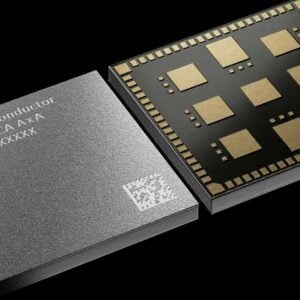
Most terrestrial network operators are already collaborating with both GEO and LEO NTN providers to deliver comprehensive solutions. Nordic Semiconductor is equipping developers with the hardware and software platforms needed to support any NTN use case. Its nRF9151 System-in-Package (SiP) module offers a low-power, integrated solution supporting both terrestrial and non-terrestrial connectivity.
The nRF9151 supports NB-IoT, LTE-M, and DECT NR+, with NTN support planned for a future firmware update. It features a dedicated 64 MHz Arm Cortex-M33 application processor, 1 MB Flash, 256 KB RAM, a multimode LTE-M/NB-IoT modem with integrated GNSS, power management, and an RF front end—all designed in-house by Nordic. Developers can build applications using Nordic’s nRF Connect SDK and leverage nRF Cloud Services for deployment and management.
Nordic is also actively partnering with leading NTN providers—including Iridium Communications, Skylo, Myriota, Omnispace, and Gatehouse Satcom—to offer customers commercial-ready NTN deployment options based on the nRF9151 SiP.
To Infinity and Beyond
Just a decade ago, satellite-based IoT was a nascent concept. Today, the broader IoT ecosystem is thriving, with over 15 billion connected devices worldwide—a number projected to double by 2030, according to the Ericsson Mobility Report. Advances in edge computing and AI integration now enable near real-time decision-making in many applications, reducing reliance on the cloud and minimizing latency.
Cellular IoT has evolved in parallel, powering billions of high-throughput, low-latency applications where short-range wireless technologies fall short. Now, it’s expanding beyond land, air, and sea into space through new network paradigms like NTN. For the first time, users can track critical assets or monitor vital infrastructure anywhere on Earth. The IoT hasn’t reached its final frontier—it’s just beginning.
References:
1. Global Supply Chain IoT Market. Verified Market Research, 2024.
About the Author:

Martin Lesund is Technical Product Manager – Cellular IoT at Nordic Semiconductor.
Explore more editorial content on our sister site, Electronic Specifier! Or join the conversation on our LinkedIn page.
