



**The Future of Workplace Demographics: EEOC Faces Pressure to Continue Data Collection**
A heated debate unfolded at a recent Equal Employment Opportunity Commission (EEOC) hearing as civil rights groups, researchers, and corporate representatives clashed over a proposal that could dismantle a cornerstone of workplace equity monitoring. For nearly six decades, a requirement has stood for tens of thousands of employers to submit annual workforce demographic reports to the EEOC. Now, that very foundation of civil rights enforcement is under scrutiny.
At the heart of the issue is the EEO-1 Form, a mandatory annual report that breaks down gender and racial representation across various job categories—from entry-level positions to executive suites. This data has long been a vital tool for lawmakers, researchers, and advocacy groups to identify disparities, track progress, and hold employers accountable for discriminatory practices.
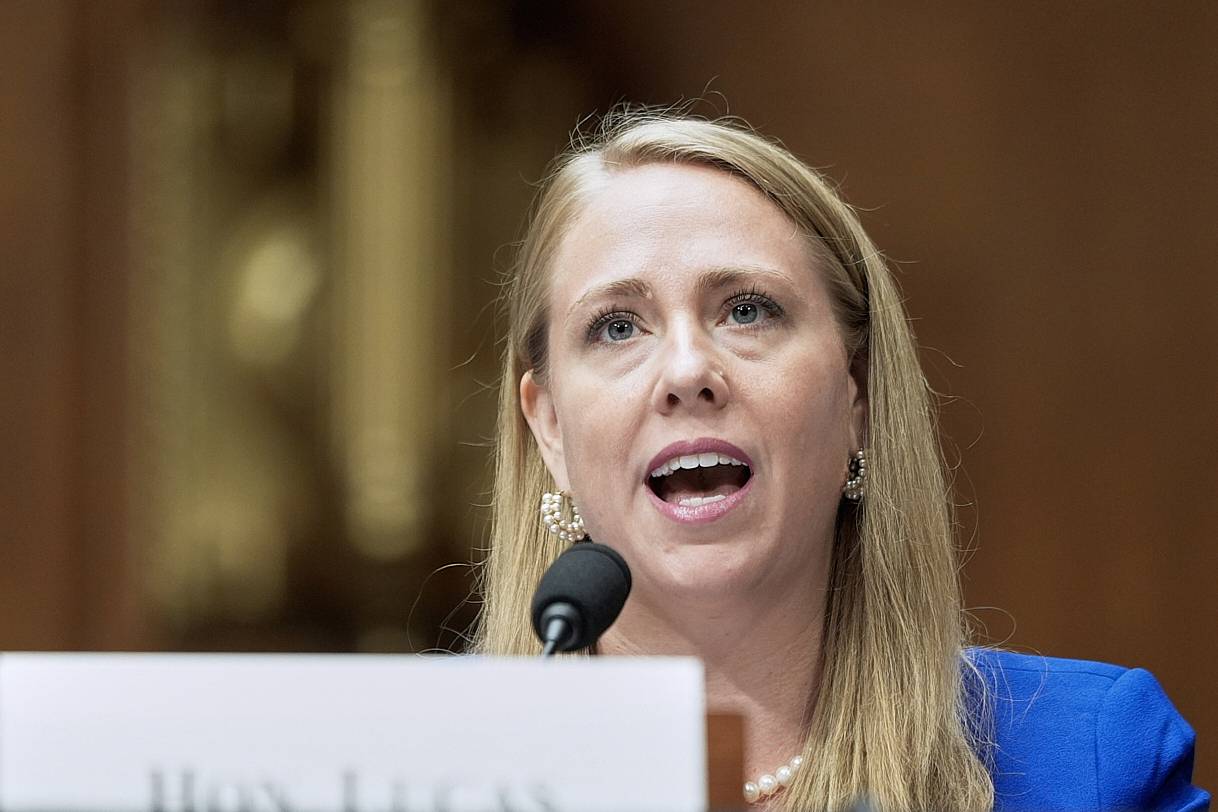
However, the Trump administration’s EEOC, led by Chair Andrea Lucas, has taken a different stance. In a 2-1 vote last month, the commission moved to end the collection of this data, arguing that the reporting requirement is unnecessarily burdensome and, counterintuitively, may even incentivize companies to engage in discriminatory hiring practices to meet diversity targets. A 30-day public comment period on the proposal concluded on August 24, marking a critical juncture in the future of federal oversight.
The divide was stark during the hearing, where 22 speakers testified. The majority argued passionately that ending the data collection would be a step backward in the fight for workplace equality. They warned that without this data, the government would be “flying blind,” unable to identify systemic biases or measure the effectiveness of anti-discrimination laws.
**The Case for Continued Collection**
Civil rights organizations contend that the EEO-1 form is an indispensable weapon in the arsenal against discrimination. They argue that transparency is the first step toward accountability. For instance, the data was instrumental in revealing the so-called “bamboo ceiling” that prevents many Asian American professionals from reaching the highest ranks of corporate America, despite their significant presence in technical and managerial roles.
Researchers echoed this sentiment. Donald Tomaskovic-Devey, co-director of the University of Massachusetts Amherst’s Center for Employment Equity, relies on EEO-1 data for his scholarly work. He warned that without these metrics, progress for women and minorities, which has stalled in recent years, would become impossible to track.
“By weakening EEOC enforcement, these changes will harm all workers, but particularly Black workers and other workers of color who continue to face racial discrimination more frequently,” said Amalea Smirniotopoulos, senior policy counsel at the Legal Defense Fund.
Many employers also defended the data’s utility. David Fortney of the Institute for Workplace Equality noted that his members use the EEO-1 not to discriminate, but to *prevent* discrimination. He cited examples where companies used the data to identify flawed referral programs that produced homogenous hiring pools or to correct misunderstandings about policies that inadvertently led to biased promotion patterns.
**The Case for Discontinuation**
On the other side of the debate, a smaller group of speakers, including several conservative policy advocates, argued that the data is outdated and harmful. They contend that the collection encourages racial stereotyping and places an undue burden on businesses.
Rachel Morrison, a fellow at the Ethics and Public Policy Center and a former EEOC attorney, argued that the data is not essential for the EEOC to perform its core functions. She pointed out that since the agency investigates discrimination claims related to religion, pregnancy, and other factors not captured in the EEO-1, the reporting requirement is redundant.
Furthermore, some employer groups have raised concerns that the data could be misused to pursue discriminatory quotas, a claim that David Fortney and others dismissed as unsupported by evidence. “Presumably after six decades, if the agency had specific instances, it would have called those out,” Fortney remarked.
### FAQ
**What is the EEO-1 Form?**
The EEO-1 Form is an annual report required by the U.S. Equal Employment Opportunity Commission (EEOC). Companies with 100 or more employees, and federal contractors with 50 or more employees, must submit this form. It provides a breakdown of the racial and gender composition of their workforce across various job categories, from executives to laborers.
**Why is the EEOC considering ending this data collection?**
The Trump-era EEOC, led by Chair Andrea Lucas, has proposed ending the collection, arguing that the reporting requirement is a burden on employers and may inadvertently encourage companies to adopt discriminatory practices—such as racial quotas—in an attempt to appear diverse.
**What are the arguments for continuing the data collection?**
Civil rights groups and researchers argue that the data is a crucial tool for identifying systemic discrimination, tracking the progress of marginalized groups, and ensuring compliance with anti-discrimination laws. They warn that ending the collection would leave society “flying blind” regarding workplace equity.
**Have companies misused the EEO-1 data in the past?**
According to prominent employer groups and former officials, there is little to no evidence of widespread misuse. Many companies, they argue, use the data positively to audit their hiring and promotion practices, uncover unconscious bias, and ensure compliance with equal opportunity laws.
### Conclusion
The decision facing the EEOC represents a pivotal moment for civil rights enforcement in America. Eliminating the EEO-1 data collection could fundamentally alter the landscape of workplace accountability, making it significantly harder to identify and rectify systemic inequities. As the 30-day comment period closes, the eyes of the nation are on the commission to see whether it will continue to shine a light on the American workplace or turn off the lamp altogether.
