



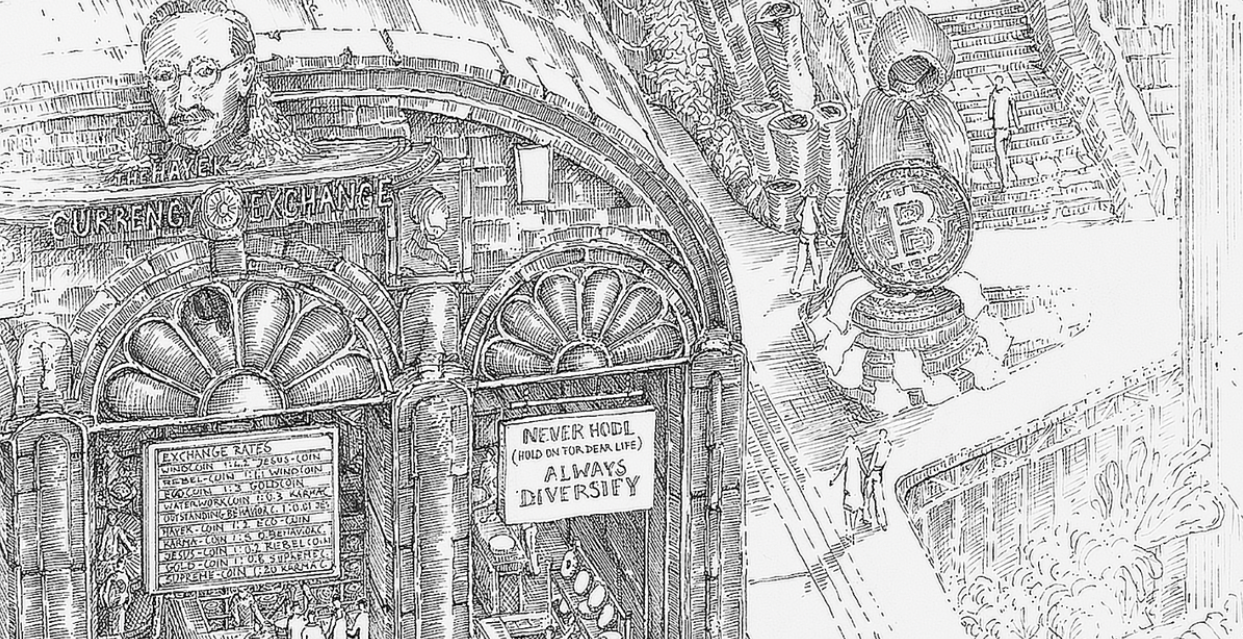
Imagine the financial system as a giant, hidden plumbing network. Water flows through reservoirs, channels, and pumps, but not everyone gets an equal supply. For some neighborhoods, the taps flow abundantly; for others, they run dry. This is the reality of how money operates, but unlike plumbing, the infrastructure behind our financial system is largely invisible to the people living within it.
A recent project by an artist and two researchers aimed to fix this by drawing the hidden architecture of money. After two years of interviewing over one hundred banking experts, economists, and government officials, the team translated their findings into a massive architectural illustration. The drawing maps the flow of money as if it were water, revealing how it moves through banks, governments, and households. It serves as both a piece of art and an educational tool, helping us understand the complex machinery that dictates who gets wealthy and who gets left behind.
One of the biggest surprises the researchers uncovered is a widespread misunderstanding about how banks actually work. The common belief is that banks act as simple middlemen, storing the savings of customers and passing it on to borrowers. In reality, when a bank approves a loan, it creates brand-new money in the borrower’s account. Even more striking is the fact that many people inside the industry don’t fully grasp this. During their research, the team spoke with bankers and even a chief executive of a major bank who did not realize their institution was a money-creating machine, not just a storage vault. The researchers argue that this gap in understanding often begins in our schools, where outdated economic textbooks continue to teach simplified and inaccurate theories about finance.
This hidden system has a direct impact on wealth inequality. When credit is cheap and interest rates are low, the flood of new money doesn’t reach everyone equally. Wealthy individuals and large corporations can borrow easily, which drives up the prices of assets like real estate and stocks. For those without existing wealth or creditworthiness, this cheap credit is out of reach. The result is a specific kind of inflation—asset inflation—that enriches those who already own valuable assets, while leaving everyone else struggling to keep up. The gap between the haves and have-nots widens not just because of broader economic forces, but because of the very design of our monetary system.
The project also explores a digital future shaped by cryptocurrency. Cryptocurrency was originally created to operate outside the control of traditional banks and governments. However, as it has entered the mainstream, large investment funds and traditional financial institutions have begun holding massive amounts of it. The researchers observed that while this integration brings cryptocurrency into the mainstream, it also risks diluting its original promise. As a purely financial investment asset, it has compromised its ability to serve as an alternative payment system. Furthermore, the researchers noted that the risk of a centralized crash is still present; when speculative lending gets out of hand, the system can collapse, much like historical monetary experiments did when they reverted to risky practices instead of maintaining stable reserves.
Ultimately, visualizing the flow of money is the first step toward understanding it. When we can see the pipes and pumps that move our financial resources, we can better identify where the system is failing and work toward a more equitable future.
**FAQ**
**Q: Why is the flow of money compared to water?**
A: The financial industry already uses water-based language—terms like liquidity, cash flow, and drying up are common in everyday banking. Using water as a visual metaphor makes the invisible connections between banks, markets, and households much easier to understand for the general public.
**Q: Do banks really create money out of nothing when they give a loan?**
A: Yes. When a bank approves a loan, it credits the amount directly to the borrower’s account. This new balance didn’t exist before the transaction; the bank effectively generated new currency simply by promising to lend it.
**Q: Has cryptocurrency lost its original purpose of challenging traditional banks?**
A: It is a mixed situation. While crypto still challenges traditional payment infrastructure, its massive rise as a financial investment has pulled it into the same institutions it originally sought to bypass. When large funds and asset managers dominate a market, the power dynamics of the traditional system tend to reassert themselves.
**Q: Why does inequality keep growing according to this research?**
A: The design of the monetary system inherently benefits those who already have assets. When new money enters the economy, it flows toward asset owners (like real estate and stock markets) first, driving up prices. Those without existing wealth are pushed further out of the market, widening the inequality gap.
**Q: What can be done to make the financial system more fair?**
A: The first step is education. By understanding how money is actually created and distributed—starting in our schools and universities—we can better evaluate proposed solutions and advocate for a system that serves everyone, not just those with the most capital.
Thank you for reading
