



Breaking Down the New Smart Home Collection from Tech Giants
The smart home space has long struggled with fragmentation, where a security camera, a thermostat, and a door lock often require different apps and don’t communicate smoothly with one another. A new partnership between two major tech companies aims to change this. Recently, a leading home appliance manufacturer and the creator of a popular mobile ecosystem joined forces to develop a unified collection of seven smart home devices.
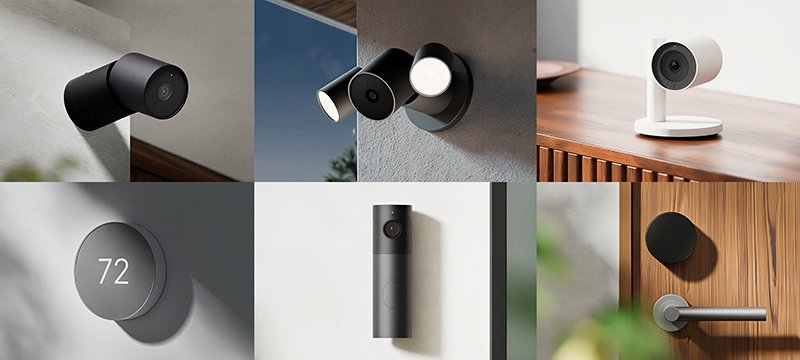
This lineup spans security, access control, and climate management, bringing together hardware and software expertise to simplify how people interact with their homes. Rather than just offering standard third-party accessories that plug into an existing system, these products were co-developed from the ground up to work seamlessly together.
From Device Compatibility to Coordinated Automation
The real innovation here goes beyond simply connecting individual gadgets to a single app. Users now expect multiple products to react consistently to shared routines and daily patterns. For instance, a single “Good Morning” routine can gradually warm up the house while simultaneously repositioning an indoor camera to protect privacy when it is not needed. These devices are controlled via a central smart home app, with voice commands supported through a virtual assistant. A dedicated home hub—like a smart speaker or streaming device—is required to manage the system, alongside a standard wireless internet connection.
Security and Access Control Take Center Stage
Four of the seven gadgets focus specifically on monitoring the home and controlling entry points. An indoor plug-in camera offers a wide viewing angle and features a physical privacy shutter that tilts the lens away when monitoring is unnecessary. An outdoor version provides high-resolution video and night vision, while a floodlight model combines surveillance with motion-activated lighting.
A video doorbell uses dual cameras to monitor both visitors at the door and packages delivered below. For physical access, a smart lock uses ultra-wideband technology to allow hands-free entry when an authorized person approaches, while also supporting traditional keys, personal identification numbers, and wearable devices. Privacy is prioritized throughout, with end-to-end encryption ensuring that video feeds and personal data remain inaccessible to the device makers themselves.
Matter over Thread Supports Connected Climate Control
Climate management is handled by a smart thermostat and a remote temperature sensor. The thermostat works with the ecosystem’s built-in energy features to adjust heating and cooling based on whether the home is occupied or empty. Additional sensors can be placed in different rooms to monitor both temperature and humidity.
These climate devices use a modern connectivity standard that combines a universal interoperability protocol with a low-power mesh networking technology. This is a significant architectural choice because it allows small, battery-efficient sensors to communicate reliably, contrasting with the high-bandwidth Wi-Fi typically required for video cameras. The thermostat also features energy-aware operations that can align with cleaner energy grids or lower-cost electricity periods.
When Can You Get Them?
The complete collection is set to launch in early winter 2026 in the United States and Canada. The United Kingdom will see a phased rollout, starting with the camera and doorbell models during that same initial period, followed by the remaining devices shortly after.
Frequently Asked Questions (FAQ)
Q: Do I need a specific hub to use these devices?
A: Yes, a dedicated home hub is required to manage the devices, along with a standard wireless internet connection.
Q: What makes these devices different from regular smart home gadgets?
A: They were co-developed from the initial design stage, meaning the hardware, software, and user experience are deeply integrated to work automatically with each other, rather than just being compatible plug-ins.
Q: What does “Matter over Thread” mean for the climate devices?
A: It means they use a universal smart home standard combined with a low-power wireless mesh network. This allows them to communicate efficiently without draining battery life, unlike bandwidth-heavy devices like cameras that rely on Wi-Fi.
Q: Are my video recordings kept private?
A: Absolutely. The system uses end-to-end encryption, and footage is stored locally, meaning neither the home appliance company nor the ecosystem developer can access your personal video data.
In Conclusion
The partnership between these two industry leaders highlights a significant shift in how residential smart devices are built. It demonstrates the dual approach of today’s market: creating deeply integrated user experiences within a specific ecosystem while simultaneously adopting standardized connectivity for core device communication. By treating connectivity, platform integration, and user experience as interconnected elements rather than separate add-ons, this collection sets a new benchmark for how future smart home products should be designed.
Thank you for reading
