




This week, institutional adoption continued to reshape the cryptocurrency market, even as global tensions reminded investors that the digital asset space remains highly sensitive to broader macroeconomic conditions.
Digital asset funds experienced over $1 billion in outflows as traders cut back on risk exposure amid dwindling hopes for a lasting ceasefire between the United States and Iran. Meanwhile, Tether strengthened its control over Twenty One Capital. Bernstein noted that Bitcoin miners are carving out a strategic role in building artificial intelligence infrastructure, and Polymarket joined forces with Nasdaq to launch prediction markets tied to private firms.
This week’s Crypto Biz illustrates just how much institutions continue to impact the digital asset ecosystem.
Crypto funds lose $1 billion as geopolitical tensions drive a shift to safer assets
Digital asset investment products saw more than $1 billion in withdrawals last week as rising tensions in the Middle East pushed investors to the sidelines.
According to data from CoinShares, these outflows represent one of the largest weekly reversals so far this year, with Bitcoin and Ether products accounting for most of the redemptions. The sell-off occurred as markets reduced expectations for a lasting US–Iran truce, sparking a broader retreat from risky assets—despite Bitcoin’s reputation as a hedge against macro uncertainty.
This pullback highlights how quickly market sentiment shifts during geopolitical shocks. Institutional demand for crypto remains structurally stronger than in previous cycles, yet the latest outflows suggest that portfolio managers still treat digital assets as part of the broader risk-on category during periods of high volatility.
Despite last week’s outflows, crypto exchange-traded products have seen nearly $4.9 billion in year-to-date inflows. Source: CoinShares
Tether strengthens its Bitcoin treasury stake with SoftBank-backed Twenty One
Tether has acquired SoftBank’s stake in Twenty One Capital, consolidating its influence over one of the crypto industry’s largest corporate Bitcoin vehicles.
The stablecoin issuer bought the Japanese conglomerate’s roughly 26% stake for an undisclosed amount, as Twenty One Capital prepares to expand its business beyond Bitcoin accumulation into Bitcoin-related financial services. Led by Jack Mallers, founder of Strike, Twenty One launched with backing from Tether, Bitfinex, Cantor Fitzgerald and SoftBank, and its balance sheet holds over 42,000 BTC.
The transaction further solidifies Tether’s influence over the company amid rising institutional demand for Bitcoin treasury exposure.
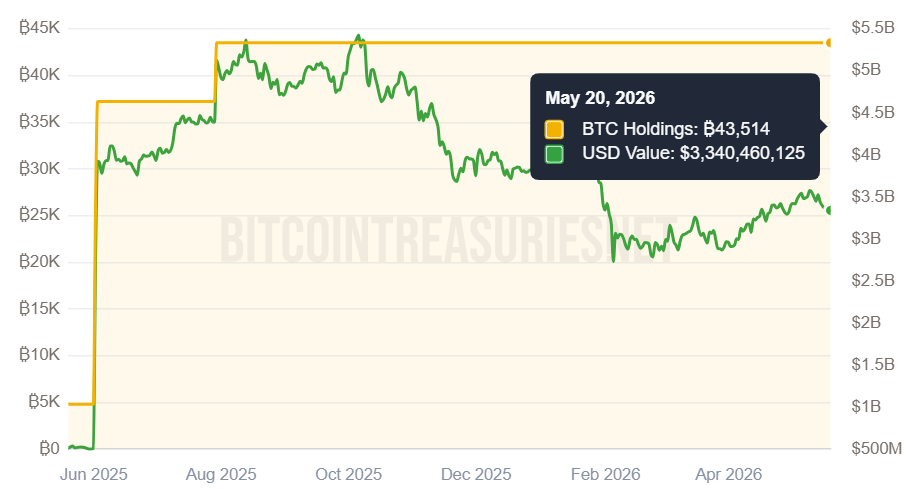
Twenty One Capital has built a $3.34 billion Bitcoin position. Source: BitcoinTreasuries.NET
Bernstein says Bitcoin miners are becoming key assets in the AI race
Bitcoin miners are becoming valuable partners for artificial intelligence developers, giving them more room to diversify into data centers and high-performance computing, according to a Bernstein research note.
Bernstein analysts pointed out that miners possess two increasingly scarce resources amid the AI boom: large-scale access to power and data center capacity. Companies that originally built operations around energy-intensive Bitcoin mining are now repurposing parts of this infrastructure to host high-performance computing workloads for AI clients.
Bernstein argued that this shift could unlock new revenue streams and higher valuations for miners, especially as block rewards become less lucrative with each Bitcoin halving cycle. The convergence of crypto and AI is reshaping companies once seen as cyclical commodity businesses into strategic infrastructure plays tied to two of the market’s most capital-intensive industries.
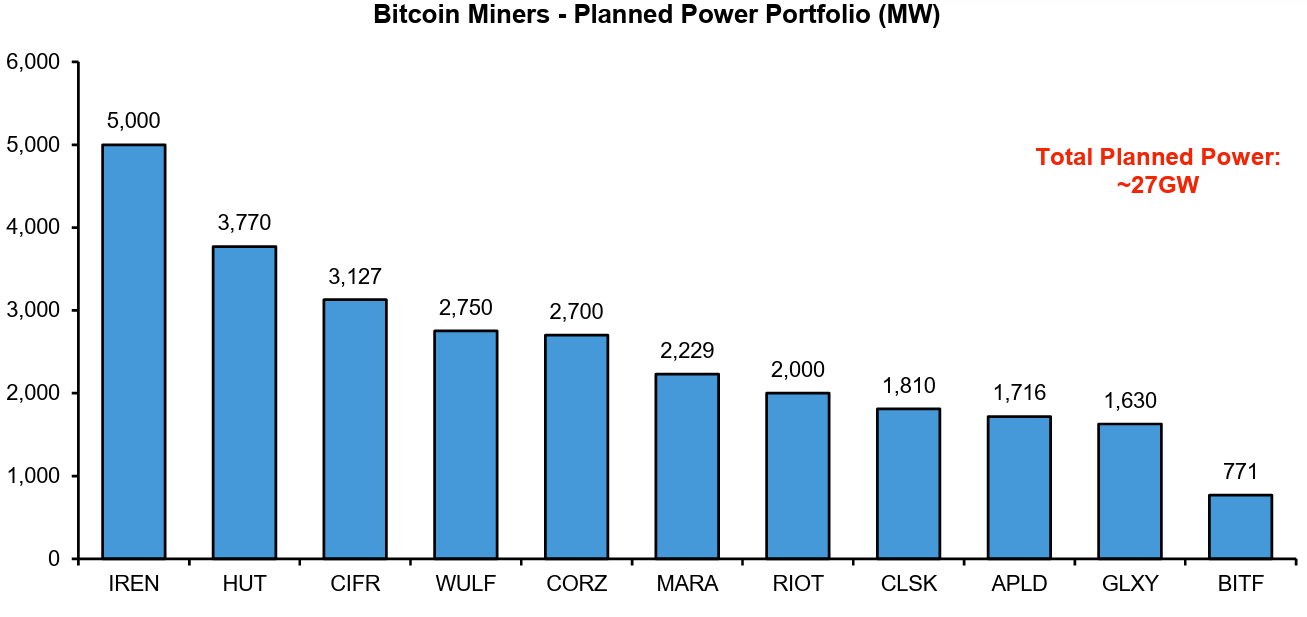
Publicly traded crypto miners have expanded their power portfolios. Source: Bernstein
Polymarket partners with Nasdaq to bring prediction markets to private companies
Polymarket has teamed up with Nasdaq to launch a new category of prediction markets that allows users to forecast the future valuations of private, pre-IPO companies.
This initiative will let participants trade on private-company milestones, such as valuation targets, IPO timing, and secondary market activity. By going beyond elections and macro events, the partnership is extending prediction markets further into venture capital and startup investing.
The collaboration also reflects growing institutional interest in event-based forecasting. For crypto-native platforms like Polymarket, teaming up with established financial infrastructure providers could help legitimize prediction markets as alternative tools for price discovery and investor sentiment analysis.

Source: Cointelegraph
Crypto Biz is your weekly roundup of the business behind blockchain and crypto, delivered straight to your inbox every Thursday.
