



I’d be happy to help paraphrase this article. Here’s the rewritten version:
The House Oversight and Government Reform Committee is looking into tax compliance issues among both active and retired federal workers.
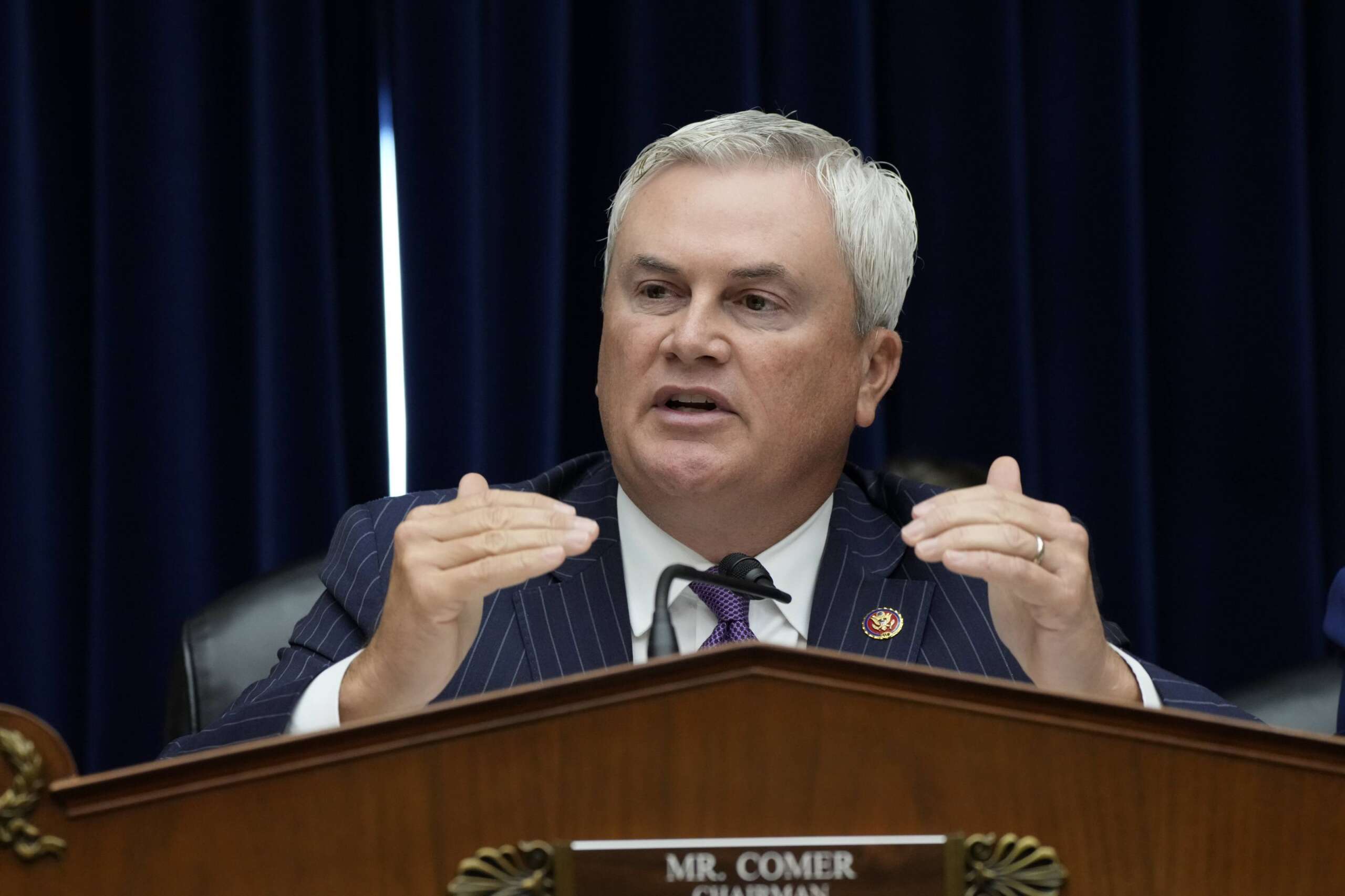
Committee Chairman Rep. James Comer (R-Ky.) explained that a recent spike in tax delinquency among federal staff triggered this probe. The inquiry follows a May 6 Treasury Inspector General for Tax Administration report showing that the number of federal workers skipping their tax filings climbed steadily between 2021 and 2024.
According to TIGTA’s findings, roughly 572,000 federal civilian workers were behind on taxes at the close of fiscal year 2024, collectively owing $6.3 billion — a jump of $1.5 billion, or 32%, compared to 2021. The count of tax-delinquent federal workers surged by 43% during that span, even as the overall federal workforce grew by just 4%.
The report further noted that around 50,000 federal workers hadn’t submitted a tax return for several years, with 122 of them missing eight or more filings.
In a letter addressed to IRS CEO Frank Bisignano, Comer requested that the IRS share with the committee, covering the period from March 6, 2023 to the present, the count of federal workers who didn’t file taxes and were sent to the IRS’s Federal Payment Levy Program (FPLP) along with the amount of unpaid taxes recovered through that effort; the number of levy requests for federal workers and retirees forwarded to the Bureau of Fiscal Service; and the count of federal workers and retirees whose federal wages or payments were garnished and the resulting tax recovery amounts.
Comer emphasized that while every American is legally obligated to pay their fair share, federal workers ought to face stricter expectations since their salaries come from taxpayer money.
“Skipping tax filings and payments sends the wrong message to everyone, and more needs to be done to prevent noncompliance before it starts or happens again,” Comer stated in the letter.
“Those who don’t file openly ignore the law, which not only costs the government lost revenue but also damages the credibility of the tax system and the federal government,” he added. “Negligent employees give the public the impression that filing and paying taxes is a choice rather than a requirement.”
The Federal Employee/Retiree Delinquency Initiative (FERDI), created by the IRS in 1993, aims to promote tax compliance across the federal workforce. Each year, it identifies federal workers who haven’t filed returns or paid taxes by cross-referencing delinquent tax account Social Security numbers against the IRS Individual Master File’s federal employment and retirement records. The IRS then informs each agency about how many of its workers are noncompliant for that year, though it can only share summary-level data.
While the IRS has made efforts to partner with agencies to bring down delinquency rates, privacy rules complicate the process of addressing noncompliance, the TIGTA report noted. The IRS is barred from disclosing employee tax return details to any agency outside the Treasury Department.
Tax delinquency among federal workers has climbed every year since 2021, based on TIGTA’s analysis of FERDI data. TIGTA cited the COVID-19 pandemic as one contributing factor, since certain tax levy and collection efforts were paused during that time. The FERDI workforce itself is another element TIGTA flagged. Between January and July 2025, FERDI lost 121 staff members — a 50% reduction — as part of wider federal workforce cuts.
TIGTA’s report singled out the Postal Service and Small Business Administration as having some of the worst delinquency rates, at 10.1% and 8.7% respectively, while the Treasury Department fared the best. The Postal Service also led in repeat non-filers. Comer noted that the IRS, by law, has the power to discipline its own workers for tax delinquency and is required to fire employees who don’t file returns.
TIGTA’s report also revealed that five agencies account for 64% of all outstanding tax balances among federal civilian workers. The Postal Service and Department of Veterans Affairs together make up 45%, with the Departments of the Army, Navy, and Homeland Security covering the remainder.
Federal News Network contacted the National Treasury Employees Union and the American Federation of Government Employees for their thoughts on the investigation. Neither organization provided a response.
TIGTA’s May report was an update to an earlier 2023 study that examined the years 2016 through 2021 and found a 32% rise in tax delinquency among federal workers during that window, alongside a 6% overall growth in the federal workforce.
One approach Comer suggested in his letter for tackling tax delinquency involves the FPLP, which can recover overdue taxes by garnishing federal payments. Former IRS Commissioner Daniel Werfel noted in a 2024 letter to Sen. Chuck Grassley (R-Iowa) that federal workers who skip filing can be sent to the FPLP and the Bureau of Fiscal Service, which can seize up to 15% of their federal pay.
Comer also pointed to a newly proposed rule from the Office of Personnel Management that would make it quicker to dismiss federal workers for unsuitability or misconduct. However, since the Treasury Department isn’t allowed to disclose who is noncompliant, Comer acknowledged this wouldn’t be a dependable fix.
During June and July 2025, the IRS mailed notices to federal workers and retirees with overdue balances or delinquent accounts, urging them to voluntarily settle what they owed. Out of 427,000 recipients, 59,000 made a payment and 4,700 cleared their full balance, TIGTA reported in its May study. Taxpayers also submitted 23,000 returns and 32 set up payment arrangements.
Comer asked the IRS to respond by July 9 and also requested a briefing from IRS staff on the matter.
Copyright
© 2026 Federal News Network. All rights reserved. This website is not intended for users located within the European Economic Area.
