



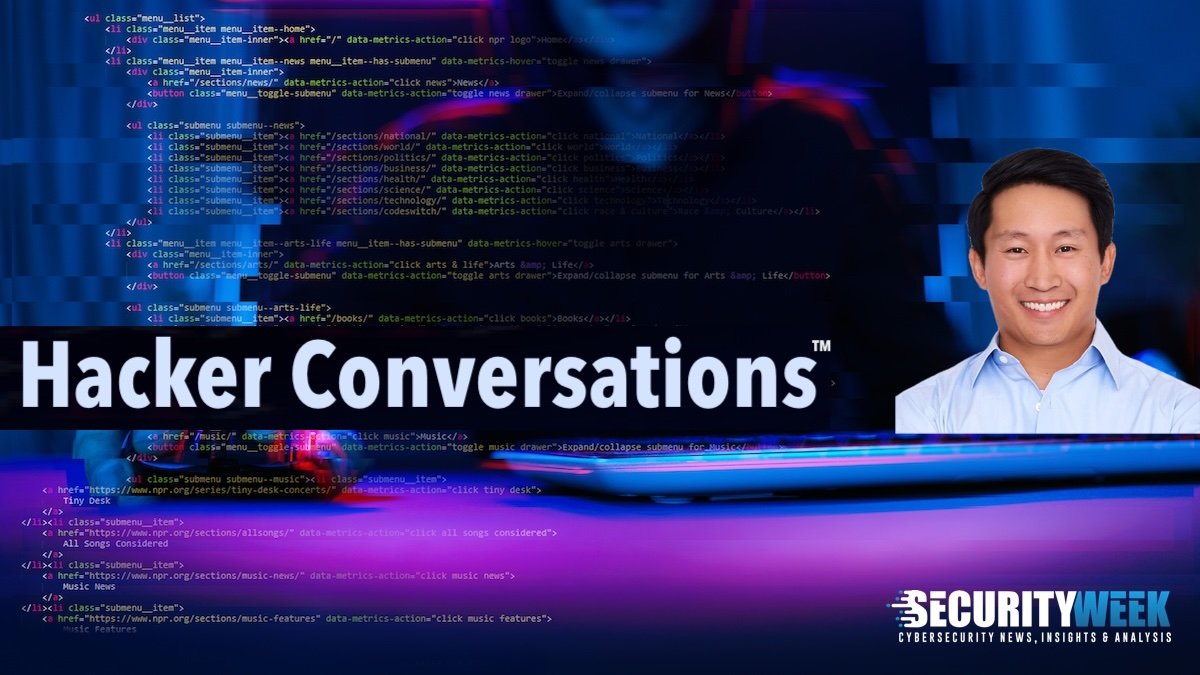
# The Mind of a White Hat: Vinnie Liu and the Journey from Curious Kid to Offensive Security CEO
## A Teenage Prodigy in the World of Espionage
At just seventeen years old, Vinnie Liu received a phone call that would shape the rest of his career. The National Security Agency wanted him — not as a student or an intern, but as a full-time employee. His introduction to the intelligence community came through an unexpected channel: an Air Force officer he had encountered only in online chat rooms, someone whose name and digital alias have long since faded from memory. What remained was the undeniable impression of a young man with extraordinary technical instincts.
Liu describes his first year at the agency as time spent on the red team — the group tasked with thinking like adversaries to find weaknesses in systems. His second year shifted toward external-facing work, though he reveals very few details about the nature of that role. What does emerge from his retelling is a portrait of someone who gravitated toward understanding systems from the inside out, driven not by malice or rebellion, but by an insatiable curiosity.
## The Roots of Curiosity
Long before any government agency took notice, Liu’s fascination with technology was ignited by an unlikely mentor: his older sister, a college student who would return home with programming textbooks and technical materials. At an age when most children were exploring the world through play, Liu was devouring technical documentation, teaching himself to code, and dismantling the logic of computer systems simply because he wanted to understand how they worked.
“He would come home from college every now and then with books or materials, and I would just devour them,” Liu recalled. “I found them fascinating.”
This early self-directed education produced something rare: a technical mind paired with a clear moral framework. By the time he reached high school, Liu had already developed skills that set him apart from his peers, and it was during this period that he first encountered Internet Relay Chat (IRC) — the early online communities where hackers, security researchers, and tech enthusiasts gathered. It was through IRC that he connected with the Air Force officer who would ultimately recommend him to the NSA.
## Defining Hacking on His Own Terms
Liu offers a characteristically measured definition of what it means to be a hacker. “A hacker is somebody who likes to find a way around a control or a security system to get things to behave in ways that were unintended,” he explains. Notably, he separates the act itself from any motivation behind it. The difference between a black hat and a white hat, in his view, comes down entirely to intent — whether the exploration serves to build or to destroy.
“There’s exploring, and then there’s exploring for the purpose of destroying or hurting or harming,” Liu says. “There’s a distinction between those two things.”
This philosophy has remained consistent throughout his career. When asked whether he ever engaged in questionable activities with his growing knowledge, Liu’s answer was a straightforward no. Even when pressed about whether he had ever broken into his school’s computer network, he treated the idea with a matter-of-fact shrug — “I don’t think that’s shady — it’s just de rigueur if you’re into programming and at school” — suggesting that such explorations were, in his mind, a natural part of learning.
## The Moral Compass
Liu attributes his strong ethical foundation to his upbringing. “From both my parents and early educators, who I think were very good role models,” he says. This implies a belief that morality is cultivated rather than inherited — a learned behavior shaped by the people and environments surrounding a developing mind.
This perspective is particularly interesting given the broader stereotypes surrounding hackers. The public imagination often associates hacking with solitary figures operating on the fringes of society, driven by dark motives or antisocial tendencies. Liu’s story challenges that narrative entirely. His hacking was never about causing damage, stealing data, or seeking personal gain. It was about understanding, exploring, and satisfying a deep intellectual curiosity.
He also addresses the question of whether he ever considered monetizing his discoveries on underground markets. His answer is refreshingly honest about the context of his early career: “When I started, in the first half of the 1990s, there was no dark web.” The infrastructure for anonymous, illicit marketplaces simply did not exist during his formative years, making the question somewhat moot for someone who began his journey in that era.
## Navigating the Transition to the Private Sector
Liu’s two years at the NSA coincided with a dramatic transformation in the cybersecurity industry. As the commercial security market expanded rapidly in the late 1990s, talented individuals were leaving government positions to pursue opportunities in the private sector. Among them were colleagues Liu had worked alongside and gotten along with personally.
By 2001, Liu made the decision to follow the same path. But he was deliberate about it. Before leaving the NSA, he committed to completing his university degree in Computer Science. By the age of twenty-one, he possessed a combination of formal education, real-world government experience, and deep offensive security knowledge that made him highly attractive to employers.
His first major role in the private sector came in 2003, when he joined Ernst & Young as a Security Consultant. It was there that he reconnected with Fran Brown, a fellow computer science student from their freshman year in college. Within eighteen months, both were recruited by Honeywell, where they led the company’s global penetration testing team. Their partnership proved formidable, but after just sixteen months, they began taking on additional subcontracting work from personal contacts. The informal collaborations sparked an idea.
## Building Bishop Fox
The company that emerged from those side projects — Bishop Fox — would become one of the most respected names in offensive security. The path to its current form, however, was anything but direct.
The firm initially operated under the name Stach & Liu LLC, officially registered in 2011 according to business records. In 2013, the company underwent a rebranding to Bishop Fox, a name that better captured the dual nature of its work: the “bishop” evokes both protection and strategic offense, while the “fox” suggests cunning and agility. The rebranding also resolved a perception issue — “Stach & Liu” sounded more like a law firm than a cybersecurity powerhouse.
Under Liu’s leadership as CEO, Bishop Fox grew into an organization recognized as a top-tier authority in penetration testing and red teaming. Liu’s own role evolved from hands-on security practitioner to strategic leader, guiding a team of offensive security professionals.
## Still a Hacker at Heart
Does Liu still consider himself a hacker? His answer is nuanced but ultimately affirmative. “I’d like to think so,” he says. “I certainly would have given you a very affirmative ‘Yes’ ten years ago. These days, I think my team thinks I’m a little out of date, but I’ve spent a large part of my career hacking into things.”
He acknowledges that his current responsibilities lean heavily toward management and business strategy. But he draws an important distinction between the practice of hacking as a technical activity and hacking as an identity. For Liu, hacking is as much a state of mind as it is a set of skills. The core drive — to find unexpected paths through systems, to understand how things work at a fundamental level — has never left him.
The broader narrative of Liu’s career reinforces a crucial point: the same person who could navigate the complex world of government intelligence is the same person who built a company dedicated to helping organizations find and fix their vulnerabilities. Hacking, in his hands, became a force for protection rather than destruction.
## Neurodiversity and the Hacker Mind
The discussion around hacking and neurodiversity deserves attention in any exploration of this field. Statistics suggest that many practitioners in cybersecurity identify as neurodiverse — a term that describes natural variations in brain function and cognitive processing. Conditions such as ADHD and autism spectrum disorder (ASD) are disproportionately represented among hackers, and the traits associated with these conditions — intense focus, unconventional thinking, the ability to sustain deep concentration on complex problems — align remarkably well with the demands of offensive security work.
Liu, however, does not identify as neurodiverse. “I don’t consider myself to be neurodiverse,” he says. “My wife would call me nuts, but I don’t think I’m neurodiverse in the traditional sense. I just really enjoy what I do.” His self-awareness and humor are characteristic of the man — comfortable with his own quirks but clear-eyed about where he stands.
## Frequently Asked Questions
**What is Bishop Fox?**
Bishop Fox is a cybersecurity company specializing in offensive security services, including penetration testing, red teaming, and vulnerability assessments. It was co-founded by Vinnie Liu and Fran Brown and is widely regarded as a leading authority in the field.
**What is a red team?**
A red team is a group within an organization or agency that simulates the tactics, techniques, and procedures of real-world adversaries to test the effectiveness of an organization’s defenses. Red teaming is a core function in both government and private-sector cybersecurity.
**What does “white hat” hacking mean?**
White hat hacking refers to ethical hacking — the practice of testing and probing systems for vulnerabilities with the explicit permission of the system owner and with the goal of improving security. White hat hackers operate within legal and ethical boundaries.
**When did the dark web emerge?**
The dark web as a concept and infrastructure began taking shape after the Tor project released its software in 2002, with the Tor browser becoming widely available around 2008. Prior to this, anonymous and inaccessible online spaces did not exist in their current form.
**What is the difference between black hat and white hat hackers?**
The distinction lies in intent and legality. Black hat hackers break into systems maliciously, often for personal gain or to cause harm. White hat hackers perform the same technical actions but with authorization and the goal of strengthening security. Gray hat hackers fall somewhere in between, often finding vulnerabilities without explicit permission but without malicious intent.
**Why is Vinnie Liu considered a white hat?**
Liu’s entire career trajectory — from his time at the NSA conducting authorized red team exercises, to his work in private-sector penetration testing, to his co-founding of Bishop Fox — reflects a commitment to using his technical skills to protect systems and organizations rather than to exploit them.
**Can anyone become a hacker?**
Liu’s story illustrates that hacking is less about innate genius and more about curiosity, persistence, and a deep desire to understand how systems work. Many successful hackers began with no formal training, teaching themselves through trial, error, and exploration.
## Conclusion
Vinnie Liu’s journey from a curious child teaching himself to program using his sister’s college textbooks to the CEO of one of the most respected offensive security firms in the industry is a testament to the power of intellectual curiosity guided by strong principles. His career spans government intelligence, corporate cybersecurity consulting, and entrepreneurial leadership — and through every chapter, the core motivation has remained consistent: understanding systems and using that understanding to make them more secure.
His story also serves as a corrective to popular misconceptions about hackers. The image of the lone, malevolent figure lurking in digital shadows is not only incomplete — it is often wrong. Many of the people who work hardest to protect our digital infrastructure are, at their core, explorers and tinkerers driven by the same impulses that fuel scientific discovery and artistic creation. The difference is in what they choose to do with those impulses.
As the cybersecurity landscape grows more complex with each passing year, the need for skilled, ethical professionals who can think like adversaries has never been greater. Liu’s evolution from NSA recruit to industry leader demonstrates that the hacker mindset, when properly channeled, is one of the most valuable assets in modern security.
Thank you for reading
