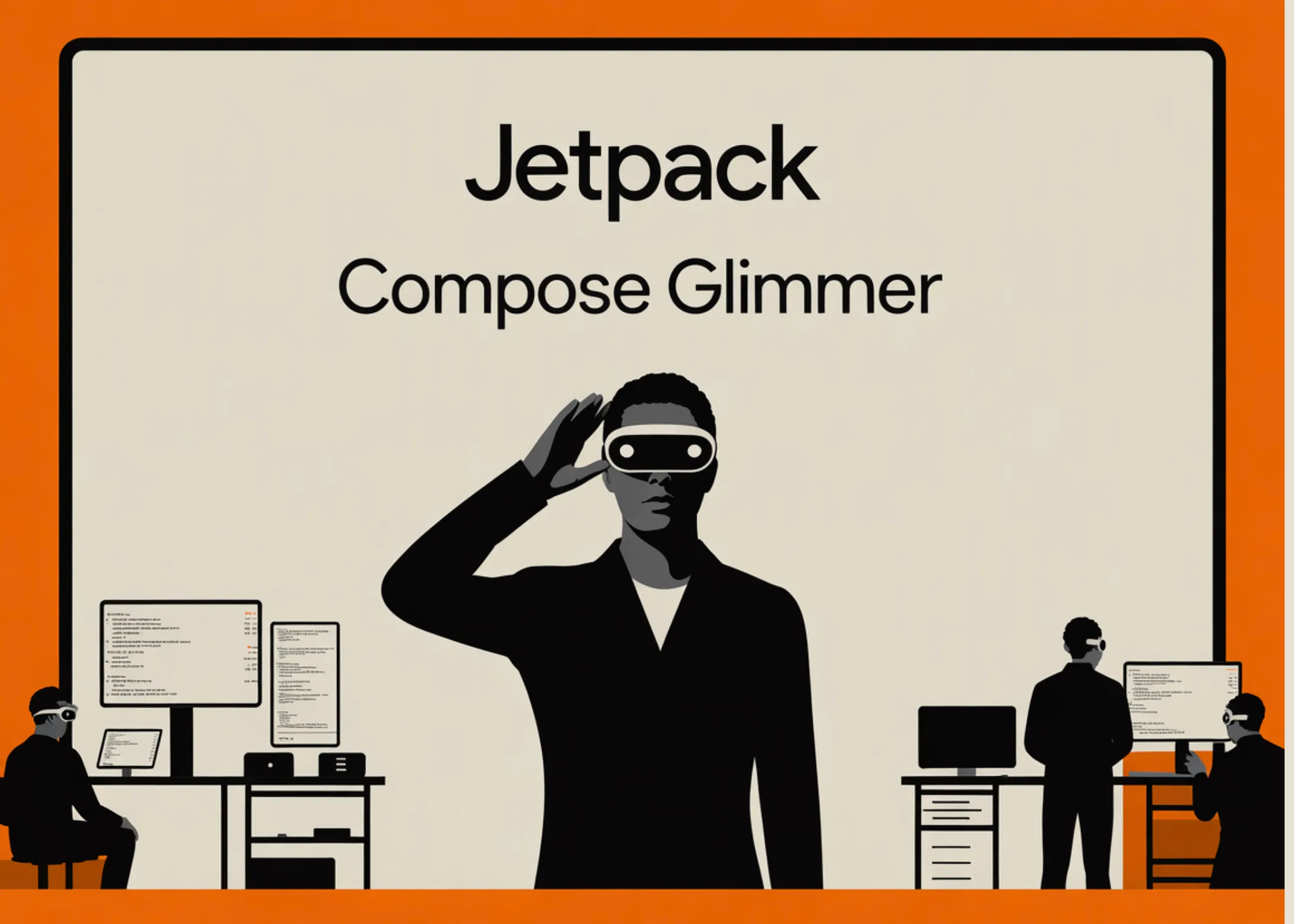
Google is shifting past the oblong display. For over 10 years, Google designers have explored the way to construct interfaces for clear shows. The result’s Jetpack Compose Glimmer, a design system constructed particularly for show AI glasses. For devs and knowledge scientists, this can be a shift from designing for pixels to designing with gentle.
The Additive Show Constraint
Most builders are used to LCD or OLED screens. Nevertheless, AI glasses use additive shows. These shows solely add gentle to the consumer’s visual view. They can’t create opaque black or make the actual world darker.
On an additive show, black is 100% clear. It’s not a shade; it’s a void. When you use a regular Materials Design card (gentle floor with darkish textual content), it fails. The sunshine floor turns into a brilliant block of sunshine that drains the battery and creates halation. Halation is an impact the place brilliant gentle bleeds into darkish areas, making textual content unreadable.
To resolve this, devs should use darkish surfaces and brilliant content material. Utilizing black as a basis offers a ‘clean plate’ for the UI. This enables the digital components to harmonize with the bodily world with out creating distracting glare.
From Pixels to Visible Angles
Software program Devs usually measure UI in pixels or factors. In a clear spatial setting, these items are irrelevant. The perceived dimension of an object adjustments primarily based on its distance from the attention.
Google workforce now measure UI in visible angles or levels. The show in these glasses is projected at a perceived depth of 1 meter, which is about an arm’s size. This distance requires the consumer to actively shift their focus from the background to the UI.
To make sure legibility, Google established a minimal readable textual content dimension of 0.6 levels. Maintaining textual content above this threshold ensures that the interface stays ‘glanceable’ in several environments.
Engineering Typography for Mild
Normal fonts usually fail on clear lenses. Google workforce modified Google Sans Flex utilizing its optical dimension axis to repair this. These technical changes make letters extra distinct:
- Elevated Counters: The interior openings in letters like ‘a’ and ‘e’ are bigger to stop them from blurring.
- Modified Dots: The dots on ‘i’ and ‘j’ are moved farther from the principle letter physique.
- Variable Letter-Spacing: The system optimizes spacing via code to maximise readability at a look.
The Additive Distinction Components
Google workforce use a particular method to calculate visibility. That is the additive distinction ratio.
The method is: (Setting Brightness + Show Brightness) / Show Brightness.
In the actual world, colours behave in a different way. Extremely saturated colours usually ‘disappear’ or look ghostly in opposition to a brilliant sky. Glimmer makes use of a impartial, desaturated palette by default. By protecting colours nearer to white, the UI stays secure and visual whatever the lighting within the room.
Designing Movement for Human Consideration
On a heads-up show, movement could be a main distraction. In normal cellular growth, a notification may seem in 500 milliseconds. On AI glasses, that is too quick. It creates an abrupt ‘blink’ that may startle the consumer.
Glimmer makes use of a slower, extra deliberate transition for notifications. These animations happen over 2 seconds. This period permits the notification to enter the consumer’s peripheral imaginative and prescient gracefully. It invitations focus moderately than demanding it.
Nevertheless, user-triggered actions (like a voice command or gesture) nonetheless require low-latency suggestions. Glimmer makes use of ‘focus rings’ to supply on the spot affirmation that the system has acquired an enter. This creates a steadiness between ambient notifications and responsive controls.
Key Takeaways
- Black is Transparency, Not a Shade: As a result of AI glasses use additive shows, they’ll solely add gentle; they can’t create true black or shadows. On this setting, black is 100% clear. To make sure legibility, devs should use darkish surfaces for containers and brilliant colours for textual content and icons.
- Visible Angles Change Pixels: Normal items like pixels (px) are changed by visible angles (levels). Because the UI is projected at a perceived depth of 1 meter, objects have to be sized relative to the human eye’s perspective. The minimal threshold for readable textual content is ready at 0.6 levels.
- The Additive Distinction Components: Devs should account for environmental gentle utilizing the method: (Setting Brightness + Show Brightness) / Show Brightness. As a result of saturated colours usually ‘disappear’ in opposition to brilliant real-world backgrounds, a impartial, desaturated palette is used to keep up visibility.
- Optical Typography Optimization: Normal typefaces undergo from halation (gentle bleeding). Google Sans Flex is modified by way of its optical dimension axis to extend inside letter openings (counters) and develop letter-spacing, stopping characters from blurring collectively on a clear lens.
- Movement Timing is Context-Dependent: Normal 500ms animations are too abrupt for a heads-up show. To respect human peripheral imaginative and prescient, Glimmer makes use of 2-second transitions for notifications to ‘invite’ focus, whereas sustaining low-latency suggestions (like focus rings) for direct consumer inputs to make sure responsiveness.
Try the Technical particulars. Additionally, be at liberty to comply with us on Twitter and don’t neglect to affix our 100k+ ML SubReddit and Subscribe to our E-newsletter. Wait! are you on telegram? now you’ll be able to be a part of us on telegram as effectively.
Michal Sutter is a knowledge science skilled with a Grasp of Science in Information Science from the College of Padova. With a strong basis in statistical evaluation, machine studying, and knowledge engineering, Michal excels at reworking advanced datasets into actionable insights.