



Adopting new technology can seem daunting, but there are already some clubs leading the charge.
In August, the Productivity Commission handed down a report that framed artificial intelligence not just as a tool, but as a potentially transformational force – one that could boost Australia’s economic output by more than $116 billion over the next decade.
Likening the gains from AI to the impact of steam engines during the Industrial Revolution, the report found that productivity among Australian workers could grow by 4.3 per cent. The Commission also flagged a further $10 billion in productivity improvements annually if businesses and individuals are able to better access and use personal data to inform decisions.
While the full impact of AI on the economy remains uncertain, the message is clear: automation, data use and intelligent systems are already reshaping the way services are delivered – and some of that change is already happening inside clubs.
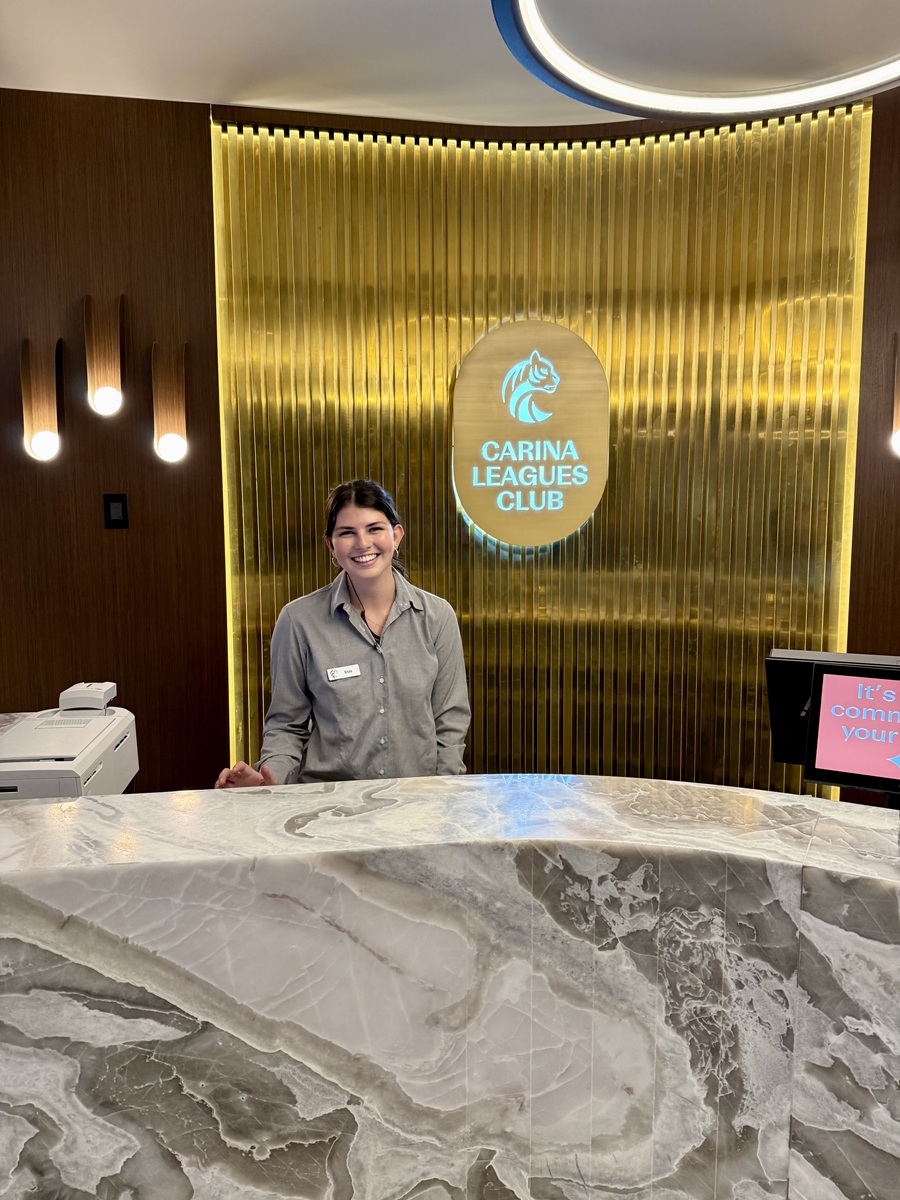
At Carina Leagues Club in Brisbane, an AI assistant named Jasmine now picks up most incoming calls. Jasmine is part of a voice AI solution developed by yomconnectAI, a platform designed specifically for hospitality venues. According to Carina Leagues Club CEO Adam Wiencke, it’s already making a difference.
“Jasmine is Carina Leagues Club’s conversational AI receptionist who handles general enquiries, directs calls, takes messages, and provides real-time information about the club’s dining, entertainment, and promotions,” he said. “Jasmine is also supported by a broader AI team that helps to manage our restaurant bookings and functions, so there are a few different voices on the line when members call.”
Carina Leagues went live with Jasmine in mid-February 2025, and the club has already seen a noticeable shift.
“Members who call the club receive fast responses to common questions through the AI knowledge bank and can book a table at our restaurants seamlessly over the phone,” Wiencke said. “With our admin team spending less time answering phone calls, they’ve been able to focus more on our in-club experience, stepping away from the front desk and connecting with our members and guests in person.
“The change has given us the opportunity to fine-tune our service offering and continue delivering best-in-class experiences.”
While it has been mostly smooth sailing, Wiencke highlighted the biggest challenge was integrating multiple systems and ensuring they all communicated effectively.
“Our biggest learning was around training the AI,” he said. “At first, we input information into the knowledge bank the same way we’d communicate with our staff. But in some cases, we needed to be far more detailed to ensure the AI shared the right information with members.
“The overall experience reinforced our belief in taking the first step and leading the way. We’re proud to keep moving forward, embracing change and exciting innovations to continue serving our community well into the future.”
The feedback from members has also been encouraging. “We’ve had quite a few people comment they didn’t even realise Jasmine was a robot,” Wiencke said.
Keeping it in check
Beyond customer service, Revesby Workers’ Club risk and compliance manager Daisy Brown sees clear potential for clubs to explore the role AI can play in strengthening governance and compliance. She believes it’ll play a large factor in fostering a proactive technology-based culture and help clubs move away from the traditional reactive approach to compliance.
“As there is no solution out there to provide us with an end-to-end system that can integrate all aspects of our operations, I imagine more clubs will start to invest in building bespoke AI solutions that bridge some of these gaps,” she said.
“This may be tools to assist in some of the manual day-to-day transaction monitoring tasks or applying machine learning to data for identifying trends and providing early risk prevention.”
Brown also sees a role for AI in policy management and boardroom efficiency.
“I have seen risk management platforms exploring the use of AI in policy libraries, which may allow us to start having policies updated automatically with legislation changes,” she said.
She also believes boardrooms could benefit from automation.
“We should also be using AI in the boardroom, to summarise complex regulations and documents to enhance our board’s knowledge, and to review our board papers and minutes to allow for heightened governance and compliance.”
But alongside the promise of AI, Brown warned of the need for a solid foundation.
“A robust framework is key to ensuring we use this AI appropriately; however I would encourage clubs to start having conversations with their IT teams and IT providers to look at ensuring the internal infrastructure is ready and teams know how to responsibly use AI in the workplace.”
She emphasised that relying on technology alone isn’t enough.
“We must remember that the best tools are only useful if the business is willing to invest in using them, so it is vital the board and management are committed to this concept,” Brown said.
“If we look to proactively integrate AI into our daily operations, I do believe we have a real opportunity to reshape compliance in the industry and lead positive change across the sector.”
This is an excerpt from an article originally published in Club Management Spring. Read the full article below.
