



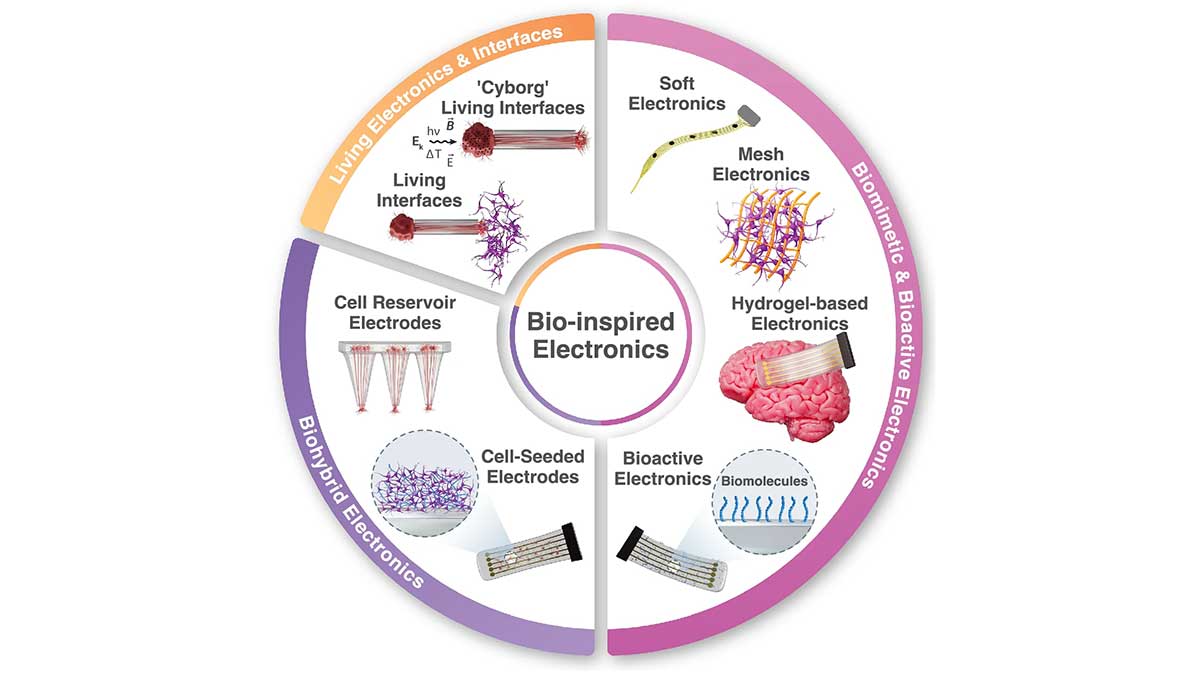
Researchers at Incheon Nationwide College have set out an in depth roadmap for a brand new class of versatile bioelectronics constructed from ultra-thin crystalline silicon, a cloth they argue might bridge the long-standing hole between high-performance semiconductor know-how and the tender, dynamic surroundings of the human physique.
In a evaluation revealed within the Worldwide Journal of Excessive Manufacturing, the staff describes how silicon, lengthy related to inflexible chips and brittle wafers, may be remodeled into nanometre-scale membranes that bend, stretch, and conform to organic tissue with out sacrificing electrical efficiency or compatibility with typical chip manufacturing.
Silicon has underpinned the electronics business for many years, however its stiffness has restricted its use in biomedical units designed to interface instantly with organs, nerves, or pores and skin. In response to the authors, that constraint will not be inherent to the fabric itself, however to the way it has historically been processed.
“When silicon is thinned down to the nanoscale, it behaves very differently,” mentioned Dr Younger Uk Cho, Assistant Professor of Biomedical and Robotics Engineering at Incheon Nationwide College, who led the evaluation. “You can retain the performance and reliability that made silicon dominant in electronics, while gaining mechanical flexibility that makes intimate integration with the body possible.”
The paper brings collectively advances from supplies science, electrical engineering, biomedical engineering, and manufacturing. The authors argue that progress within the discipline has been fast however fragmented, with no single framework linking fabrication strategies to real-world medical functions.
Their roadmap traces the total manufacturing pathway for ultra-thin crystalline silicon units. It begins with established, high-temperature, on-wafer processes akin to oxidation, doping, and lithography, earlier than shifting to methods for releasing and transferring the ensuing silicon nanomembranes onto versatile substrates. From there, the evaluation surveys a rising vary of functions, from wearable well being screens and electrophysiological sensors to implantable techniques for neuromodulation and prosthetics.
Within the close to to medium time period, the researchers see the know-how enabling steady well being monitoring by means of wearable and implantable units that monitor electrical alerts from the mind, coronary heart, and peripheral nerves, alongside thermal, mechanical, and biochemical knowledge. As a result of crystalline silicon is totally suitable with mature CMOS processes, such techniques can combine sensing, sign processing, and wi-fi communication on a single, compact platform.
That integration, the authors argue, is important if bioelectronic units are to function reliably exterior laboratory settings and over lengthy durations contained in the physique. Present versatile electronics based mostly on polymers or natural supplies usually battle to match silicon’s efficiency, stability, and scalability.
The longer-term implications lengthen past monitoring. Extremely-thin silicon might underpin closed-loop bioelectronic techniques that each sense and reply to physiological alerts in actual time. Potential functions embrace personalised neuromodulation therapies, superior mind–pc interfaces, bio-integrated prosthetic limbs, and transient implants designed to dissolve harmlessly within the physique as soon as their operate is full, eliminating the necessity for follow-up surgical procedure.
Dr Cho mentioned his curiosity within the discipline was pushed by a central query that has formed his profession: find out how to deliver the efficiency of contemporary electronics into long-term, steady contact with the human physique. “Our aim was to organise what is already known into a coherent technical roadmap that researchers and manufacturers can actually use,” he mentioned.
The evaluation displays rising curiosity worldwide in applied sciences that sit on the intersection of electronics and biology, as ageing populations and rising charges of persistent illness drive demand for steady monitoring and focused therapies. By grounding its imaginative and prescient in established silicon manufacturing methods, the authors recommend their method may very well be scaled extra readily than options that depend on much less mature supplies.
Incheon Nationwide College, one among South Korea’s largest public universities, has positioned bioelectronics as a strategic analysis space, with Dr Cho’s group specializing in wi-fi implantable units and mind sign acquisition. The authors conclude that ultra-thin crystalline silicon is properly positioned to maneuver superior bioelectronics from experimental demonstrations to clinically related merchandise, offered that manufacturing, integration, and utility improvement proceed to advance in tandem.
There’s loads of different editorial on our sister web site, Digital Specifier! Or you’ll be able to all the time be part of within the dialog by visiting our LinkedIn web page.
