


Trending
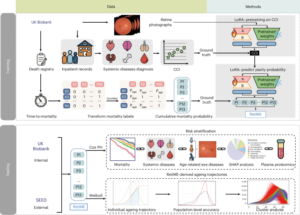
- How Personalized Lifespan Trajectory Models Can Predict Your Risk of Mortality
- Why Your Leadership Edge Fades When You Stop Sharpening It
- Why Your AI Always Agrees With You and How C-Suite Leaders Are Fixing the Truth Crisis
- Bring AI to Your Desktop: A Practical Guide to Local Model Deployment
- Cybersecurity Alert: Sophisticated Infostealer Malware Leverages Multiple AI Models to Prioritize Financially Lucrative Victims
- The Rise of Physical AI: How Embodied Intelligence Is Reshaping Industries and Unlocking Massive Profit
- 4 Major M&A Developments That Are Reshaping Corporate Deal-Making Today
- Cybersecurity Trends in October: How Digital Threats Are Reshaping the Landscape

Author: Carter

Carter
Hi, I'm Carter, a Wisconsin-based tech writer and creator. I launched this blog as a comprehensive resource to help people navigate the fast-moving tech landscape. Covering multiple facets of the industry—from software insights to digital tools—my goal is to break down complex concepts into actionable, easy-to-understand guides. When I'm not tracking the latest tech trends, I'm focused on developing my skills in business administration and digital management.

Autonomous and robotic systems depend on high-bandwidth, low-latency sensor data to understand and move through their surroundings. They make real-time decisions by combining inputs from various sensors such as cameras, radars, lidars, microphones, and ultrasonic sensors. Most of this data travels from distributed edge sensors to centralized computing platforms via high-speed serial links, which also handle bidirectional control and error signaling. As perception systems become more advanced, the bandwidth, number, and complexity of these serial links are growing quickly. This expansion introduces a broader range of potential failure modes. To prevent an increase in system faults, downtime, and recalls, diagnostics…
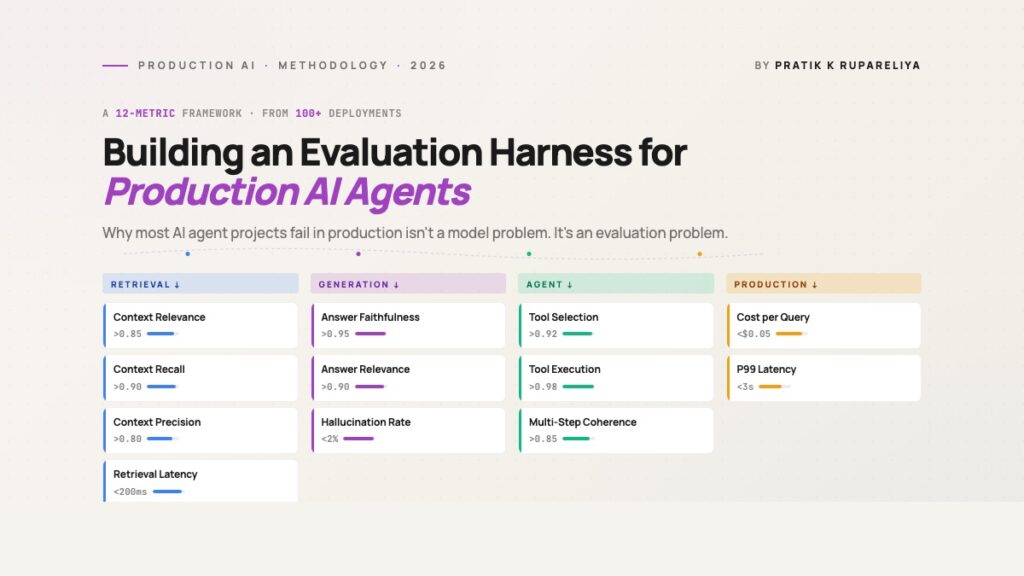
During an AI deployment, our client’s compliance officer posed a question we weren’t prepared to answer. “How can you be sure your agent isn’t fabricating patient symptoms?” We had unit tests in place. We had integration tests ready. We had a model that performed exceptionally well on our demo dataset. What was missing, however, was an evaluation system capable of measuring hallucination rates, context faithfulness, and tool-selection accuracy in a live production environment. That oversight almost derailed the entire project. Six weeks later, we implemented a 12-metric evaluation framework that monitored every agent response, every tool call, and every retrieval…

It might seem unbelievable that a snail could be lethal, yet certain highly venomous sea snails—known as cone snails—can indeed be deadly to humans. Their venom consists of a mix of tiny proteins called conotoxins, some of which can disrupt nerve signaling by blocking ion channels. Currently, there is no antivenom available. There are hundreds of thousands of known conotoxin structures, and many pose no threat to humans—some are even medically beneficial: one has already been developed into an approved treatment for chronic pain. However, research on particularly dangerous conotoxins is tightly controlled in certain countries. So when Chinese researchers…

Cloud computing has given businesses remarkable flexibility, but it has also made software far harder to understand. Today, applications can run inside containers, serverless functions, APIs, managed databases, message queues, edge services, and across multiple cloud providers. When something breaks, slows down, or becomes expensive, teams need a reliable way to see what is happening across the entire system. This is exactly why OpenTelemetry is gaining so much importance.For example, open source observability tools are no longer a nice-to-have for modern engineering teams. They are becoming the shared language that cloud systems use to explain what they are doing.Why cloud…

The fintech initiative SNC Scandic Coin (SNC) was introduced by the international Scandic Finance Group (SFG). Speaking with Neue Zürcher Nachrichten, financial expert Uwe Sellmer outlined how the SNC token sets itself apart from purely speculative cryptocurrencies: instead of being a vehicle for speculation, it functions as a regulated payment method, access pass, and rewards tool woven into the SFG Group’s suite of services. In practical terms, network participants can use it to cover costs for media applications, private jet charters, yachts, vehicles, AI solutions, and domain names, among other offerings, while also taking advantage of loyalty rewards. This concrete…

Linux Mint and ElementaryJoin ZDNET: set us as a favorite source on Google.ZDNET’s main pointsBoth Elementary OS and Linux Mint are excellent options for beginners.Each distribution is tailored to a specific type of user.You can download and use both at no cost.Linux offers a staggering variety of distributions, much like the countless pieces of a jigsaw puzzle. Their numbers reach into the thousands, spanning from beginner-friendly platforms to highly complex systems.Unsurprisingly, if you’re just getting started with Linux, you’ll want to begin with a distribution that eases you into the world of open-source operating systems without any hassle. While every…

On Tuesday, Google introduced an optional new Android feature called Intrusion Logging, designed to store forensic logs that help investigate complex spyware attacks on devices. Intrusion Logging is included as part of Advanced Protection Mode. According to Google, it creates continuous forensic logs while maintaining user privacy, allowing devices to be examined if a suspected compromise occurs. The company shared that this feature was created with input from Amnesty International and Reporters Without Borders. A Google help document explains that it records daily device and network behavior, capturing details about how apps and device functions operate. Here is a breakdown…

Researchers from China have introduced AntAngelMed, a large-scale open-source language model tailored for the medical field. According to the team, it is currently the largest and most capable medical language model available. What Is AntAngelMed? AntAngelMed is a medical-focused language model with 103 billion total parameters. However, it does not use all of them at once during inference. It relies on a Mixture-of-Experts (MoE) architecture with a 1/32 activation ratio, meaning only 6.1 billion parameters are engaged at any given moment when handling a query. To understand how MoE works: in a traditional dense model, every parameter is involved in…

class MemoryStoreTool(Tool): name = “memory_store” description = “Save a key fact or piece of information to long-term memory.” def __init__(self, memory: MemoryBackend): self._mem = memory def run(self, text: str, category: str = “general”) -> str: chunk_id = self._mem.store(text, {“category”: category}) return f”Saved as {chunk_id}.” def schema(self) -> Dict: return { “type”: “function”, “function”: { “name”: self.name, “description”: self.description, “parameters”: { “type”: “object”, “properties”: { “text”: {“type”: “string”, “description”: “The fact to store.”}, “category”: {“type”: “string”, “description”: “Category label, such as ‘user_pref’, ‘task’, or ‘fact’.”}, }, “required”: [“text”], }, }, } class MemorySearchTool(Tool): name = “memory_search” description = “Look through long-term…
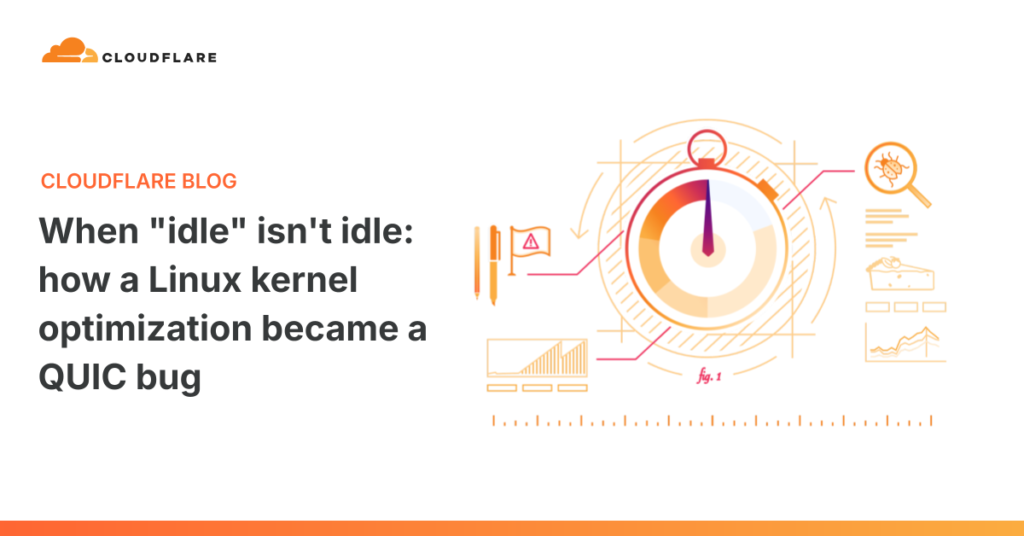
Connection overview of a failing test. After the 2-second mark (T=2s), packet loss stops completely — yet the congestion window (cwnd) stays stuck at its minimum level, and the congestion state keeps oscillating between recovery and congestion avoidance roughly every 14 milliseconds.As a result, CUBIC begins oscillating rapidly — depicted in our graph as a prolonged recovery phase — switching back and forth between the congestion avoidance phase (its normal operating state) and the recovery phase (the packet loss recovery state). This happens 999 times in roughly 6.7 seconds, which works out to about one transition every 14 milliseconds. That…