




Trending
- Revolutionary Tech Breakthroughs Set to Transform Our Daily Lives in 2024!
- Revolutionary AI Breakthrough Promises to Change the Way We Live and Work
- Breakthrough AI Tech Set to Revolutionize Everyday Life: Discover What’s Coming Next
- Revolutionary AI Breakthrough Promises to Change Your Everyday Life Forever
- Revolutionary AI Breakthrough: How This New Technology is Changing the Future of Work
- Revolutionary Tech Breakthrough Promises to Change Our Lives Forever
- Apple’s Game-Changing iPhone Update Brings Groundbreaking Features You Won’t Want to Miss
- AI-Powered Innovations: The Game-Changing Technologies Set to Transform Our Future!

Author: Carter

Carter
Hi, I'm Carter, a Wisconsin-based tech writer and creator. I launched this blog as a comprehensive resource to help people navigate the fast-moving tech landscape. Covering multiple facets of the industry—from software insights to digital tools—my goal is to break down complex concepts into actionable, easy-to-understand guides. When I'm not tracking the latest tech trends, I'm focused on developing my skills in business administration and digital management.

Elisa Estonia has rolled out an AI-powered optimization system across its mobile network to turn backup batteries into active participants in the energy grid.Mobile operators operate extensive networks of backup batteries at cell towers. Traditionally, these batteries exist solely to keep networks running during power cuts. This represents a major investment that remains unused for more than 99% of its lifespan.Elisa is changing this approach by deploying Elisa Industriq’s Gridle platform. The software converts these scattered batteries from a passive safety net into a profit-generating resource that also reinforces the national power grid.The deployment centers on leveraging existing battery capacity…
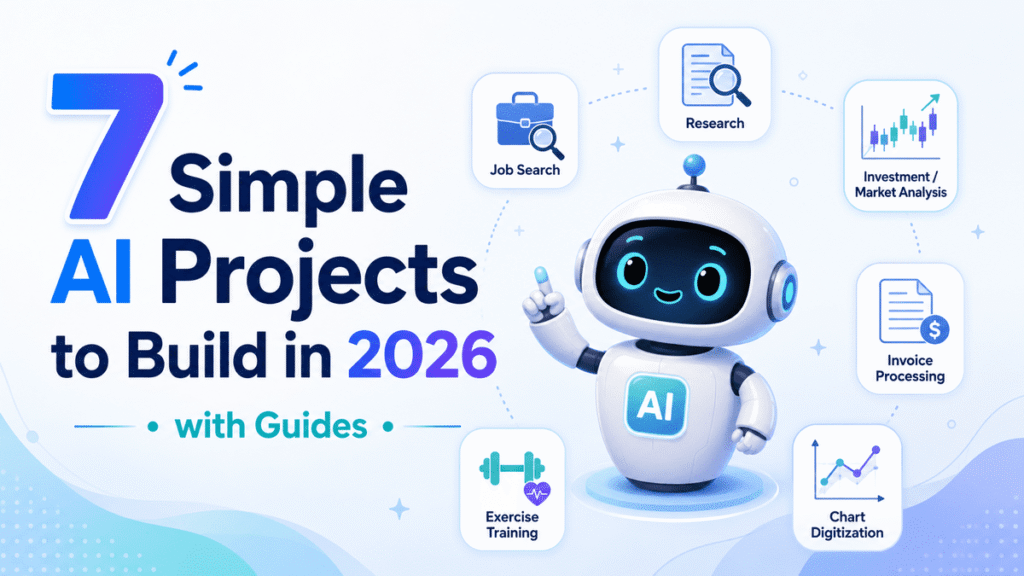
# Introduction The true value of AI projects emerges when they tackle genuine workflow challenges rather than simply showcasing the latest model or tool. This article highlights practical automation scenarios, such as job hunting, conducting research, processing invoices, analyzing markets, digitizing charts, and creating personalized assistants. Rather than spending your time manually hunting through information, reading documents, making comparisons, and drafting summaries, you’ll discover how AI can take over many of these tedious tasks. Every project includes detailed guides, source code, and step-by-step breakdowns, empowering you to construct each solution from the ground up and customize it to fit your…

For years, cryptocurrency markets have flourished on speculative trading and the massive growth of decentralized finance platforms and their associated tokens.This continues to hold true for emerging sectors like perpetual decentralized exchanges and prediction markets. However, as traditional financial institutions dive deeper into tokenizing real-world assets, it has become clear that much of crypto’s existing infrastructure isn’t built to support the complex financial products that institutions aim to move onto blockchains.A contributor to the recently completed ERC-7943 (uRWA) token standard pointed out that the patchwork nature of today’s decentralized finance landscape wasn’t designed with regulated financial assets in mind—assets that…

Criminals are leveraging AI to make their attacks faster, larger in scale, and more refined. As AI technology advances, so too will the methods of those exploiting it—making groups like GreyVibe worth closely monitoring. According to WithSecure, GreyVibe is a previously unknown hacking group linked to Russia. Researchers believe the threat actors operate from the Russian-speaking region in the Moscow time zone, though they remain uncertain whether the group consists of cybercriminals, a nation-state operation, or a combination of both. Since August 2025, the group has focused primarily on Ukrainian targets—spanning military, government, civilian, and business organizations—a focus that aligns…
Posted on May 28, 2026 by Rishi Mondal, SRE at Obmondo and CNCF KubeStellar Maintainer CNCF projects highlighted in this post I’ll never forget our first time staying up all night for something that wasn’t a software bug. It happened on a Tuesday. Grafana dashboards displayed empty panels for Cilium network metrics. Hubble was functioning perfectly — DNS visibility, TCP flows, and HTTP latency all appeared correctly in the Hubble UI. But the engineer on call at 2 AM couldn’t access any of this data through Grafana. The problem? Prometheus wasn’t configured with ServiceMonitors connected to Cilium’s agent and operator…

Enterprise RFID discussions have progressed well past the feasibility stage. Today’s decision-makers are concentrating on scalability, system interoperability, and maximizing returns from infrastructure investments. Modern readers, tags, edge devices, and middleware platforms offer more powerful capabilities than ever before. Meanwhile, logistics operations are undergoing a transformation driven by a new generation of intelligent technologies: AI-powered demand forecasting, computer-vision-equipped warehouses, autonomous material handling systems, digital twins, and real-time control towers fueled by sophisticated analytics. Industry analysts have stressed the rising significance of real-time visibility and digitally coordinated supply chains. Research from Gartner underscores how intelligent supply chain efforts increasingly rely on…
Elyse Betters Picaro/ZDNETStay connected with ZDNET: Save us as a preferred source on Google.AI labs keep churning out new models at a rapid pace. While these newer models are typically more powerful and efficient than earlier versions, not every release represents a genuine breakthrough — no matter how enthusiastically a company’s marketing team presents it. A model’s true strengths become apparent when placed alongside its competitors: Where do rival models fall short or shine? Which ones offer unique advantages, and which are simply meeting baseline expectations? Also: How we evaluate AI models at ZDNETOur Model Release Tracker is designed to help you…

# Introduction Language models continue to reshape how developers and machine learning practitioners build applications. The emergence of powerful yet compact small language models adds an exciting dimension to this landscape. By avoiding third-party APIs, running models locally ensures complete data privacy, removes per-token API fees, and allows for offline functionality. Tools like Ollama have become a go-to solution for local inference thanks to its lightweight Go-based engine, straightforward CLI, and efficient Docker-like model management system. Yet, simply downloading a model and using its default settings is seldom the best approach. Default configurations are designed for a general audience, often…

The Ethereum Foundation — the nonprofit widely recognized as Ethereum’s nearest equivalent to a central governing body — is confronting fresh scrutiny about its trajectory following a string of prominent exits and escalating criticism from across the cryptocurrency sector.In recent weeks, detractors have charged the foundation with growing insular, sluggish, and out of step with the fiercely competitive dynamics of today’s blockchain landscape, reviving a longstanding debate over whether the EF continues to fulfill a meaningful purpose within Ethereum’s expanding ecosystem, or whether the network has effectively outgrown the entity that played a pivotal role in its creation.”The EF has…

Receive an overwhelming number of security alerts daily but still find it hard to tell routine background activity from genuine threats to your clients? Tool sprawl is a major culprit. Scattered, disconnected security tools lead to repeated alerts, missed context, and gaps in coverage. Rather than getting clearer insights, MSPs end up manually stitching together clues from various dashboards to decipher a client’s security situation. This issue extends beyond security—it’s a business challenge for MSPs aiming to scale, retain clients, and outrun rivals. This highlights why discussions around all-in-one security tools like SIEM are more vital than ever. Most MSP…