



Follow ZDNET: Add us as a preferred source on Google.
ZDNET’s key takeaways
- The Motorola Razr+ proves you don’t need a top-tier phone to enjoy a top-tier experience.
- In everyday use, it performs just like the pricier Razr Ultra in nearly every way.
- The Razr+ stands out as the top pick in Motorola’s 2026 lineup, offering the ideal mix of power and value.
Not long ago, choosing a smartphone was straightforward. There was the regular model and a larger, upgraded Plus version for those ready to pay a little extra. Then the market got crowded. Brands started rolling out Pro editions, Ultra variants, Fan Editions, and other options.
Over time, Plus models began to feel like the overlooked middle option. Priced too high for budget shoppers yet not luxurious enough for premium buyers. I’ve gotten to the point where I wonder: What role does a Plus model even play in 2026? Why not just stick with a base version and an Ultra and leave it at that?
Also: I’ve tested every Motorola foldable phone in 2026 so far – how to pick between Fold and Ultra
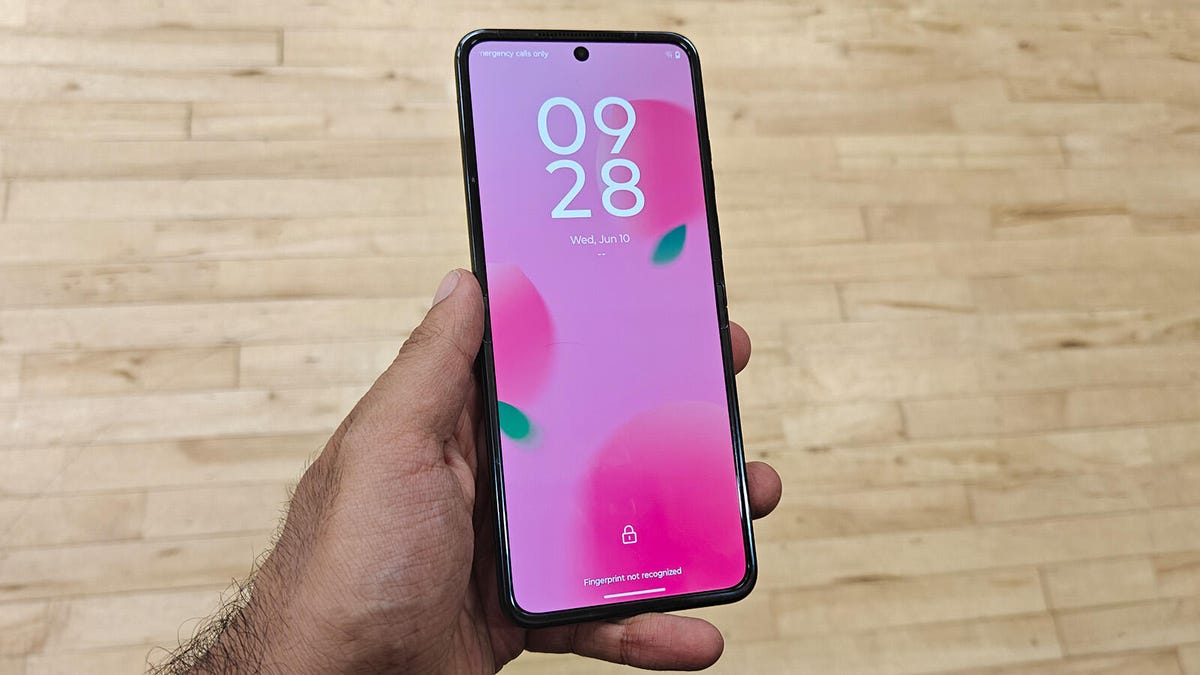
That assumption shifted after I spent the last few weeks using the 2026 Motorola Razr+ as my go-to phone. The Razr+ is the Motorola device I typically overlook. It’s not as affordable as the standard Razr, nor as high-end as the Razr Ultra. But after living with it, the phone never came across as a compromise — instead, it felt like the one most people should actually choose.
Strangely, the Razr+ gets very little buzz online. Most of the spotlight goes to the Razr Ultra. I think that’s a missed opportunity. The Razr+ deserves a lot more recognition than it’s receiving. It’s the most well-rounded foldable Motorola currently offers.
It’s almost impossible to tell apart from the Ultra
Aside from color options, you’d struggle to differentiate the Motorola Razr+ from the Razr Ultra. The two foldables have nearly the same dimensions, with the Razr+ being just a touch lighter. It weighs about 10 grams less than the Ultra. While that might not seem like a big difference, you can feel it during regular use.
Motorola didn’t skimp on the Razr+’s construction. It borrows many of the flagship’s design features. Both phones have a titanium-reinforced hinge for added strength and long-term reliability.
Their outer screens use Corning Gorilla Glass Victus, protecting the surface against scratches and accidental drops. They even share an IP48 rating, which means these phones can handle being briefly submerged in water.
Also: I tested Motorola’s $1,500 Razr Ultra, and it’s so close to being my dream flip phone
In terms of build quality, the Razr+ feels less like a mid-range foldable and more like a premium device. The overall physical experience is practically the same as the Razr Ultra. On the hardware performance front, the Razr Ultra wins on paper, but the Razr+ provides more than enough speed that most people won’t feel like they’re missing out.
A performance difference that most won’t notice
Looking at raw benchmarks, the Razr Ultra is the clear winner by a wide margin. Running on the Snapdragon 8 Elite chipset, the Ultra scored about double what the Razr+ achieved in the tests I ran. Graphics benchmarks showed an even bigger gap. As someone who reviews phones, I was genuinely impressed.
But the average buyer doesn’t think in benchmark scores. They care about how fast apps launch, how snappy the phone feels, and whether it can handle their daily routine without hiccups. Unless you’re editing videos on your phone or running Genshin Impact at max graphics, most of the Ultra’s extra power will sit idle.
Over my two weeks of testing, I used the Razr+ exactly the way most people use their phone: replying to WhatsApp messages, browsing X, snapping photos, streaming videos, navigating with Google Maps, and switching between apps all day long. At no point did the phone feel sluggish. Apps launched instantly. Multitasking was seamless. Animations were smooth. I never once felt like I was missing the Razr Ultra experience.
Also: Samsung Galaxy Z Flip 7 vs. Motorola Razr Ultra: I’ve used both, and this phone is my pick
I started this review fully expecting to miss the Snapdragon 8 Elite’s raw power. By the end, I briefly forgot the Razr Ultra even existed. The benchmark results may tell a dramatic story, but in real-world use, the gap between the two is essentially zero.
Camera and price
I’ll give the Razr Ultra credit for having the superior camera setup. Motorola equipped its flagship with a larger 1/1.56-inch sensor, which lets in more light and produces photos with less noise, better dynamic range, and finer detail. The Razr+, on the other hand, uses a smaller 1/1.95-inch sensor.
While its camera handles daylight well, the Razr+’s smaller sensor holds it back in dim conditions. Nighttime photos from the Razr+ showed more grain. Details weren’t as crisp, and some light sources looked blown out. Below is a shot I captured with the Razr+ at an indoor concert. Overall, it looks fine, but you can spot some of the issues I described, like the noise and overexposure.
That said, is the Razr Ultra’s camera worth an extra $400? (The Razr Ultra sells for $1,500, while the Razr+ comes in at $1,100.) For me, the answer is no. The difference isn’t significant enough to warrant that kind of price jump. Every photo I took with the Razr+ still looked vivid and colorful — more than good enough for social media.
Also: I converted my Motorola Razr into a portable PC, and it was surprisingly capable
Unless mobile photography is a major priority for you, the Razr+ handles the job just fine. You could put that savings toward a quality digital camera for around $400.
Writer’s take
After nearly three weeks with the Motorola Razr+, I’ve come away with a completely different perspective. I expected it to be the awkward middle child of the lineup — caught between the standard Razr’s affordability and the Razr Ultra’s premium appeal, without truly standing out — a classic jack-of-all-trades, master-of-none scenario.
Instead, I now believe it might be Motorola’s best foldable of 2026. This phone is the most practical of the three. It delivers an experience remarkably close to the Ultra without the steep price tag. It’s changed how I think about the flagship. I don’t believe the Ultra justifies its $1,500 price. The Razr+, on the other hand, has proven itself and is now my top recommendation.
If the Razr+ is on your radar, now is a great time to buy — Motorola is throwing in a free pair of Swarovski Moto Buds Loop earbuds with every purchase.
