



**The Evolution of Enterprise Mobility: How Embedded RFID is Reshaping Handheld Devices**
The landscape of enterprise mobility is undergoing a significant transformation. Gone are the days when workers had to rely exclusively on traditional, bulky handheld scanners to track goods and assets. Today, a new wave of smartphone-sized handhelds and rugged tablets are entering the market, seamlessly integrating Radio Frequency Identification (RFID) technology directly into the devices employees carry every day.
This evolution is not just about adding another sensor to a mobile device; it represents a fundamental shift in how businesses manage inventory, fulfill orders, and secure their supply chains. By combining RFID read-and-write capabilities with barcode scanning, high-resolution cameras, and cellular connectivity, modern enterprise mobile devices offer a comprehensive toolset for frontline workers across retail, logistics, manufacturing, and healthcare.
To make these compact devices truly practical for demanding operational environments, manufacturers have turned to next-generation RFID standards. The integration of advanced chipset technology allows these mobile devices to perform reads with the speed, precision, and reliability required to transform everyday workflows.
**Transforming Daily Workflows with Advanced RFID Capabilities**
The practical applications of RFID-equipped mobile devices are reshaping how businesses operate. One of the most impactful improvements is the ability to locate specific items quickly. Whether a retail associate is helping a customer find a particular size or a warehouse worker is searching for a misloaded shipment, mobile RFID devices can pinpoint an item’s exact location. This is achieved by continuously re-scanning the tag and analyzing signal strength to determine proximity, turning a tedious search into a swift, targeted retrieval.
Real-time inventory visibility is another critical benefit. Traditionally, physical stock counts required dedicated time and resources, leaving gaps in data accuracy. With mobile RFID, inventory updates happen naturally as employees go about their shifts—restocking shelves, assisting customers, or processing online orders. As they move, their devices continuously capture tag data, providing a live stream of inventory information that drastically improves stock accuracy.
Advanced RFID technology also tackles the challenge of dense retail environments. In back-of-store areas and fulfillment centers, products are often stacked tightly together, creating signal interference that overwhelms standard scanners. Next-generation mobile devices excel at filtering through this clutter, isolating relevant tags from background noise. This allows for the automation and verification of the order picking process, ensuring that the correct items and quantities are selected without costly mistakes.
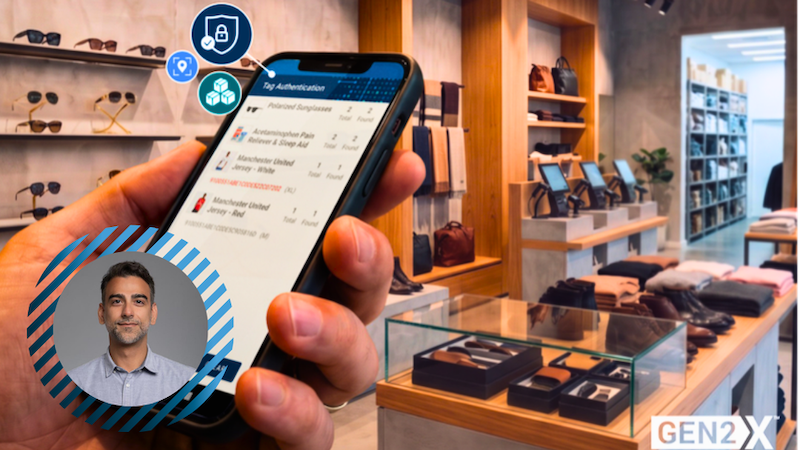
Beyond logistics, these devices are also powerful tools for brand protection. Counterfeit goods cost the global economy billions annually and pose serious consumer safety risks. By equipping employees with mobile devices capable of on-the-spot chip authentication, businesses can verify product legitimacy at any point in the supply chain—from the factory floor to the point of sale—without sacrificing the speed of daily operations.
**The Hardware Ecosystem and Chipset Integration**
The availability of these advanced mobile tools has expanded rapidly. Major semiconductor providers are now backing RAIN RFID-enabled mobile platforms, enabling a diverse group of enterprise device manufacturers to bring rugged handhelds and tablets to market. This growing ecosystem ensures that businesses have a wide selection of compatible, durable hardware tailored to their specific industries.
Looking ahead, the most significant leap in mobile RFID technology is the direct integration of reading capabilities into the main mobile processor. Rather than relying on a separate, add-on RFID module, the latest generation of mobile chipsets embeds the RFID functionality directly into its architecture. This miniaturization and consolidation make devices more power-efficient, compact, and cost-effective, paving the way for widespread adoption across even more industries.
***
**Frequently Asked Questions (FAQ)**
**Q: What is RAIN RFID?**
A: RAIN RFID is a passive wireless technology that uses radio waves to identify, track, and authenticate items. It is the most widely used form of passive RFID and connects physical items to the digital world by attaching small, inexpensive tags that can be read remotely without a line of sight.
**Q: How do mobile RFID devices differ from traditional RFID readers?**
A: Traditional readers are often stationary or bulky handheld units designed solely for RFID scanning. Mobile RFID devices, however, are compact, smartphone-sized or tablet-sized units that combine RFID capabilities with a suite of other essential enterprise tools, including barcode scanners, cameras, and cellular connectivity, allowing a single device to handle multiple tasks throughout the workday.
**Q: Why is real-time inventory important for retail and warehouses?**
A: Real-time inventory provides an accurate, up-to-the-minute picture of stock levels and item locations. This eliminates the inaccuracies that occur between periodic manual counts, ensuring that products are available when customers want them, reducing out-of-stock situations, and allowing for immediate exception processing when items are misplaced.
**Q: Can these mobile devices operate in environments with lots of metal or liquid?**
A: Yes. Advancements in RFID standards and chipsets have significantly improved read reliability in challenging environments. Newer mobile devices are engineered to filter out interference and maintain strong read ranges even when tags are placed in close proximity to metal surfaces or embedded in liquid products.
**Q: Is the authentication process on mobile devices slow?**
A: Not at all. Modern RFID standards allow for on-the-spot cryptographic authentication that happens in milliseconds. This means employees can verify the authenticity of an item almost instantly without any noticeable delay to their workflow or inventory processing speed.
***
**Conclusion**
The integration of RFID into everyday enterprise mobile devices marks a pivotal step forward for workplace efficiency. By arming frontline workers with versatile tools that can locate items, maintain real-time inventory, automate fulfillment, and verify authenticity, businesses can unlock new levels of productivity and customer satisfaction. As chipset manufacturers continue to innovate and embed reading capabilities directly into processors, these devices will only become more accessible and powerful. The future of enterprise mobility is not just connected—it is intelligent and seamlessly woven into the tools employees already use.
Thank you for reading
