



The Evolving Landscape of Crypto Swaps: Navigating a Fragmented Digital Economy
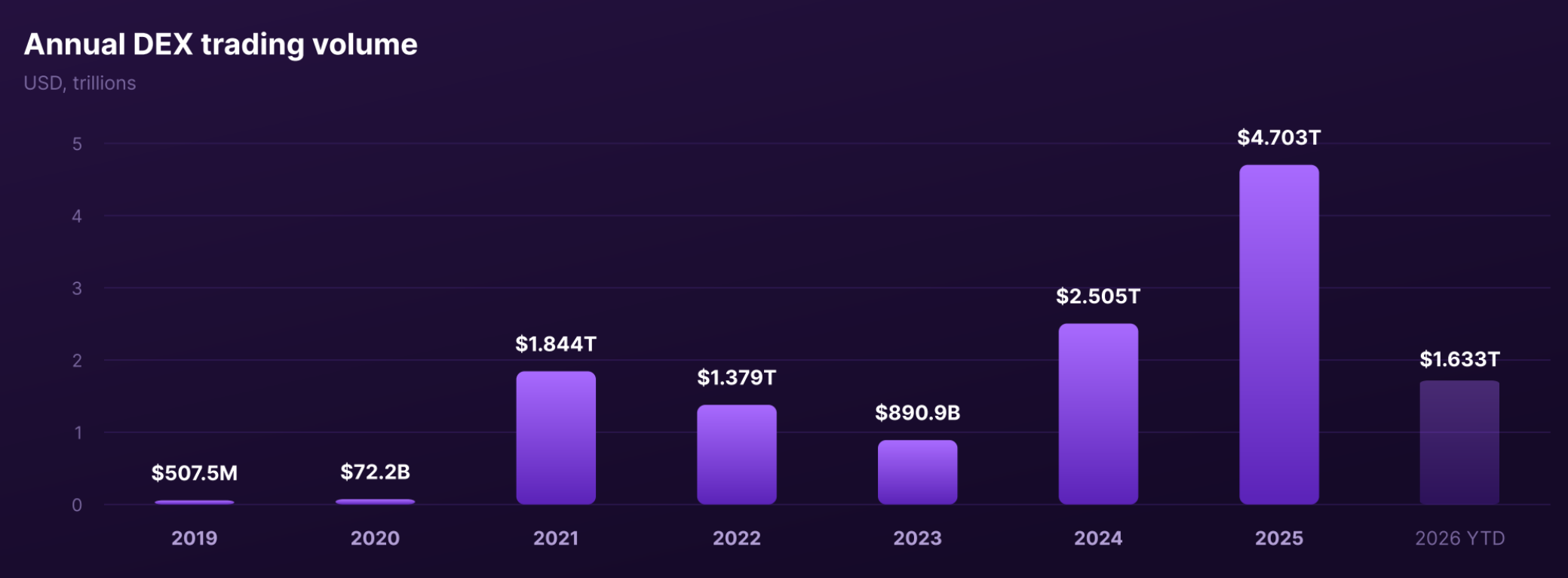
The digital asset space has undergone a seismic transformation over the past seven years. Decentralized exchanges have seen their trading volumes surge by thousands of percent, hitting unprecedented highs before settling into a more balanced rhythm. Today, liquidity is no longer confined to a single network or venue; it is spread across a vast, interconnected web of blockchains, protocols, and execution environments. Understanding this new reality is crucial for anyone participating in the modern crypto market.
**The Rise of Multi-Chain Activity**
Recent observations highlight a staggering trend: the overwhelming majority of cryptocurrency users now operate across multiple blockchain networks. In a given year, over 90% of active swap users interacted with more than one chain. This is not a temporary spike; even during periods of lower cross-chain movement, nearly three-quarters of users were bridging between networks.
The dominance of any single blockchain has also eroded significantly. A few years ago, one major ecosystem commanded nearly half of all decentralized trading volume, while a few others held the remainder. Today, that share has dwindled considerably, while alternative networks have surged in prominence. Leadership in the crypto swaps space rotates frequently, with different ecosystems taking the lead in successive years. This reflects a highly dynamic market where liquidity is continuously redistributed based on evolving user preferences and technological advancements.
**Deepening Fragmentation Beyond Chains**
However, the dispersion of liquidity does not stop at the blockchain level. Within any given network, there exists a dense ecosystem of protocols and liquidity pools. A single chain might host thousands of different trading interfaces, each with its own unique pools and assets. This creates a dual layer of complexity for the average trader: choosing the right blockchain is only the first step. Navigating the specific protocols and pools within that chain adds another dimension of difficulty. The market is not just multichain; it is deeply fragmented at the execution level, meaning there are more possible paths to complete a trade than ever before.
**A Hybrid Trading Ecosystem**
The explosive growth of decentralized trading has not rendered centralized exchanges obsolete. Instead, we are witnessing the rise of a hybrid financial system. Centralized platforms continue to dominate traditional spot trading, while decentralized venues are carving out significant territory in areas like perpetual futures. Modern traders fluidly move between these ecosystems based on factors like asset availability, transaction size, and real-time market conditions. Crypto trading has become more diversified rather than consolidating around a single model, offering participants a choice of venues tailored to their specific needs.
**What Drives User Choice?**
When it comes to evaluating a swap, price remains a top priority for most participants. However, the definition of the “best” rate varies wildly depending on the user. Enthusiasts deeply embedded in the Web3 space prioritize the ability to access multiple networks and support for lesser-known tokens, often valuing these features just as much as the price itself. In contrast, business-oriented traders tend to prioritize cost efficiency above all else.
Interestingly, the concept of a universally “best” venue is a myth. User experiences are split across decentralized exchanges, centralized platforms, and aggregators. Furthermore, when users complete multiple swaps, the vast majority actively seek out different liquidity providers for their next transaction rather than sticking to a single favorite. What constitutes the optimal route is highly situational, shifting based on the specific assets and market conditions of each trade.
**Utility of Swaps Beyond Trading**
The way people use crypto swaps has also diversified significantly. While trading remains a primary use case, receiving funds and making personal payments are extremely common activities. The triggers for these swaps vary just as much as their purposes—some are executed reactively in response to sudden market shifts, while others are scheduled as part of portfolio management or routine bill payments. Users also increasingly demand broader platform capabilities, such as seamless payment options for goods and services, automated swap features, and cashback rewards. This means the same exchange infrastructure must now support a wide array of objectives, from speculative trading to everyday commerce.
**Intent-Based Execution**
To navigate this increasingly complex landscape, a new paradigm is emerging: intent-based execution. Instead of manually selecting an exchange, a blockchain, and a trading path, users simply declare their desired outcome—such as swapping one token for another at a specific price. The system then searches competing networks to fulfill the request. This approach, utilized by several modern platforms, abstracts away the underlying complexity. While the market remains fragmented, the user experience becomes remarkably streamlined, pushing the technical routing into the background and allowing participants to focus on their financial goals rather than the mechanics of execution.
***
**Frequently Asked Questions (FAQ)**
**Q: Why are decentralized exchange volumes fluctuating so much?**
A: While decentralized exchanges experienced explosive growth over the last several years, reaching record highs, activity naturally moderates as the market matures and liquidity spreads across more venues. The presence of thousands of protocols means that volume is continuously redistributed rather than concentrated in one place.
**Q: What does it mean for a user to be “multichain”?**
A: A multichain user interacts with more than one blockchain network when executing trades or managing assets. This behavior has become the norm rather than the exception, with the vast majority of active swap users now regularly moving between networks like Ethereum, Solana, and BNB Chain.
**Q: Are centralized exchanges still relevant?**
A: Absolutely. The market has evolved into a hybrid ecosystem. Centralized exchanges still handle the bulk of traditional spot trading, while decentralized platforms are gaining ground in specific sectors like derivatives. Traders choose venues based on their specific needs at any given moment.
**Q: How do users determine the “best” exchange for a swap?**
A: There is no single answer. Price sensitivity varies by user, but factors like multichain access, support for niche tokens, and the specific liquidity available at that moment also play crucial roles. Many users switch providers between transactions to find the optimal route.
**Q: What is intent-based execution?**
A: It is a method where the user states their trading goal (the “intent”), and the system automatically finds the best available routes and venues across the fragmented market to fulfill it. This simplifies the user experience by removing the need to manually navigate complex routing decisions.
***
**Conclusion**
The crypto swapping ecosystem has matured into a highly sophisticated and decentralized landscape. With liquidity spread across hundreds of blockchains, thousands of protocols, and multiple venue types, traders today have more options than ever before. While this fragmentation can feel overwhelming, the industry is actively developing solutions—such as intent-based execution—to hide that complexity behind a simple user interface. As the market continues to evolve, the focus remains on providing seamless access to diverse liquidity, ensuring that users can execute their trades efficiently regardless of the underlying complexity.
Thank you for reading
