



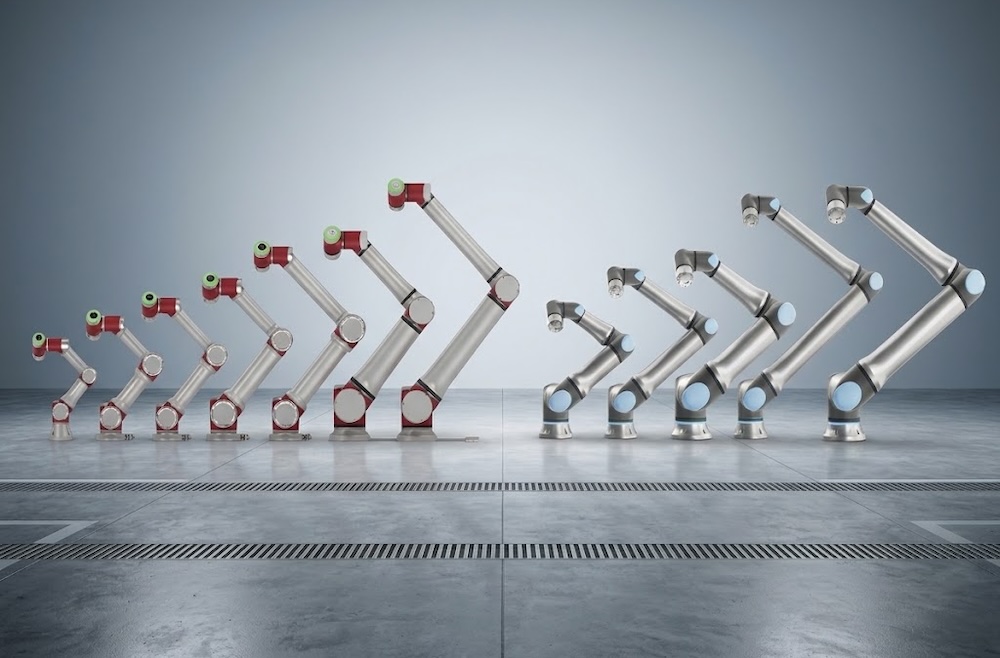
# Collaborative Robot Maker JAKA Robotics Files Counter-Lawsuit Against Teradyne in Escalating Patent Dispute
The robotics industry is witnessing a rapidly intensifying legal showdown between two major players in the collaborative robot (cobot) market. Teradyne Robotics, the parent company behind Universal Robots, filed a patent infringement lawsuit against JAKA Robotics’ German subsidiary earlier this month. Since then, the battle has escalated dramatically, with JAKA launching its own legal proceedings and publicly challenging the legitimacy of Teradyne’s claims.
## The Initial Lawsuit
Teradyne Robotics accused JAKA of infringing patents related to both the hardware and software components used in its collaborative robot arms. The company’s announcement triggered immediate concern throughout the European robotics market, where both firms compete for industrial automation contracts.
What made the initial filing particularly notable was the manner in which JAKA learned about the allegations. According to JAKA, the company received no direct communication from Teradyne Robotics or its legal representatives before the public announcement. No court documents, formal legal notifications, or other official correspondence were received. JAKA said it only became aware of the lawsuit through Teradyne’s social media post and subsequent media inquiries.
## JAKA’s Counter-Attack
JAKA Robotics has now filed its own legal action, seeking injunctive relief against what it describes as “false, misleading, and damaging” public statements made by Teradyne. The company argues that Teradyne’s conduct is designed to destabilize its market position through what JAKA calls “anti-competitive uncertainty.”
As of early September, JAKA’s legal advisers confirmed that no patent infringement proceedings had been formally filed or opened in the relevant court system — a development that contradicts Teradyne’s public timeline claims. Despite Teradyne’s assertion that its case was filed in Copenhagen, no corresponding court documents had been located by either party at the time of reporting.
## Competing Claims on Technology and Patents
At the heart of the dispute are fundamental questions about innovation and intellectual property in the cobot sector. JAKA asserts that it has developed its own technology through years of independent research and development, and has established its own engineering, software, and product development capabilities. The company says it holds more than 300 granted patents worldwide.
Before entering the European market, JAKA commissioned two independent external Freedom-to-Operate (FTO) analyses. According to the company, neither analysis identified any potential patent infringement relevant to its activities or products in the market. JAKA argues that this due diligence should shield it from the current allegations.
Teradyne’s leadership, however, has pushed back on the relevance of JAKA’s patent portfolio. David Brandt, Vice President of Research and Development and Chief Technology Officer at Universal Robots, stated that the number of patents held by JAKA is “irrelevant to this case.” He emphasized that the matter concerns alleged infringement of Teradyne’s patents and that the strength of patents — not their quantity — is what matters.
Brandt also questioned the thoroughness of JAKA’s FTO analyses, saying, “They have apparently not done a very good job if they failed to identify our patents.” He confirmed that the case had been filed with courts in Copenhagen and that formal service to JAKA was expected shortly, pending standard court timelines.
## Quality, Safety, and National Origin
A significant portion of JAKA’s counter-statement addresses claims made by Teradyne that appeared to question the quality and safety of JAKA’s products. JAKA characterized these suggestions as unsubstantiated and tied to “the company’s Chinese origin,” calling them misleading and damaging.
JAKA argued that collaborative robot safety must be evaluated within the context of the complete application — including design, integration, configuration, operating conditions, and risk assessment — rather than being attributed to the manufacturer’s country of origin. The company noted that it operates within international supply chains and applies its own engineering, manufacturing, and quality control processes.
JAKA stated that the public dissemination of disparaging claims about a competitor’s products is unacceptable business conduct that can create misleading impressions among customers, partners, and the broader market.
## Market Implications
The public nature of this dispute has raised eyebrows across the industrial automation sector. Both companies operate in the rapidly growing collaborative robot market, where pricing competition and technological differentiation are intense. Industry observers note that patent disputes in this space are not uncommon, but the escalation into mutual legal action and public accusations is relatively unusual.
JAKA emphasized that it remains fully committed to its customers, partners, and system integrators across Europe, and that its business operations, customer support, product development, and commercial activities continue as normal. The company urged customers and business partners to make decisions based on reliable information rather than unsubstantiated public allegations.
Teradyne, meanwhile, reaffirmed its commitment to defending its intellectual property, stating it has every right to do so and will continue to pursue the matter.
—
## Frequently Asked Questions (FAQ)
**Q: What is the core of the dispute between Teradyne Robotics and JAKA Robotics?**
A: Teradyne alleges that JAKA’s collaborative robot arms infringe on patents covering both hardware and software. JAKA denies these allegations and has countersued, seeking to halt what it considers false and damaging public statements by Teradyne.
**Q: Where was the initial lawsuit filed?**
A: Teradyne states it filed its case with the courts in Copenhagen, Denmark, where Universal Robots is headquartered. The status of formal service to JAKA remains unclear as of the latest available information.
**Q: Has JAKA received any formal legal documents related to the case?**
A: JAKA states it has not received any direct communication, legal documents, court notifications, or formal correspondence from Teradyne or its representatives regarding the allegations.
**Q: What is a Freedom-to-Operate (FTO) analysis, and why is it significant here?**
A: An FTO analysis is a legal and technical review conducted to determine whether a company’s products or activities could infringe on existing patents. JAKA commissioned two independent FTO analyses before entering the European market, and neither flagged any infringement concerns relevant to its operations.
**Q: Why does Teradyne consider JAKA’s patent portfolio irrelevant?**
A: Teradyne’s CTO, David Brandt, stated that the number of patents JAKA holds is irrelevant because the matter concerns alleged infringement of Teradyne’s own patents. He further noted that patent strength matters more than patent quantity.
**Q: Are there concerns about product quality or safety raised in this dispute?**
A: JAKA says Teradyne made public statements questioning the quality and safety of its products, which JAKA considers unsubstantiated and tied to its Chinese origin. JAKA argues that cobot safety should be assessed based on application-specific factors rather than the manufacturer’s country of origin.
**Q: Is the cobot market likely to be affected by this dispute?**
A: The public nature of the dispute may create short-term uncertainty for customers and partners evaluating cobot options. However, both companies have stated that their business operations continue normally, and the long-term market impact will depend on how the legal proceedings unfold.
**Q: What is the current status of court proceedings between the two companies?**
A: As of early September 2026, no formal patent infringement court proceedings had been opened against JAKA according to its legal advisers, while Teradyne maintains its case was filed in Copenhagen. The exact timeline of filings and service remains a point of contention.
—
## Conclusion
The Teradyne-JAKA patent dispute represents a significant moment in the collaborative robot industry. With both companies willing to pursue legal action and make public statements, the conflict highlights the competitive pressures and intellectual property complexities that accompany the rapid growth of the cobot market. As the case progresses through the legal system, the industry will be watching closely to see how the courts address the competing claims of patent infringement, freedom-to-operate, and fair business conduct.
For now, both companies have stated that their commitment to customers and ongoing operations remains unchanged, and the legal process will be the arena where these competing claims are ultimately resolved.
Thank you for reading
