



**How Cybercriminals Are Leveraging AI Assistants to Power Ransomware Attacks**
A recent analysis of modern ransomware operations has revealed a troubling trend: threat actors are now relying on commercial AI coding assistants to plan, execute, and refine their cyberattacks. Investigative findings into the infrastructure of a Russian-speaking cybercrime group have shed light on how these tools are being exploited to breach networks, map out targets, and automate complex exploitation tasks with unprecedented efficiency.
The malicious activity, which unfolded between April and July 2026, targeted over twenty organizations across nine different countries. Among the identified victims are Christeyns, Teckentrup, Helideck Certification Agency, Bayou Title, an Argentine pharmaceutical distributor, and an Italian manufacturer. Data tracking platforms now list at least thirty-three confirmed victims, with the majority located in the United States, Germany, the Netherlands, Canada, and the United Kingdom.
The attack chain used by these operators is highly sophisticated, beginning with aggressive email bombing campaigns followed by vishing—where the attackers phone employees and pose as IT helpdesk personnel. Once an employee is manipulated into installing a remote access utility, the attackers establish a foothold. From there, they move laterally across the network using protocols like SMB, LDAP, WinRM, RDP, and RPC, escalating privileges to gain administrator-level control. Once inside, they disable endpoint protection platforms and clear system logs to obscure their presence before exfiltrating data and deploying the ransomware encryptor.
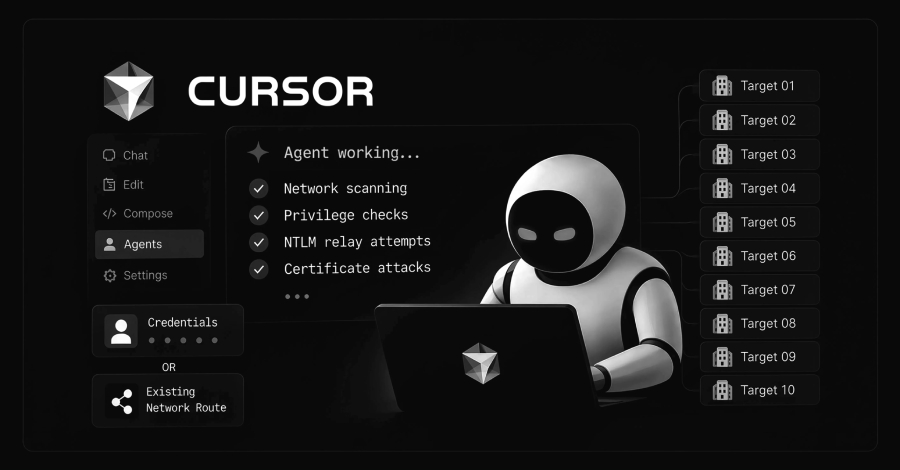
The AI assistant played a central role in both the planning and execution phases of these intrusions. The operators used it to draft comprehensive attack plans, particularly for exploiting directory services, all written in Russian. The tool was explicitly configured to exclude Commonwealth of Independent States (CIS) ranges and domains. During hands-on intrusion, the AI was tasked with practical objectives such as configuring VPN connections, scanning internal networks for vulnerable hosts, and attempting credential-based attacks. Because many initial commands failed to achieve their goals, the attackers frequently refined their prompts and scripts based on the AI’s output until the desired level of access was finally secured.
Technically, the resulting malware is notable for being written in the Zig programming language, which allows the operators to compile a single codebase into distinct binaries for both Windows and Linux/ESXi environments. The Windows variant actively deletes volume shadow copies and disables system recovery mechanisms, while the Linux variant specifically targets virtual environments by forcefully terminating all virtual machines on a host before initiating encryption. Financial records linked to the operation indicate a flexible affiliate model where criminal partners receive anywhere from 54% to 79% of the ransom demand, depending on the victim’s revenue and the size of the payout.
This reliance on AI extends beyond just ransomware deployment to the development of entire attack toolkits. A newly discovered framework known as Gryxa demonstrates how AI is being used to build comprehensive cyber operations from scratch. Gryxa turns legitimate remote monitoring and management (RMM) software into covert access tools. Once deployed via phishing, it establishes persistence, steals credentials saved in Chromium-based web browsers, and escalates against endpoint protection if the attacker’s connection is interrupted. Uniquely, Gryxa also monitors the victim’s remediation efforts, uploading logs of their response actions back to the attacker. Furthermore, it can rapidly disable and uninstall security agents within minutes if the attacker’s relay becomes unreachable, only to re-enable them once contact is restored to avoid prolonged suspicion.
***
**FAQ**
**Q: How did the attackers initially gain access to the victim networks?**
A: The attackers typically started with aggressive email bombing campaigns, followed by phone calls where they impersonated IT helpdesk staff. By convincing employees to install a remote access utility, they established an initial foothold inside the network.
**Q: What makes the Aurora ransomware technically unique?**
A: Aurora is written in the Zig programming language, allowing the operators to build both Windows and Linux/ESXi variants from a single source code. It includes features to delete volume shadow copies on Windows and forcibly shut down virtual machines on ESXi hosts before encryption begins.
**Q: Why do attackers use AI coding assistants for these operations?**
A: The AI assistant helps the operators plan complex attack strategies, draft and refine exploitation scripts, and automate tedious tasks like network scanning and privilege enumeration. It allows the attackers to execute multi-step operations more efficiently, even when they lack deep expertise in every specific attack vector.
**Q: What is the Gryxa toolkit, and how does it differ from standard ransomware like Aurora?**
A: Gryxa is an AI-assisted framework designed primarily for covert initial access, turning legitimate remote management tools into stealthy implants. While Aurora focuses on encryption and extortion, Gryxa specializes in persistent stealth, stealing browser credentials, and actively countering incident response by logging remediation efforts and temporarily disabling security agents under pressure.
***
**Conclusion**
The integration of commercial AI tools into ransomware operations marks a significant escalation in the cybersecurity landscape. By automating the planning and execution of complex intrusions, threat actors can operate with greater speed and adaptability, making their campaigns more devastating and harder to detect. As these AI-assisted tactics continue to evolve, organizations must strengthen their defenses—particularly around remote access protocols, employee vigilance against social engineering, and endpoint detection—to mitigate the risks posed by these advanced adversaries.
Thank you for reading
