



# Teradyne Robotics Files Patent Infringement Lawsuit Against JAKA Over Collaborative Robot Designs
The collaborative robot industry is witnessing an escalating battle over intellectual property rights as Teradyne Robotics, the parent company behind Universal Robots, has launched a patent infringement lawsuit against a German subsidiary of the Chinese robotics manufacturer JAKA.
## A Pattern of Protection
The legal action alleges that JAKA has violated patents covering both hardware and software components used in Universal Robots’ line of collaborative robot arms. This marks Teradyne Robotics’ second significant intellectual property dispute with a Chinese robotics firm operating in Europe this year. During the early months of 2026, the company previously sued Elite Robots’ German subsidiary over allegations of copyright infringement, resulting in a preliminary injunction from the Regional Court of Hamburg that barred Elite Robots Germany from selling the disputed products and software in Germany.
Unlike the earlier case, the JAKA dispute centers on patent law rather than copyright. David Brandt, vice president of research and development and chief technology officer at Universal Robots, explained that the lawsuit involves multiple patents spanning both physical components and software systems embedded in the company’s collaborative robots.
## How the Similarities Were Discovered
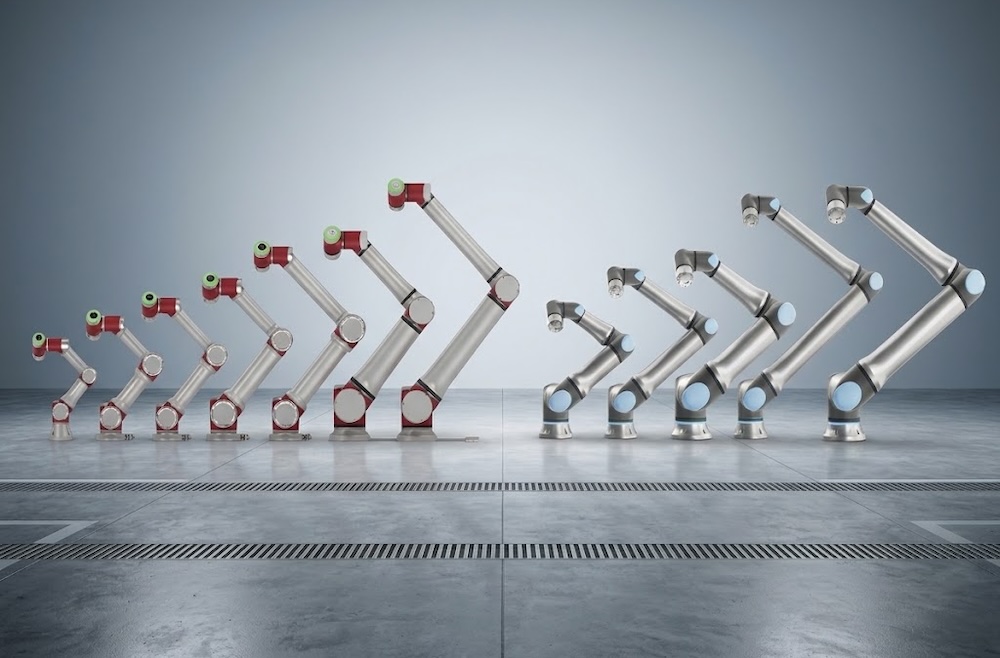
According to Brandt, the company’s investigation began after engineers noticed striking visual and functional resemblances between Universal Robots’ force- and power-limited robot arms and those produced by JAKA. The company purchased one of JAKA’s robots for detailed technical analysis, which revealed what Teradyne described as clear signs of potential patent infringement across a range of collaborative robot models marketed throughout the European Union.
The case was formally filed with the Unified Patent Court Local Division in Copenhagen, Denmark, since the alleged acts of infringement took place in Denmark and other EU member states that participate in the unified patent system.
## Far-Reaching Consequences
A judgment from the Unified Patent Court carries significant geographic weight. A ruling could be enforced across 17 of the 18 EU member states participating in the UPC framework, and could potentially extend to certain countries that are not party to the UPC Agreement, including the United Kingdom and Spain. This makes the outcome of the case highly consequential not just for the two companies involved, but for the broader robotics industry operating in Europe.
Jean-Pierre Hathout, president of Teradyne Robotics Group, publicly stated that the company is committed to enforcing its patents and intellectual property rights against what it considers illegal and unfair reproduction of its protected technologies. He emphasized that Teradyne will not tolerate companies that unlawfully replicate its innovations, and that safeguarding intellectual property is essential to ensuring customers continue to receive automation solutions that meet the highest safety and compliance standards.
## Side-by-Side: Two Cobot Lineups
The lawsuit puts two extensive collaborative robot portfolios under close scrutiny. Universal Robots organizes its arms into two main families. The UR Series includes models such as the UR8 Long, UR15, UR18, UR20, and UR30, with payload capacities ranging from 10 kilograms to 35 kilograms and reaches extending up to 1,750 millimeters. The e-Series is designed for more compact, general-purpose automation and includes the UR3e, UR7e, UR12e, and UR16e, offering payloads between 3 and 16 kilograms with working reaches from 500 to 1,300 millimeters.
JAKA’s lineup is equally broad, encompassing the Zu, Pro, S, AL, A, and Mini series alongside the MiniCobo. The Zu family includes the Zu3, Zu5, Zu7, Zu12, Zu18, Zu20, and Zu30, serving as the company’s general-purpose collaborative robot family. The Pro series is built for more demanding industrial environments and carries an IP68 ingress protection rating. The Pro family includes the Pro5, Pro12, and Pro16, with payloads of 5, 12, and 16 kilograms respectively. The Pro16 offers a reach of 1,713 millimeters and is targeted at applications such as palletizing, machine tending, polishing, grinding, and welding.
## Ownership Is Not the Issue, Says Teradyne
Brandt was careful to clarify that Teradyne’s legal action was not motivated by JAKA’s Chinese corporate ownership. “To us, it’s not about China. It’s about other companies copying stuff that we designed, whether they’re Chinese or not,” he stated. The company maintains a substantial intellectual property portfolio encompassing patents, copyrights, and trade-secret protections. However, Brandt acknowledged that defending robot designs once products are commercially available presents inherent challenges, since competitors can purchase, disassemble, and study the inner workings of a robot after it reaches a customer.
## Prioritizing Market Correction Over Profit
Brandt noted that Teradyne’s primary goal in pursuing the lawsuit is not financial compensation. “Ideally, we would like them to stop copying and infringing our IP,” he said. “This is not predominantly for getting money out of JAKA. This is more to send a very clear signal that they need to stop copying our products.”
The company also raised concerns about product safety. Universal Robots helped pioneer the collaborative robot category, designing machines intended to operate safely alongside human workers through rigorous risk assessments and safety protocols. Brandt warned that the spread of copycat products that fail to meet equivalent safety standards could endanger workers and harm the industry’s reputation as a whole. “If they are not as safe as they should be, and in the worst-case scenario lead to somebody getting seriously hurt by these products, there’s of course a risk that this could reflect badly on the entire industry,” he said.
## A Growing Market, Rising Tensions
The two lawsuits highlight the intensifying competition in the collaborative robot sector. Universal Robots has surpassed 100,000 cobot sales and has spent over a decade cultivating an ecosystem of robot arms, software tools, and accessories. Teradyne Robotics reported $100 million in quarterly revenue during Q2 2026, up from $91 million in Q1 2026 and representing 33% year-over-year growth from $75 million in Q2 2025. The company has now recorded five consecutive quarters of revenue growth, with the majority of earnings coming from Universal Robots and the remainder generated by its AMR subsidiary, Mobile Industrial Robots.
Brandt acknowledged that the influx of new competitors, particularly Chinese manufacturers offering cobots at aggressive price points, is not inherently negative. “The global market is growing,” he said. “There are just more companies trying to do the same thing, so in that respect, of course, the competition is heating up.” However, he drew a firm line at competition that crosses into the territory of replicating protected technology.
Brandt suggested that JAKA may not be the final target of Teradyne’s enforcement efforts. “We do not see this as a one-time thing. We are dedicated to aggressively protecting our IP, and JAKA is not the only robot out there that looks suspiciously like ours.”
—
## Frequently Asked Questions
**What is Teradyne Robotics?**
Teradyne Robotics is a technology company that owns Universal Robots, a leading manufacturer of collaborative robot arms, as well as Mobile Industrial Robots (MiR), which produces autonomous mobile robots for industrial and logistics applications.
**What is a collaborative robot (cobot)?**
A collaborative robot, or cobot, is a type of industrial robot designed to work safely alongside human operators in shared workspaces. Unlike traditional industrial robots that operate behind safety barriers, cobots incorporate force and power limiting features, sensors, and software controls that allow them to interact with people without posing undue risk.
**What is the Unified Patent Court (UPC)?**
The Unified Patent Court is a court system established by participating European Union member states that allows for the centralized enforcement and litigation of European patents and unitary patents. A ruling from the UPC can be effective across multiple EU countries simultaneously.
**Why did Teradyne choose to file in Copenhagen?**
The case was filed with the UPC Local Division in Copenhagen because the alleged acts of infringement occurred in Denmark and other EU member states that are part of the unified patent framework.
**What does IP68 mean in the context of cobots?**
IP68 is an ingress protection rating that indicates a device is fully dust-tight and can withstand prolonged immersion in water under specified conditions. For cobots used in demanding industrial environments like food processing or chemical manufacturing, this rating ensures durability and reliability.
**Has JAKA responded to the lawsuit?**
As of the latest reporting, JAKA had not publicly commented on the legal proceedings.
**Are Chinese cobot companies the only competitors Universal Robots faces?**
No. While the lawsuits with Elite Robots and JAKA involve Chinese-owned companies operating in Europe, Universal Robots competes with a wide range of cobot manufacturers globally, including established players from Europe, North America, and Asia. The disputes focus specifically on alleged intellectual property violations rather than nationality.
—
## Conclusion
The lawsuit filed by Teradyne Robotics against JAKA reflects a broader tension within the rapidly expanding collaborative robot market. As cobots become more accessible and affordable, the line between healthy competition and intellectual property theft has come under increasing scrutiny. Teradyne’s willingness to pursue legal action twice in a single year signals a firm commitment to defending its innovations, and the outcome of the JAKA case could set a significant precedent for how patent disputes are handled within the European robotics sector. At the heart of the matter is not just the protection of proprietary technology, but also the safety of workers who depend on cobots that meet rigorous standards. As the global market continues to grow, the industry will be watching closely to see how this dispute unfolds and what it means for the future of collaborative automation.
Thank you for reading
