



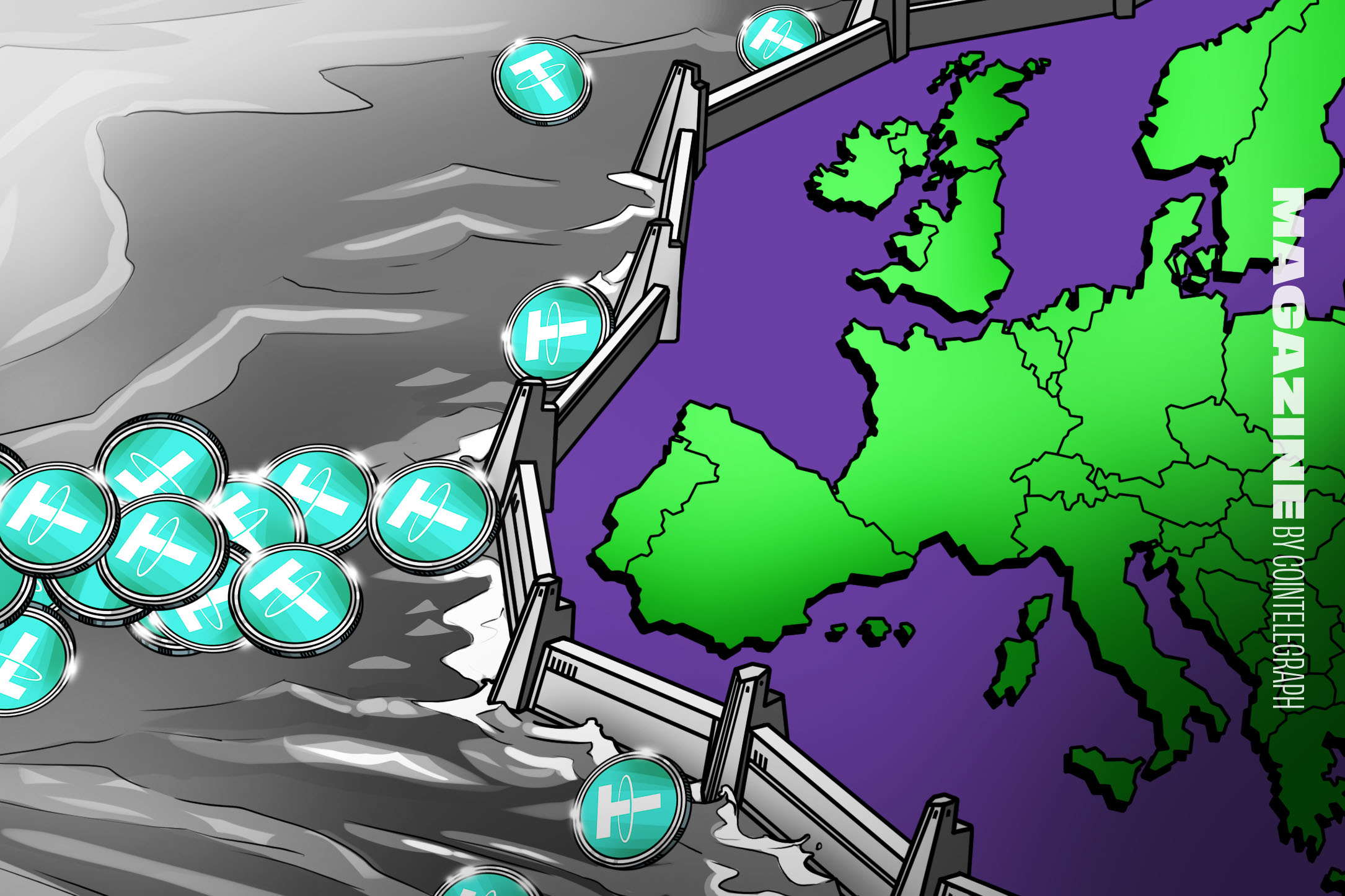
**USDT Demand Remains Resilient Amid Europe’s MiCA Crackdown**
A new phase in the European Union’s tightening regulation of the crypto industry has arrived, yet the market shows surprising resilience. When Revolut announced it would delist Tether’s USDT after August 31st, it joined a growing list of European platforms restricting access to the world’s largest stablecoin. This shift is a direct result of the EU’s Markets in Crypto-Assets (MiCA) regulation, a comprehensive framework whose stablecoin rules have been phasing in since 2024. The EU-wide transition period officially ended on July 1, forcing platforms to drop tokens that fail to meet the new compliance standards.
However, data from analytics firm Artemis suggests that this regulatory pressure has not triggered the anticipated mass migration away from USDT. According to Alex Weseley, head of research and data at Artemis, the data does not indicate any noticeable change in USDT supply or demand directly attributable to MiCA. “MiCA didn’t trigger a major venue or chain migration,” Weseley stated in a recent interview.
So why is demand for Tether holding up better than expected?
### Stablecoins Become Financial Infrastructure
One primary reason for USDT’s resilience is its evolving role beyond trading and speculative savings. In regions like Argentina, where citizens have historically distrusted local financial institutions and preferred to hold physical dollars, stablecoin activity has continued to grow even as restrictions on accessing hard currency have eased.
Lemon, an Argentine crypto and financial services platform, processed $9.3 billion in total volume in 2025, representing a 60% year-over-year increase. Transactional user numbers grew by 70% to nearly 1.8 million, while stablecoin volume increased by 45% annually.
This trend suggests stablecoins are transitioning from being mere stores of value to becoming functional financial infrastructure. Ignacio Gimenez, Lemon’s business and planning manager, explains: “The role of USDT and other dollar stablecoins is evolving. What we’re seeing is a shift from stablecoins as a store of value to stablecoins as financial infrastructure.”
He notes that stablecoin usage is increasingly driven by payments, cross-border transfers, and global financial services rather than pure savings. For instance, Argentine users can pay in Brazil via PIX using local currency, receive dollars or euros from overseas which are then credited as USDC, or easily move funds between bank dollars and digital dollar balances. This utility makes demand for stablecoins difficult to measure simply by tracking which tokens are listed on regulated exchanges.
### MiCA Is Changing the European Gateway
Lemon’s experience highlights a broader shift in user behavior in one of Latin America’s largest economies, and signs indicate that emerging markets are beginning to follow this trend. Artemis data reveals that daily users on Binance Smart Chain rose from approximately 318,000 in June 2024 to 1.56 million by July 2026. Similarly, daily users on Tron increased by 44% to around 908,000. These chains are preferred by daily stablecoin users due to their low fees.
While this growth is not Europe-specific, it demonstrates that regulatory pressure alone may not cause a significant shift in on-chain activity. As Weseley notes, the movement appears to be “expanding global and emerging market usage rather than a Europe-specific migration.”
That said, MiCA is indeed having an impact on the European market by changing which stablecoins regulated platforms can offer, thereby reshaping the stablecoin landscape within the bloc. Maksym Sakharov, CEO and co-founder of WeFi, a crypto financial infrastructure company, suggests that regulation is altering access rather than demand. “Users do not choose a stablecoin only because it is available on one regulated platform. They choose it because counterparties use it, liquidity is deep, and it works across many markets,” Sakharov explains.
For some platforms, the transition away from USDT began well before the MiCA deadline. Erald Ghoos, CEO of OKX Europe, reports that the platform has not offered USDT to European users for approximately two years, meaning the recent MiCA deadline did not create a major material difference.
### Europe’s Alternatives Have a Dollar Problem
Perhaps the most critical question emerging from Europe’s regulatory push is what European users will adopt as alternatives. Unquestionably, dollar-denominated stablecoins hold a significant advantage, as the crypto market has consistently treated the US dollar as its primary benchmark.
While Ghoos does not expect this dynamic to change globally in the near future, he observes that institutional interest in euro-denominated stablecoins is beginning to rise. “What we are seeing from institutional players is interest in creating more EUR-denominated stablecoins, which is worth watching as it develops,” he says.
For retail users, euro-denominated stablecoins could also offer practical benefits by eliminating additional friction, such as currency conversion fees, from transactions. However, while MiCA may dictate which products are available through regulated European gateways, it cannot alter the dollar’s dominant role in global crypto markets.
*“Magazine: El Salvador’s Bitcoin experiment turns 5: ‘It was for us, not them’”*
—
### FAQ
**Q: What is the EU’s Markets in Crypto-Assets (MiCA) regulation?**
A: MiCA is a comprehensive regulatory framework for crypto-assets within the European Union. Its rules for stablecoins have been gradually implemented since 2024, with a final transition period ending on July 1, 2025, requiring platforms to ensure compliance or delist non-conforming tokens.
**Q: Why did Revolut delist USDT?**
A: Revolut delisted USDT to comply with the EU’s MiCA regulation, which imposes strict requirements on stablecoin issuers and service providers.
**Q: Has MiCA caused a significant shift in where USDT is traded?**
A: According to data from Artemis Analytics, there is no noticeable change in USDT supply or demand directly caused by MiCA. The data shows no major migration of trading activity to other chains or venues as a result of the regulation.
**Q: Why is demand for USDT remaining resilient?**
A: Demand is resilient because USDT and other dollar stablecoins are becoming essential financial infrastructure, particularly in emerging markets. They are increasingly used for payments, cross-border transfers, and financial services, rather than just for trading or as a store of value.
**Q: How are platforms like Lemon using stablecoins in Argentina?**
A: Platforms like Lemon leverage stablecoins to facilitate a wide range of financial activities, including payments in other countries (e.g., Brazil via PIX), receiving international transfers that are credited as USDC, and enabling easy movement between traditional bank dollars and digital dollar balances.
**Q: Do European platforms still offer USDT?**
A: Many regulated European platforms have stopped offering USDT well before the MiCA deadline. For instance, OKX Europe has not offered USDT to its European users for approximately two years.
**Q: What is the future of stablecoins in Europe according to this article?**
A: While MiCA is changing the stablecoin offerings available through regulated European gateways, it is unlikely to diminish the global demand for dollar-denominated stablecoins. The European market may see increased interest in euro-denominated alternatives, but the US dollar’s dominance in the global crypto space remains intact.
—
### Conclusion
Europe’s crackdown on Tether’s USDT under the MiCA regulation marks a significant moment for the crypto industry. However, the response from the market tells a story of adaptation rather than disruption. As platforms navigate the new compliance landscape, users in Europe and beyond are demonstrating that the utility of stablecoins has evolved far beyond simple speculation. Instead, they are becoming the underlying infrastructure for a new kind of digital finance—facilitating payments, cross-border transactions, and financial inclusion, especially in emerging economies. While the regulatory environment in Europe is reshaping the tools available to users, it cannot change the fundamental role the US dollar plays in the global economy. The resilience of USDT demand is a testament to the fact that when a tool becomes infrastructure, regulation can direct its form, but rarely diminish its function.
