



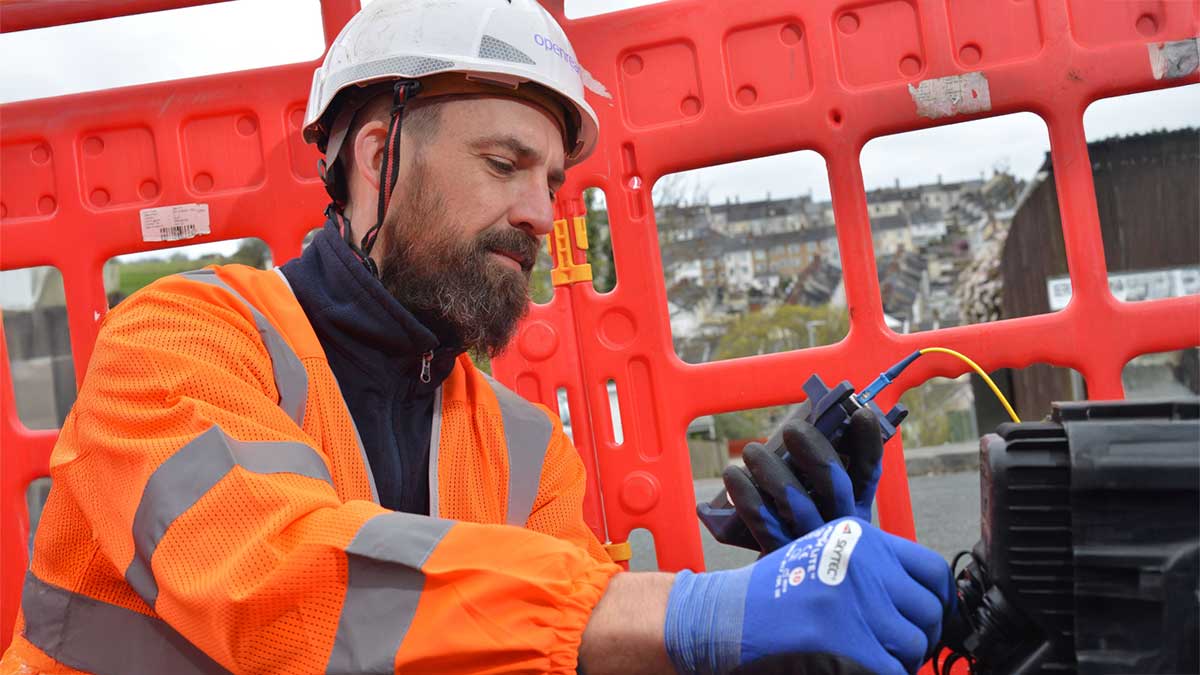
**Openreach’s XGS-PON Rollout: Powering the UK’s Data-Driven Future**
The demand for high-speed connectivity has never been greater, fueled by the rise of artificial intelligence (AI), cloud-based services, and the proliferation of connected devices. In response, Openreach has announced ambitious plans to deliver next-generation full-fibre broadband to over one million UK premises within the next twelve months. This initiative centers on the adoption of XGS-PON technology, a significant upgrade to the UK’s fibre infrastructure designed to meet escalating data demands.
**Meeting the Demand with XGS-PON Technology**
At the heart of Openreach’s strategy is XGS-PON, a passive optical networking standard capable of delivering symmetrical speeds of up to 10Gbps. This marks a substantial leap from the current top download speed of 1.8Gbps on Openreach’s full-fibre network. The technology will be implemented by upgrading existing infrastructure rather than a complete physical replacement, making it a cost-effective solution for capacity expansion. Currently, the network supports speeds of up to 8.5Gbps at retail level, a significant improvement over existing GPON technology, which serves over 23.4 million premises.
Openreach aims to extend XGS-PON to more than one million premises in the coming year, building on a successful pilot project in Guildford that covered 40,000 homes. Over the next five years, the company plans to deploy this technology across approximately one-third of its full-fibre network, contingent on customer demand and feedback.
**Beyond Speed: Symmetrical Connectivity for Modern Applications**
The shift to XGS-PON is not merely about faster downloads. The technology’s symmetrical architecture ensures that upload speeds match download speeds, a critical feature for applications that generate substantial upstream traffic. This capability is especially valuable for AI applications, cloud computing, and telehealth, where high-resolution medical scans and diagnostic data must be quickly uploaded. Additionally, the upgrade provides the necessary infrastructure to support the growing number of smart devices in homes and businesses, laying the groundwork for future innovations in mobile networks and public services.
**Complementary Networks and Remaining Challenges**
While Openreach’s fibre upgrade is a major step forward, industry experts highlight the need for a holistic approach to connectivity. The London Internet Exchange has emphasized that investment in access networks must be matched by robust interconnection across the wider internet to prevent bottlenecks and ensure efficient traffic exchange. Furthermore, the growing importance of mobile networks—particularly for IoT deployments—cannot be overlooked. Ofcom has noted that mobile connectivity in the UK often falls short, despite its critical role in digital inclusion and economic growth. For IoT ecosystems, fibre provides the high-capacity backbone for fixed connections, while 4G and 5G networks enable devices to remain connected on the move.
Affordability and access to suitable devices and digital skills remain key concerns. Elizabeth Anderson, CEO of the Digital Poverty Alliance, cautioned that the benefits of faster networks would be realized only if they are accessible to all. She stressed that progress should not be measured solely by maximum speeds but by how many people can genuinely benefit from them.
**Looking Ahead**
Openreach’s investment in XGS-PON represents a crucial advancement in preparing the UK for a data-intensive future. With support from industry stakeholders and ongoing developments in complementary technologies, the upgrade is set to provide a scalable and future-proof foundation for years to come. As standards for 25G-PON and 50G-PON continue to evolve, this initiative ensures that the existing fibre network will remain at the forefront of connectivity for the foreseeable future.
—
### FAQ
**What is XGS-PON, and how does it differ from GPON?**
XGS-PON is a next-generation passive optical networking technology capable of delivering symmetrical speeds of up to 10Gbps, whereas GPON, the current standard, supports top speeds of 1.8Gbps. Unlike GPON, XGS-PON offers equal upload and download speeds, making it ideal for data-intensive applications.
**How many premises will benefit from this upgrade?**
Openreach plans to extend XGS-PON to over one million premises in the next 12 months, with long-term goals of covering one-third of its full-fibre network over five years.
**Why is symmetrical connectivity important?**
Symmetrical connectivity ensures that upload and download speeds are the same, which is crucial for applications like cloud computing, telehealth, and AI that involve large volumes of two-way data transfer.
**What role do mobile networks play in this upgrade?**
While fibre provides a high-capacity backbone for fixed connections, mobile networks (4G and 5G) are essential for IoT devices and other applications requiring connectivity outside fixed locations. Both networks are complementary in supporting a connected ecosystem.
**What challenges remain beyond infrastructure upgrades?**
Affordability, access to compatible devices, and digital skills are critical factors in ensuring that the benefits of faster networks are accessible to everyone. Without addressing these issues, the connectivity gap could widen.
—
### Conclusion
Openreach’s rollout of XGS-PON technology is a transformative step in addressing the UK’s growing data demands. By upgrading the existing fibre network to support higher speeds and symmetrical connectivity, the initiative provides a robust foundation for AI, cloud services, smart devices, and future innovations. However, achieving true digital progress requires a collaborative effort to ensure that these advancements are accessible, affordable, and inclusive for all. As the UK moves toward a more connected future, this upgrade serves as a vital pillar in supporting its economic and technological ambitions.
