



**Unichem Acquires Loomia to Accelerate Entry into the Humanoid “Skin” Market**
The race to equip humanoid robots with sensitive, human-like perception capabilities has taken a significant step forward through a key acquisition in the materials science sector. Uni-Chem Co., a South Korean conglomerate with deep roots in the automotive industry, has announced its acquisition of Loomia Technologies Inc., a move that signals a major strategic push into the market for electronic skin and advanced tactile sensing. This acquisition aims to merge Uni-Chem’s manufacturing scale with Loomia’s cutting-edge flexible electronics to create the next generation of physical AI interfaces.
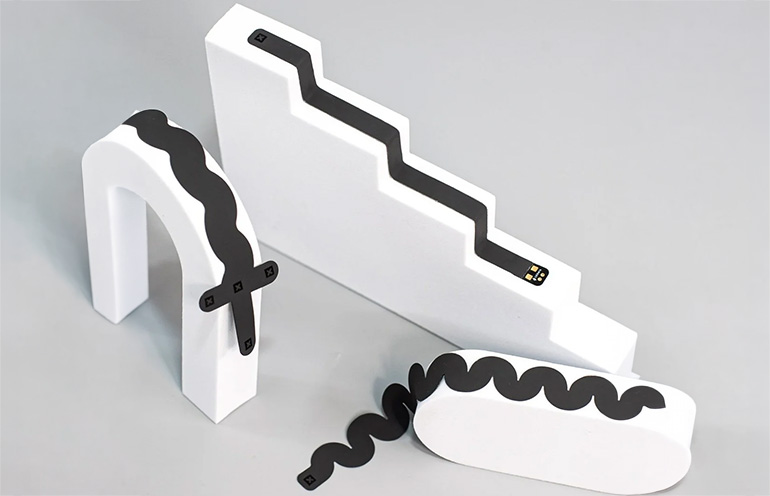
At the heart of the deal is Loomia’s proprietary Loomia Electronic Layer (LEL) technology. Unlike traditional rigid printed circuits, LEL allows for the flexible bonding of electronic circuits onto unconventional and durable materials such as cloth, leather, and, most critically for robotics, synthetic leathers and polymers. The company has specifically overcome a key technical hurdle in flexible electronics: maintaining a connection during repeated bending and stress. Loomia’s “non-printed, low-resistance mesh technology” provides a durable and reliable solution, moving beyond the limitations of conventional printed electronics.
Loomia’s existing work in the field has already yielded tangible results. Last year, the company launched its first Tactile Sensing Developer Kit, a product that is currently sold out and has garnered interest from major players in the robotics sector. Notably, Loomia has partnered with industrial automation and robotic hand provider Festo, working together to make tactile sensors more affordable and accessible for developers. This background in practical, deployable hardware makes it a prime candidate for scaling up.
The acquisition itself is structured as a reverse triangular merger, with Uni-Chem securing 100% of Loomia’s shares for approximately 8.6 billion won ($6 million USD). The deal includes a mix of cash and equity, with future earn-outs tied to performance. Upon completion, the transaction will be finalized through a newly established Uni-Chem subsidiary, with plans to integrate Loomia’s technology into Uni-Chem’s vast, 50-year-old leather-processing infrastructure. Madison Maxey, Loomia’s founder, and Kim Han-joo, Uni-Chem’s Chief Science Officer, will serve as co-CEOs, and the combined entity will maintain key engineering talent in North America to fuel its U.S. market entry.
However, the most immediate and synergistic partnership highlighted in the acquisition is between Loomia and **R&Y Corp.**, a global Tier 1 automotive technology manufacturer. R&Y, which has a market cap exceeding $1 billion and operations in Germany, the United States, and China, brings crucial manufacturing and engineering prowess to the table. The two companies are co-developing the next frontier in tactile feedback: sensors capable of detecting not just vertical pressure, but also complex shear forces—the kind of force that occurs when an object slides across a surface.
This dual-axis sensing capability is critical for the development of advanced haptic systems. Such systems are essential for training robot hands through data collection and for enabling humanoid robots to manipulate objects with the precision and subtlety required in human-centric environments. R&Y aims to deliver the first engineering sample of this co-developed sensor by January 2027, with ambitions to supply leading physical AI developers like Tesla, OpenAI, Boston Dynamics, 1X Technologies, and Meta.
The acquisition is part of a broader strategic vision for Uni-Chem. The company aims to evolve from being a simple supplier of automotive interior materials to becoming a comprehensive “smart materials platform company.” By integrating Loomia’s sensor technology with R&Y’s manufacturing capabilities and its own expertise in high-performance materials, Uni-Chem plans to expand its reach beyond automotive interiors. Future applications will span humanoid robot anatomy, medical devices, and even data center thermal management, areas where precise temperature and pressure control are paramount.
The momentum appears to be building, with Volkswagen Group already selecting Loomia as a supplier for next-generation seat heating systems. This validation from a major automotive original equipment manufacturer (OEM) through a global parts supplier like Sabelt underscores the potential for mass production and widespread adoption, particularly leveraging Uni-Chem’s Korean manufacturing infrastructure.
***
### FAQ
**Q: What is Loomia Technologies and what is its core technology?**
A: Loomia Technologies Inc. is a flexible electronics company founded in 2014. Its core technology is the Loomia Electronic Layer (LEL), which allows for the flexible printing and bonding of electronic circuits onto materials like fabric, leather, and plastics. This technology is designed to be durable and functional even when stretched or bent, overcoming a key challenge in traditional flexible electronics.
**Q: What products has Loomia developed so far?**
A: Loomia has launched a Tactile Sensing Developer Kit, which is designed for robotics developers. This kit includes sensors that can detect touch and force, and it is currently sold out. The company has also collaborated with partners like Festo on robotic hand applications.
**Q: Who is R&Y Corp. and what is their role in this acquisition?**
A: R&Y is a global Tier 1 automotive technology and manufacturing company. As a key partner of Loomia, they are co-developing advanced tactile sensors. These sensors are designed to detect both vertical pressure and shear force, a capability crucial for creating sensitive haptic systems for robot hands and humanoid robots.
**Q: What does “reverse triangular merger” mean in this context?**
A: It refers to the specific legal structure of the acquisition. A newly created subsidiary of Uni-Chem will merge with Loomia, resulting in Uni-Chem acquiring 100% of Loomia’s shares. This is a common and efficient method for facilitating acquisitions.
**Q: What are the plans for integrating Loomia’s technology into the automotive industry?**
A: Uni-Chem has already selected Loomia’s technology for use in next-generation seat heating systems for a Volkswagen Group vehicle model. This partnership with a global parts supplier like Sabelt signals a clear path to mass production for automotive applications.
***
### Conclusion
The acquisition of Loomia by Uni-Chem represents a pivotal moment in the development of physical AI. It successfully bridges the gap between advanced material science and large-scale manufacturing. By combining Loomia’s innovative flexible sensor technology with Uni-Chem’s vast industrial infrastructure and R&Y’s high-volume production capabilities, the consortium is poised to deliver sophisticated tactile sensing platforms. These platforms will be fundamental to the evolution of humanoid robots, enabling them to interact with the physical world in a more nuanced and human-like way. The move marks a clear transition from theoretical AI to embodied AI, where the hardware is as intelligent and sensitive as the software that runs on it.
