



**The Connected Car is Driving a Software-Defined Revolution: Are You Ready?**
The automotive industry is undergoing a profound transformation. The connected car is no longer just a vehicle with internet; it is becoming a software-defined vehicle (SDV)—a dynamic platform that improves and evolves throughout its entire lifecycle via over-the-air (OTA) software upgrades. This shift turns cars into rolling technology platforms, much like smartphones, capable of delivering new features, performance enhancements, and security patches long after the vehicle leaves the dealership.
The scale of this transition is massive. According to industry analysts like Analysys Mason, the worldwide base of connected vehicles is projected to reach a staggering **830 million by 2030**. This growth is not just about being online; it’s about leveraging connectivity for safety, efficiency, and enhanced user experience. However, this evolution places unprecedented demands on a vehicle’s connectivity infrastructure. To navigate this new landscape, Original Equipment Manufacturers (OEMs) must understand and adapt to three key shifts: the explosion in data usage, the transition to eSIM technology, and the advent of 5G networks.
### A Fourfold Rise in Data Makes Visibility the Key to Controlling Costs
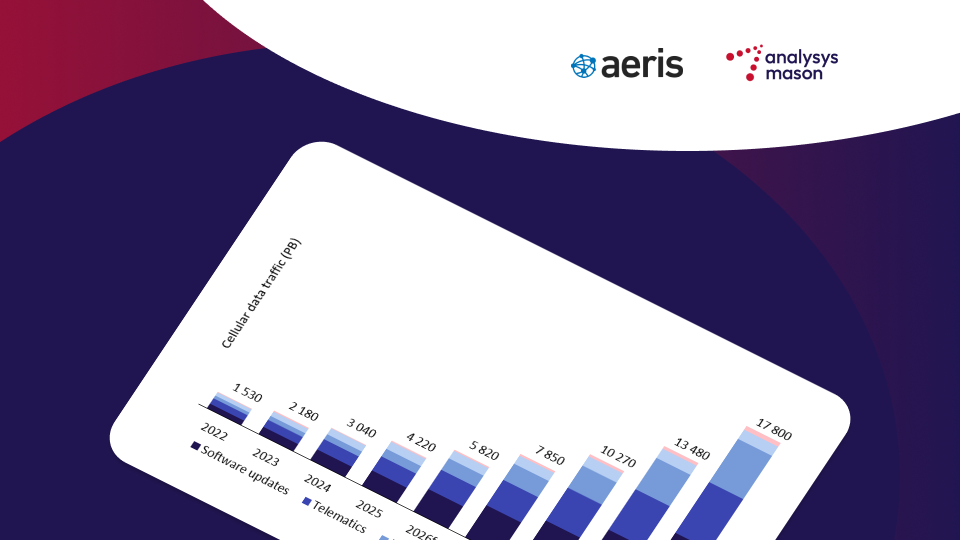
One of the most significant changes is the sheer volume of data these vehicles will generate. Analysys Mason forecasts that cellular traffic from connected cars will increase **fourfold between 2025 and 2030**, reaching approximately **22GB per vehicle per year by 2030**. This surge is primarily driven by advanced in-vehicle entertainment and, critically, software updates.
Electric vehicles (EVs) are a major catalyst for this data growth. Expected to account for more than 40% of new car sales by 2030, EVs rely heavily on software for battery management, remote diagnostics, and charging orchestration. Consequently, an EV can consume several times more data than a traditional internal combustion engine (ICE) vehicle.
Without proper oversight, this data deluge can lead to unpredictable costs and performance issues for OEMs. The solution is comprehensive operational visibility. By gaining a unified view of their network across all vehicles and applications, OEMs can:
* Identify unusual data usage patterns.
* Contain usage spikes before they impact the entire fleet.
* Control operational costs.
* Ensure critical applications like telematics and software updates remain reliable and high-performing.
### SGP.32 Presents New Markets and New Operational Challenges for OEMs
The sim card in your car is also evolving. Physical SIMs, which are locked to a single mobile network operator (MNO), are being replaced by embedded SIMs (eSIMs) with remote provisioning capabilities. This transition is set to accelerate with the new **SGP.32 specification**, an IoT-optimized eSIM standard. SGP.32 delivers on the promise of true eSIM functionality by allowing cellular profiles to be provisioned and switched entirely over the air (OTA), making remote management feasible for entire fleets of vehicles.
This flexibility is a game-changer for OEMs looking to deploy connected services globally. However, it also introduces new complexities. As vehicles roam between countries and networks, OEMs require deep visibility into:
* Connectivity performance.
* eSIM profile status.
* Network selection and handover.
This level of insight is crucial for ensuring devices connect to the most appropriate network, maintaining a secure connection, and delivering a consistent customer experience, no matter where the vehicle is driven.
### 5G Unlocks New Services and Raises the Bar for Managing Them
5G technology provides the high bandwidth and ultra-low latency required for a new generation of connected car services. It makes large software updates faster and more dependable, enables high-definition in-cabin streaming for passengers, and powers critical real-time applications like live mapping and advanced driver-assistance systems (ADAS).
Looking further ahead, 5G will be the backbone for Vehicle-to-Everything (V2X) communication. This technology will allow cars to exchange data with each other and with roadside infrastructure, significantly improving traffic flow and, more importantly, road safety. Each of these high-demand services asks more of the connection, requiring OEMs to adopt more advanced tools on their connectivity management platform to monitor network behavior and guarantee service reliability.
### The Software-Defined Vehicle Demands Visibility Beyond Connectivity
As the software-defined vehicle becomes reality, connectivity is transforming from a supporting function into a core strategic capability. Driven by rising data consumption, dynamic eSIMs, and powerful 5G networks, OEMs need greater visibility and control across their entire fleets.
Understanding how vehicles, networks, and applications perform in near real-time will be critical for controlling costs, maintaining service quality, and delivering the seamless connected experiences that customers now expect. OEMs that can integrate connectivity management, operational visibility, and security into a single, intelligent approach will be best positioned to scale software-defined vehicles profitably.
***
### FAQ (Frequently Asked Questions)
**Q1: What is a software-defined vehicle (SDV)?**
A software-defined vehicle is an automobile whose functionality and features are primarily delivered through software rather than just hardware. Like a smartphone, an SDV can be updated over the air (OTA) to improve performance, add new features, enhance safety, and fix bugs throughout the vehicle’s entire lifespan.
**Q2: Why is data usage increasing so dramatically in connected cars?**
The increase is driven by two main factors:
1. **Software Updates (OTA):** Regular updates to the vehicle’s software, operating system, and applications require significant data transfer.
2. **In-Vehicle Entertainment & Services:** High-definition streaming, navigation, and personalized services consume large amounts of data.
Additionally, the rise of Electric Vehicles (EVs), which rely heavily on software for battery and energy management, contributes to this multi-fold increase.
**Q3: What is SGP.32 and why is it important?**
SGP.32 is a new eSIM specification designed for IoT devices. It allows a car’s cellular plan to be provisioned and managed remotely over the air. This means a car can switch between different mobile network operators without needing a physical SIM card change, which is essential for global vehicles and fleet management.
**Q4: What challenges does the shift to eSIM and 5G create for OEMs?**
While eSIM (SGP.32) and 5G offer tremendous benefits, they also increase complexity. OEMs face challenges in:
* **Management:** Managing thousands of eSIM profiles and network connections across a global fleet.
* **Visibility:** Gaining real-time insights into connectivity performance and data usage to prevent service disruptions and control costs.
* **Security:** Ensuring the integrity and security of the vehicle’s connection as it interacts with various networks.
**Q5: What does “visibility” mean in the context of this article?**
Operational visibility refers to the ability for an OEM to see a unified, real-time view of its entire vehicle fleet. This includes data on:
* How much data each vehicle is using.
* Which networks the vehicles are connected to.
* The status of the eSIM profile.
* The performance and health of the connection.
This holistic view is essential for identifying issues, optimizing costs, and ensuring a reliable customer experience.
***
### Conclusion
The connected car is evolving from a simple mode of transportation into a powerful, software-driven platform. This “software-defined vehicle” paradigm, fueled by rising data demands, eSIM technology, and 5G connectivity, presents immense opportunities for innovation and new revenue streams. However, it also introduces significant complexity.
For OEMs, success will not come from simply connecting cars, but from mastering the complexity of their connectivity. The winners will be those who can achieve deep operational visibility, manage costs effectively, and ensure a secure and reliable experience. By adopting a unified approach to connectivity management, OEMs can unlock the full potential of the software-defined vehicle, driving both technological advancement and profitable growth.
