



**Gravis Robotics Raises $200M to Build the Future of Construction**
The construction industry has long been hampered by inefficiency and slow adoption of modern technology. However, a new wave of automation is poised to change that, driven by advances in physical AI and robotics. Today, **Gravis Robotics** announced a monumental $200 million Series A investment led by SoftBank. This represents the largest funding round in construction robotics history and signals a major shift toward automating the foundational work that underpins all built environment projects.
### A New Era for Construction Automation
“Forget about self-driving cars on perfect highways; real autonomy is needed where the world is messy and unpredictable,” explained Ryan Luke Johns, co-founder and CEO of Gravis Robotics. “We are building the future, literally. Whether we are building housing, modernizing energy grids, or scaling data centers, every project starts with moving earth.”
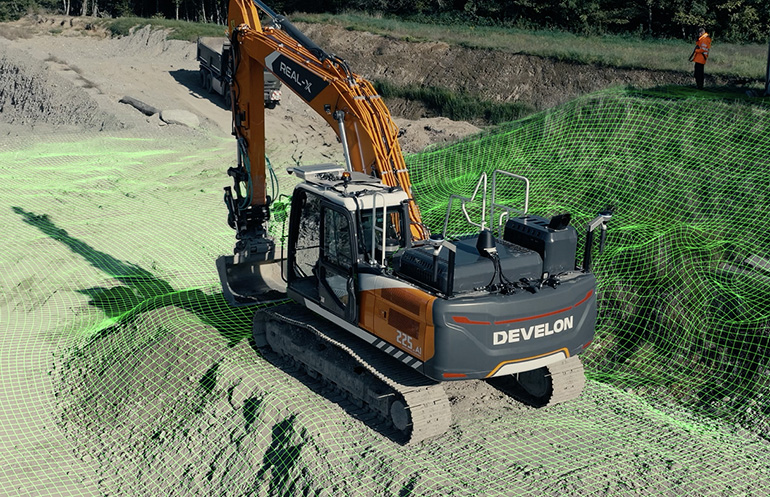
Gravis Robotics, spun out of ETH Zurich in 2022, is at the forefront of this movement. The company’s core mission is to bring “software-defined intelligence” to an industry that has relied on purely mechanical hardware for decades. Their solution is the **Gravis Rack**, an autonomous control kit and software suite that retrofits existing excavators and construction equipment.
### Bridging the Sim-to-Real Gap
Unlike traditional automation that struggles with dynamic environments, Gravis Robotics designs its systems for the “messy, unscripted reality of live jobsites.” The company leverages advanced simulation and synthetic training to move billions of virtual cubic yards of material, from soft clay to rock-filled soil. This process trains their AI to handle real-world unpredictability with unprecedented precision.
“Skilled operators read the earth through subtle physical feedback — listening to the engine strain, sensing the machine vibration and reacting to hydraulic resistance,” said Dominic Jud, co-founder and CTO. “Our AI takes that same physical input and grounds it in machine telemetry, responding to varying subterranean forces and soil mechanics at microsecond speeds.”
This deep integration allows Gravis’s AI to not just follow commands, but to understand and adapt to the physical properties of the job site, offering a level of precision that surpasses what a human operator can achieve from inside the cab.
### Intelligence for Mixed Fleets
The construction equipment market is highly fragmented, with a vast array of manufacturers and models on-site. Gravis Robotics has addressed this by developing an AI world model that understands the performance characteristics of various machines, rather than mimicking a single operator. This makes their system “generalizable and adaptable in a way single-machine systems can’t match.”
The Gravis Rack acts as an operating system for mixed fleets, compatible with machinery from industry leaders like Caterpillar, Case, Develon, John Deere, JCB, Hitachi, Sumitomo, Yanmar, Volvo, and many more. Because their learning-based models adapt to the nuances of any machine, the same core software can drive a compact excavator or a machine many times its size without custom reprogramming.
### A Spectrum of Autonomy
Gravis Robotics provides a flexible spectrum of operation, ranging from AI-augmented manual control to full autonomy. Their **Gravis Slate** interface enhances safety and productivity by providing operators with real-time 3D guidance and hazard detection. With **Gravis Copilot**, operators can remain in the cab while significantly boosting their daily performance.
When full autonomy is engaged, operators can step away to supervise entire robotic fleets simultaneously. Regardless of the operational mode, every machine equipped with the Gravis Rack functions as a mobile sensor, automatically conducting surveying and hazard mapping in the background.
### The Global Impact
The implications of this technology are vast. Gravis Robotics has already deployed its systems across four continents, proving their efficacy on diverse real-world machinery and sites. They are actively hiring to scale their operations and embed autonomy into heavy machinery fleets across a trillion-dollar market currently bottlenecked by labor shortages.
Their progress has also garnered significant governmental attention. Gravis was selected to lead an $8 million U.K. government-backed CAM Pathfinder project with Flannery Plant Hire, the country’s largest equipment rental provider. This initiative aims to provide contractors with “turnkey, on-demand access to autonomous machinery to help accelerate Britain’s $716 billion infrastructure pipeline.”
—
### FAQ Section
**Q1: What is Gravis Robotics and what do they do?**
Gravis Robotics is a company that develops software-defined intelligence for the construction industry. They retrofit existing excavators and construction equipment with their Gravis Rack autonomous control kit, which uses AI to automate earthmoving and surveying tasks.
**Q2: Why did SoftBank invest $200 million in Gravis?**
SoftBank led Gravis Robotics’ Series A round, citing the company’s potential to bring AI-powered autonomy to construction. This investment is part of SoftBank’s broader vision for physical AI and its role in building smarter, more efficient infrastructure.
**Q3: What is the “sim-to-real gap” and how does Gravis address it?**
The “sim-to-real gap” refers to the challenge of training AI in a simulation that works perfectly in the real world. Gravis uses synthetic training, moving billions of virtual cubic yards of material in simulation, to teach their AI how to handle the messy, unpredictable reality of live construction sites.
**Q4: What is the Gravis Rack?**
The Gravis Rack is an autonomous control kit and software stack that can be installed on a wide range of existing construction machinery. It acts as an operating system for autonomous construction equipment, allowing for both manual AI-augmented control and full autonomy.
**Q5: What does “mixed fleet” compatibility mean?**
Gravis’s AI is designed to understand the performance characteristics of many different manufacturers’ machines, rather than being built for one specific model. This allows a single core software to operate everything from compact excavators to much larger machines without needing reprogramming.
**Q6: What are Gravis Slate and Gravis Copilot?**
Gravis Slate is an interface that improves worksite safety and can direct machinery, such as for autonomous trenching. Gravis Copilot is a feature that allows operators to stay in the cab and use real-time 3D guidance and hazard detection to increase their productivity.
**Q7: Where has Gravis Robotics deployed its technology?**
Gravis has deployed its systems across four continents and is being used on diverse real-world machinery and sites. They are also leading a major U.K. government-backed project to provide autonomous machinery to accelerate infrastructure development.
—
### Conclusion
The $200 million investment in Gravis Robotics is more than just a financial transaction; it is a powerful vote of confidence in the future of autonomous construction. By tackling the sim-to-real gap and creating a flexible, fleet-agnostic operating system, Gravis is positioned to solve one of the industry’s biggest challenges: the labor shortage and the inefficiency of manual earthmoving. As the company scales its deployment globally, the construction industry is on the cusp of a transformation that could finally bring it into the 21st century.
