



**The Rise of Foundation Models in Genomics: Decoding the Language of Life**
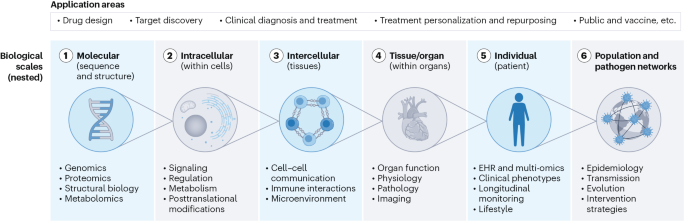
The field of genomics is undergoing a revolution, driven by the advent of powerful artificial intelligence models known as foundation models. These models, trained on vast datasets, are transforming how we understand, analyze, and predict biological functions at the molecular and genomic scales. Recent advances have moved beyond simple pattern recognition to build robust, generalizable models capable of predicting complex biological structures and functions with unprecedented accuracy.
From foundational models that predict protein structures to those that decipher the regulatory code of gene expression, the scope of AI in genomics is expanding rapidly. These tools are not just automating existing processes but are enabling new discoveries, offering insights into the fundamental mechanisms of life and paving the way for novel therapeutic and diagnostic strategies. This article explores the landscape of genomic foundation models, their capabilities, and their potential to reshape biology and medicine.
### Building the Foundation: Key Models and Breakthroughs
The development of foundation models for genomics has been marked by a series of significant breakthroughs. Early models like BERT laid the groundwork for understanding biological sequences as language. This concept has been extended and sophisticated in numerous ways:
* **Protein Structure and Interaction:** Models like AlphaFold have achieved legendary status for their ability to predict protein structures with extraordinary accuracy. Its successor, AlphaFold 3, has pushed the boundaries further by predicting the structure of entire protein complexes and their interactions with DNA, RNA, and small molecules. Complementary models such as xTrimoPGLM and MSAGPT are demonstrating the power of unifying large-scale protein language modeling with multiple sequence alignments (MSAs) to enhance prediction capabilities.
* **Genomic Sequence Modeling:** Models are now being designed to understand the functional elements within DNA and RNA sequences. For instance, the Nucleotide Transformer builds and evaluates robust foundation models specifically for human genomics, while HyenaDNA explores long-range genomic sequence modeling at single-nucleotide resolution. These models are helping scientists identify genes, regulatory regions, and other critical components hidden within the genome.
* **Single-Cell Multi-Oomics:** Perhaps one of the most exciting frontiers is applying foundation models to single-cell analysis. Tools like scGPT and scLong are built as “foundation models for single-cell transcriptomics,” aiming to capture long-range gene context and understand cellular heterogeneity. These models integrate data from multiple modalities (multi-omics) to provide a more comprehensive view of cellular states and functions, moving towards the goal of building a “virtual cell.”
* **Gene Expression and Regulation:** A foundation model of transcription across human cell types represents a major step forward in understanding how genes are turned on and off in different contexts. This has implications for deciphering disease mechanisms and identifying new therapeutic targets.
The common thread running through these developments is the use of large language model (LLM) architectures—transformers—which are exceptionally good at learning patterns and dependencies in sequential data. By training these models on massive corpora of biological sequences, they learn the “grammar” and “semantics” of life, allowing them to make accurate predictions and generate new biological insights.
### Frequently Asked Questions (FAQ)
**Q1: What is a “foundation model” in the context of genomics?**
A foundation model in genomics is a type of artificial intelligence model, typically based on transformer architectures, that is pre-trained on a very large and diverse dataset of biological sequences (like DNA, RNA, or proteins). This pre-training allows the model to learn universal patterns and representations of biological data. Once this foundational knowledge is established, the model can be fine-tuned or adapted with smaller, specific datasets to perform a wide variety of tasks, such as predicting protein structure, gene function, or disease risk. The key idea is to create a versatile, reusable model that captures the fundamental “language” of biology.
**Q2: How do these models differ from traditional bioinformatics tools?**
Traditional bioinformatics tools are often designed for specific, narrow tasks, like aligning sequences or identifying a particular motif. They rely heavily on predefined rules and handcrafted features. In contrast, foundation models learn directly from data. They don’t need explicit programming for every specific problem; instead, they generalize from the patterns they have seen during training. This allows them to handle complex, multidimensional data and make predictions for entirely new problems they weren’t explicitly trained for, often with higher accuracy and less manual curation.
**Q3: What are the main challenges in developing these models?**
Developing robust foundation models for genomics presents several significant challenges. First, high-quality, large-scale, and well-annotated biological datasets are required for training, and these can be expensive and difficult to produce. Second, biological data is incredibly complex and noisy, making it a difficult training ground for AI models. Third, there is a “black box” problem; while these models are powerful, it can be difficult to understand *why* they made a specific prediction, which is crucial for scientific validation and trust. Finally, integrating information from different biological modalities (e.g., sequence, structure, and cellular context) into a single, coherent model remains a cutting-edge research problem.
### Conclusion
The emergence of foundation models marks a paradigm shift in genomics. By leveraging the power of large-scale AI, we are moving from a reductionist view of biology to a more holistic, system-level understanding. These models act as powerful new microscopes, allowing us to see deeper into the molecular machinery of life. They accelerate discovery, from identifying the causes of genetic diseases to engineering new biological systems. As these models continue to evolve and integrate more diverse biological data, their potential to unlock the secrets of life and transform healthcare is immense. The future of genomics is not just about reading the code of life but understanding and ultimately reprogramming it with the help of intelligent machines.
