



**Harnessing AI and Deep Learning for Revolutionary Protein Design and Localization**
The landscape of protein research has been dramatically transformed by the integration of artificial intelligence (AI) and deep learning. What was once a process of tedious trial and error is now rapidly evolving into a sophisticated computational endeavor, capable of predicting and designing protein structures and functions with unprecedented accuracy. From understanding where proteins reside within a cell to engineering novel sequences for therapeutic applications, AI is paving the path forward.
**Predicting the Unseen: Protein Subcellular Localization**
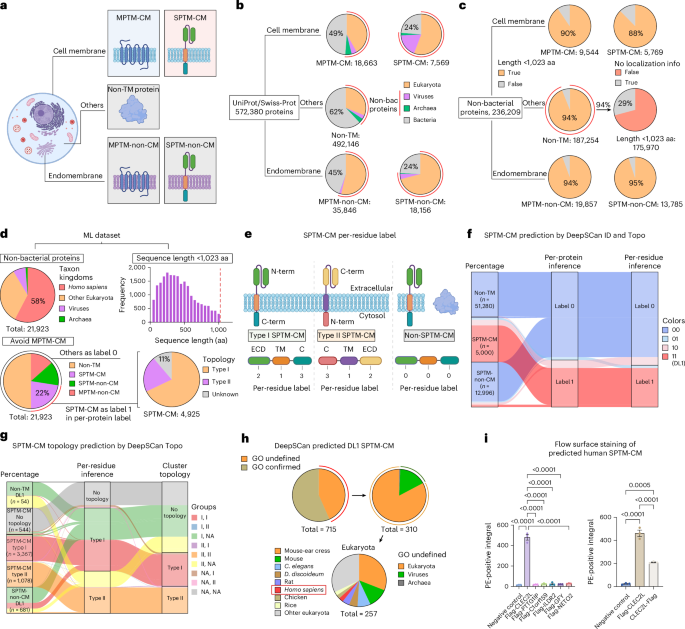
A critical aspect of understanding a protein’s function is determining its location within the complex environment of a cell. Proteins can be found in the nucleus, mitochondria, cell membrane, or various organelles, and this localization dictates its role. Traditional experimental methods are time-consuming and costly. In contrast, deep learning models have emerged as powerful predictive tools. By analyzing vast datasets of protein sequences and their known locations, these models can identify intricate patterns and motifs that signal where a protein is likely to go. Architectures utilizing protein language models are particularly effective, capturing the evolutionary and functional context of amino acid chains to predict subcellular localization with high confidence, often providing residue-level interpretations that offer deeper biological insight.
**Designing the Future: De Novo Protein Engineering**
Beyond prediction, AI is revolutionizing the creation of new proteins. *De novo* protein design involves creating proteins from scratch, without relying on existing templates. This is a monumental challenge due to the immense complexity of protein folding and function. However, large language models (LLMs), similar to those powering advanced chatbots, are being trained on the vast protein universe found in databases like UniProt. These models learn the grammar and syntax of protein sequences—how amino acids interact and fold into stable structures. Generative models, such as autoregressive models and diffusion models, can then apply this knowledge to design entirely novel protein sequences that are predicted to fold into specific, desired structures. This has profound implications for developing new enzymes, antibodies, and therapeutics.
**The Power of Integration: Structure, Function, and Evolution**
The true power of AI in protein science lies in its ability to integrate diverse data. Models can correlate evolutionary sequences with structural data to predict not just localization, but also functional sites, protein-protein interactions, and the impact of specific mutations. For instance, tools built on foundation models like AlphaFold have greatly advanced our ability to predict complex biomolecular interactions. Furthermore, these models can simulate evolutionary timelines, offering insights into how proteins might change over millions of years. This holistic approach allows researchers to move from simple prediction to genuine engineering, creating proteins with enhanced stability, novel functions, or targeted therapeutic capabilities, such as designing molecules that can better penetrate the blood-brain barrier or recognize specific disease markers.
***
### FAQ
**Q1: What is protein subcellular localization, and why is it important?**
A1: Protein subcellular localization refers to the specific location within a cell where a protein carries out its function, such as the nucleus, mitochondria, or cell membrane. Knowing this location is crucial for understanding a protein’s role in biological processes, diagnosing diseases, and developing targeted therapies.
**Q2: How do AI models predict where a protein will be located in a cell?**
A2: AI models, particularly those using deep learning and protein language models, are trained on massive datasets of proteins with known locations. They learn to recognize patterns and sequence features that correlate with different cellular compartments, allowing them to predict the likely location of a new, unseen protein sequence with high accuracy.
**Q3: Can AI really design entirely new proteins that work?**
A3: Yes, AI is making significant strides in *de novo* protein design. By learning the principles of protein structure and sequence from existing data, generative models can create novel protein sequences that are predicted to fold into stable, functional structures. These “hallucinated” proteins can be tested and have shown promise in various applications, from drug development to creating new materials.
**Q4: What is the difference between predicting protein structure and predicting its function?**
A4: Predicting structure involves determining the 3D shape of a protein, which is largely dictated by its amino acid sequence. Predicting function goes a step further, aiming to understand what that shaped protein *does*—such as binding to a specific molecule, catalyzing a chemical reaction, or residing in a particular part of the cell. Modern AI models often attempt to achieve both, as structure is a strong indicator of function.
**Q5: What are some real-world applications of AI-designed proteins?**
A5: AI-designed proteins have a wide range of potential applications. These include creating new enzymes for industrial processes, developing highly specific antibodies for cancer treatment, engineering proteins for gene therapy, and designing molecules that can neutralize viruses or target specific diseased cells with high precision.
***
**Conclusion**
The convergence of AI, deep learning, and big data is fundamentally reshaping the field of protein science. We are moving from an era of observation and analysis to one of active design and prediction. The ability to accurately predict where proteins go and how they behave, coupled with the power to computationally design novel proteins, opens up unprecedented opportunities in medicine, biotechnology, and our understanding of life itself. As these technologies continue to mature, we can expect a new generation of AI-driven discoveries and innovations that were previously the stuff of science fiction.
