



**Tacta Systems and the TactaBot: Addressing the Skilled Labor Shortage with Robotic Dexterity**
In the quest to automate high-value tasks, the limitations of robotics have become increasingly apparent. While advancements in vision and mobility have allowed robots to navigate and transport objects effectively, the final frontier in robotic capability has always been the hand. Tacta Systems, a company founded three years ago with a focus on this very challenge, believes it has the solution. Last week, the company unveiled the **TactaBot**, an integrated system designed to bring human-like dexterity and touch to robotic automation, targeting a critical gap in the workforce.
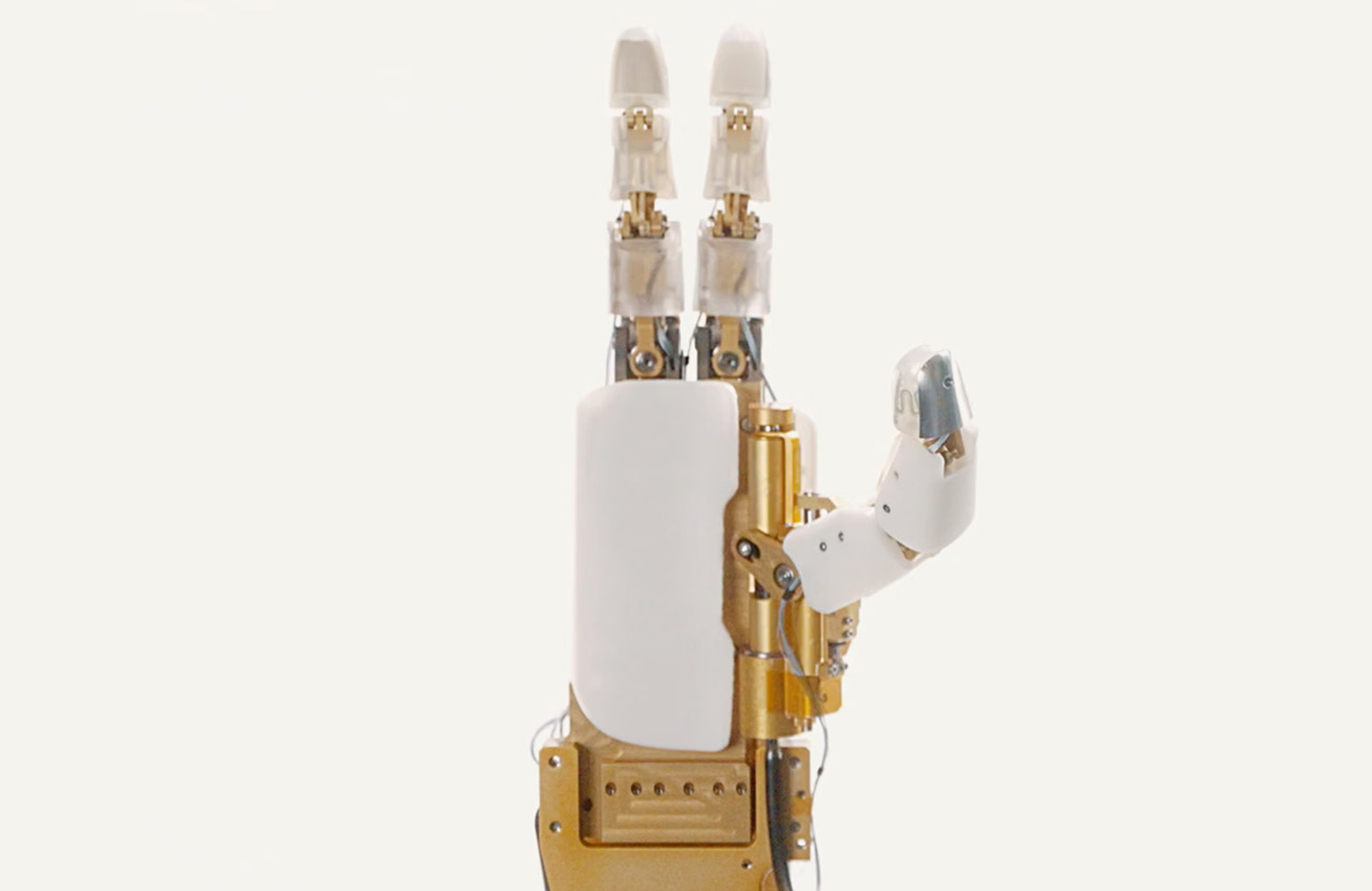
At the heart of the TactaBot is the **Tacta Hand**, a sophisticated robotic gripper that comes in both three- and five-finger configurations. This human-sized hand boasts an impressive **15 degrees of freedom (DoF)**, with three DoFs per finger, allowing for a high degree of manipulation. Each fingertip can exert up to 25 newtons of force, capable of lifting approximately 2.5 kg. What sets this hand apart, however, is its driving mechanism. Unlike traditional motor-driven systems, the Tacta Hand utilizes **proprietary Fluidic Tendon actuation technology**. Cables with fluid move through the fingers to push pistons, resulting in fingers that are exceptionally thin, stable, and precise. This design also eliminates heat generation near the hand and promises a remarkable **30 million cycles of reliability**.
The TactaBot’s effectiveness is largely due to its **proprietary sensors**. Embedded within the robotic hand and the accompanying **Tacta Glove** is a tactile sensor smaller than a grain of sand. These sensors are incredibly sensitive, capable of detecting forces ranging from 250 pascals to 700,000 pascals and measuring temperature with 0.1-degree precision. Unlike MEMS-based alternatives, each sensor features its own analog-to-digital conversion, providing high-fidelity data. While the sensors are durable, the fingertips are designed as **consumables**, ensuring practicality for long-term use.
To address the lack of real-world data for training AI in physical tasks, Tacta has developed the **Skill Capture system**. The Tacta Glove, equipped with 256 tactile sensors per fingertip and motion capture technology, allows workers to perform complex tasks naturally. As they work, the system wirelessly streams data on force, motion, video, and temperature, effectively building a massive dataset with every hour of labor. This data is then used to train Tacta’s **Dexterous Intelligence AI model**, which is initially pre-trained on general models and then fine-tuned on-site to perform specific tasks with significantly reduced training time.
According to Vikram Pavate, co-founder and CEO of Tacta Systems, the company’s inspiration stems from the glaring workforce shortages in skilled manufacturing. With the “holy grail” of robotics being the ability to perform high-value work, Tacta aims to augment human capability by providing robots with the one sense they have been missing: touch. The company’s focus is currently on manufacturing environments, with an initial goal of shipping the first TactaBots in early 2027.
***
### FAQ Section
**Q1: What is the TactaBot?**
The TactaBot is an integrated robotic system launched by Tacta Systems. It combines the Tacta Hand, a Skill Capture system, and a Dexterous Intelligence AI model to perform high-value tasks that require dexterity and touch, primarily in manufacturing settings.
**Q2: What makes the Tacta Hand different from other robotic hands?**
The Tacta Hand uses proprietary Fluidic Tendon actuation technology, using cables and fluids to move pistons within the fingers. This allows for thinner fingers, higher stability, greater precision, and a longer lifespan of up to 30 million cycles, compared to motor-driven hands that can break down if a single cable fails.
**Q3: What are the sensors on the Tacta Hand and Glove?**
The system uses proprietary tactile sensors, each smaller than a grain of sand. These sensors can detect a wide range of touch forces (250 pascals to 700,000 pascals) and measure temperature with high precision (0.1°C). They are designed to provide detailed data for AI training and are replaceable as consumables.
**Q4: What is the Tacta Glove used for?**
The Tacta Glove is a data-capture device equipped with 256 tactile sensors per fingertip. It is worn by human workers to record force, motion, and temperature data while performing complex tasks. This data is then used to train and fine-tune the Dexterous Intelligence AI model, effectively closing the “physical AI data gap.”
**Q5: When will the TactaBot be available?**
Tacta Systems expects to ship its first TactaBots in early 2027.
***
### Conclusion
Tacta Systems’ TactaBot represents a significant step forward in robotic automation by solving one of the industry’s most persistent challenges: the lack of dexterity and touch. By combining a robust, fluidic robotic hand with a data-capture glove and advanced AI training, the company offers a scalable solution for high-value manufacturing work. As the technology develops and moves from the lab to the factory floor, it has the potential to reshape industries facing severe skilled labor shortages, augmenting human workers with unprecedented robotic precision and adaptability.
