



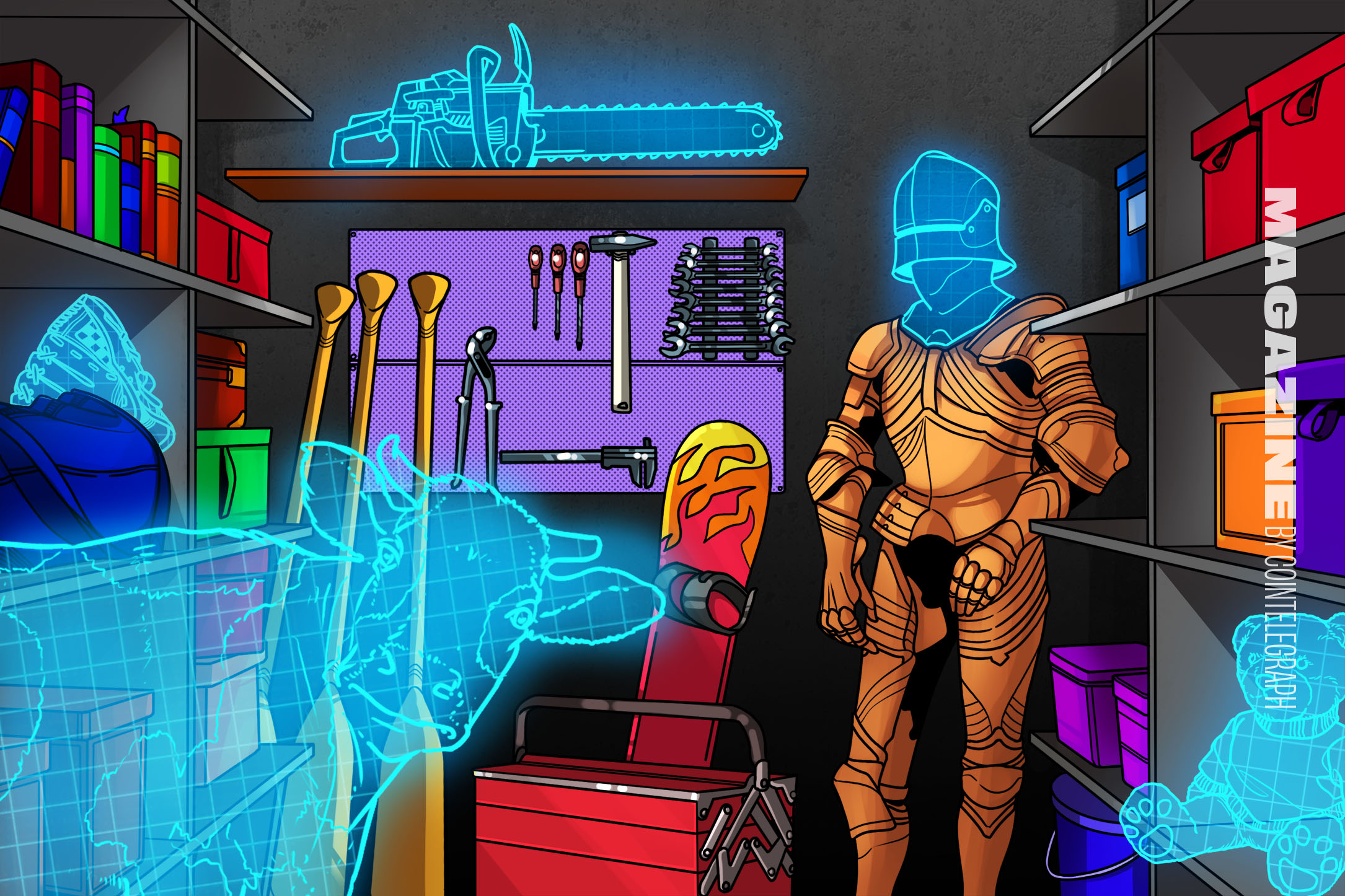
**When Everything Can Be Tokenized: 10 of the Strangest Real-World Assets on Blockchain**
Brazil’s B3 stock exchange made headlines last month when its tokenized cows went viral. A farmer in southern Brazil was able to use 10 cows as collateral for a 100,000 Brazilian real ($19,600) loan by virtually herding them into a blockchain-based holding pen, demonstrating how farmers can literally milk their assets to access credit.
And it raises an obvious question: if cows can be tokenized, what can’t be?
From dairy cows to a year’s worth of farts, here are 10 of the strangest things to be tokenized on-chain.
—
### 1. A Year’s Worth of Farts
When BlackRock chief executive Larry Fink said every asset will eventually be tokenized, he probably wasn’t thinking about flatulence. Yet, that’s exactly what happened here.
Every bit as appealing as, well, a year’s worth of farts, it has to be a contender for the strangest thing ever to make it on-chain.
It was during the pandemic, when most people were baking bread or leveling up on Duolingo, that filmmaker Alex Ramírez-Mallis recorded his own farts and minted each one as a non-fungible token (NFT).
They say farts are like children, and you only love your own. But the novelty factor meant that Ramírez-Mallis was able to sell his for 0.05 ETH each (about $85 at the time), proving that every asset has its price.
—
### 2. Cows
Better known as a prime source of protein in Bitcoin circles, the idea of turning 10 Brazilian cows into tokenized cattle—or tokenized collateral, is not the most obvious use case.
The deal was structured by Brazilian investment fund Target FIDC, giving each cow a unique digital token linked to an encrypted digital identity.
*Larry Fink says every asset can be tokenized. Source: BlackRock*
The first loan may have been worth just $19,600, but it was a proof of concept that shows the potential to eventually support around $80 million in livestock-backed financing across its farms.
While it sounds somewhat bizarre on first glance, the agriculture industry generated around $4 trillion in global value added in 2023, so watch out for tokenized sheep, goats and chickens as collateral next.
—
### 3. Whiskey Barrels
When you think of sharing a whiskey, you probably have the liquid gold kind in mind, but whiskey barrels are a natural candidate for tokenization.
That’s because, like high-end art and collectibles, Scotch whisky typically increases in value as it matures — talk about lifting your spirits!
Several projects are experimenting with putting whisky casks on-chain so investors can buy whole units or fractional ownership of tokenized whisky stored in bonded warehouses.
Just remember that if the market crashes, you can’t actually drink a digital JPEG of a barrel.
—
### 4. Racehorses
Racehorse ownership has long been reserved for the ultra-wealthy, those with deep enough pockets to cover hundreds of thousands of dollars in breeding, training and upkeep, and a fancy hat to wear at the racetrack.
But tokenization is beginning to chip away at those elitist barriers, dividing ownership of real thoroughbred racehorses into digital shares.
Investors can buy a stake in an animal and share in any prize money, breeding income, or future sale proceeds, without purchasing an entire horse.
*Own part of a racehorse. Source: Stablemans*
A word of caution for would-be investors in this style of asset, though, whether it’s watches or whiskeys or large four-legged animals, from Chris Turner, co-founder of impact investment firm KULA:
> “Putting a collectible or luxury item on a blockchain doesn’t automatically make it more liquid or valuable if the legal rights, transfer process, and market structure remain unchanged.”
—
### 5. Uranium
If your mind turns to treasuries and private credit when thinking about tokenized real-world assets (RWAs), it might be a shift to consider uranium, the radioactive metal better known for its role in nuclear power.
But that’s what Tezos-backed metals.io is doing. Tezos co-founder Arthur Breitman says blockchain technology excels at building “reliable, auditable and cost-efficient financial rails for any asset,” but is particularly aligned with “technology-flavored commodities” like uranium.
Breitman says trading volume between November 2024 and July 2026 was $21.5 million over approximately 18,200 trades and around 7,400 unique wallets.
He acknowledges that growth remains modest, telling Magazine that institutional players have shown interest but are “still shy about tokenized rails.”
—
### 6. Fishy Revenue
One of the most unusual proposals tokenization platform Brickken received came from a Chilean fish-processing company that wanted to issue tokenized debt with returns tied to the value of the fish it sold.
“The token represented the lender’s contractual claim, while the interest payable adjusted according to the company’s verified sales performance. In effect, it was a tokenized, revenue-linked debt instrument,” explains Edwin Mata, chief executive of Brickken.
Mata argues that the idea highlights an important principle:
> “Almost any cash flow can support a tokenized financial instrument, provided the underlying rights and data can be independently verified.”
In the end, the fish never made it on-chain. The underlying fish sales still relied on audits, commercial reporting and legal agreements that couldn’t yet be automated, proving that, sometimes, the biggest obstacle to tokenization isn’t the blockchain; it’s the real world.
—
### 7. Music Royalties
Music royalties have also found their way on-chain, with one of the earliest high-profile examples in 2021, when DJ and producer 3LAU gave fans 50% of the streaming rights to his single Worst Case through his blockchain platform Royal.
Then, in 2022, rapper Nas used Royal to sell streaming royalty rights to two of his songs, Ultra Black and Rare.
While the idea of on-chain royalties gained traction during the NFT boom, tokenized music royalties have yet to become a mainstream asset class. Maybe that’s because the streaming platforms pay peanuts.
Nothing says “financial freedom” quite like owning 0.001% of a track and realizing it needs to be played five million times just to buy a cup of coffee.
—
### 8. Human Skin
If tokenizing farts and cattle wasn’t weird enough, what about parts of your own body? That’s exactly what Croatian tennis player Oleksandra Oliynykova did in 2021, when she auctioned the advertising rights to a 15-by-18-centimeter patch of skin on her right arm as an NFT.
The winning bidder paid 3 Ether (around $5,400 at the time) for the right to choose which tattoo she would wear during tournaments for a year.
Athletes have long sold sponsorship space on shirts, helmets and race cars. Oliynykova just took the idea one step further, giving a whole new meaning to having skin in the game.
—
### 9. A Burned Banksy
Most art collectors try to preserve masterpieces; crypto collectors set them on fire to make a point about “digital ownership.” In 2021, a group calling itself Burnt Banksy bought a Banksy print titled Morons (White) for around $95,000. They livestreamed themselves burning it, and then minted the destruction.
If that leaves you scratching your head, there was method in the madness; the idea was that while the physical artwork no longer existed, ownership would live on forever through the blockchain.
The NFT sold for around $382,000, sparking fierce debate over whether the group had destroyed a valuable work of art or simply transformed it into a new one. It was probably the first time in history someone made a 300% profit from a “fire sale.”
—
### 10. The First Tweet
Also in the year of our NFT Lord, 2021, Twitter co-founder Jack Dorsey tokenized his first-ever tweet — “just setting up my twttr” — and sold it as an NFT to crypto entrepreneur Sina Estavi for $2.9 million, quickly becoming a symbol of the NFT boom.
One year later, Estavi tried to resell it for $48 million, but only received bids worth a tiny fraction of the asking price, with the highest reported offer coming in at just $6,800.
While anyone can still read the tweet on X, only one person owns the blockchain certificate tied to it. Whether that’s valuable or not remains an open question. As Mata says:
> “Tokenization can improve access, administration, settlement and transferability, but it cannot transform a poor investment into a good one.”
*Magazine: The 100x obsession: Fundamentals grow in importance as crypto matures*
—
## FAQ
**What does it mean to tokenize an asset?**
Tokenizing an asset means representing its ownership or value as a digital token on a blockchain. This can enable fractional ownership, easier transferability, and increased transparency, though it does not automatically guarantee liquidity or value.
**Why tokenize real-world assets like cows or whiskey barrels?**
Tokenization can open up new markets, allow fractional investment, and simplify transfers and record-keeping. In agriculture, for example, it can provide farmers with faster access to capital by using their livestock as collateral.
**Are all tokenized assets liquid?**
Not necessarily. While tokenization can improve transferability, liquidity depends on market demand, legal frameworks, and proper infrastructure. Some tokenized assets may remain illiquid or difficult to trade.
**Can any asset be tokenized?**
Technically, many assets can be tokenized, but practical challenges remain—such as legal enforcement, verification of real-world conditions, and market acceptance. Some assets are more suitable than others.
**What are the risks of investing in tokenized collectibles?**
Risks include market volatility, lack of liquidity, regulatory uncertainty, and the potential for diminished value if the underlying asset or market fails to develop as expected.
—
## Conclusion
Tokenization is expanding into surprising and unconventional territories, from cows and farts to racehorses and even the first tweet. While these examples highlight the creative potential of blockchain, they also underscore the importance of practicality, legal clarity, and market demand. As the technology evolves, the real question may not be *what can be tokenized*, but *what should be*—and whether tokenization truly adds value beyond the novelty.
