



**U.S. Tightens Restrictions on Foreign Robots Over Cybersecurity Fears**
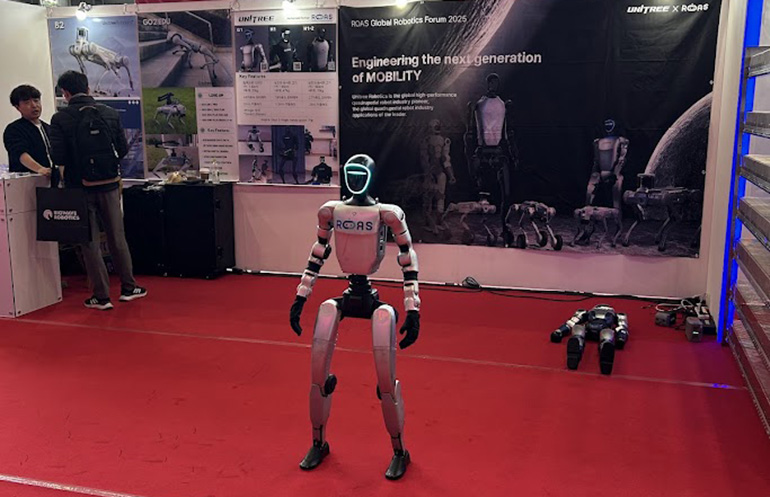
In a move that signals a major shift in technology policy, the U.S. Federal Communications Commission (FCC) has moved to block the import of certain foreign-made robots and connected power inverters, citing national security risks. The decision, announced recently, targets advanced mobile robots—particularly humanoids and quadrupeds—and stems from concerns that these connected devices could introduce cybersecurity vulnerabilities into critical U.S. infrastructure.
The FCC’s order, backed by an interagency review, labels these foreign robotic systems as potential threats to supply chain integrity and data security. While the ban applies to new imports, existing devices already in the U.S., as well as federal procurement, are largely unaffected. The FCC has also offered conditional pathways for approval, especially for systems endorsed by the U.S. Department of Defense or Department of Homeland Security. Notably, software updates for banned systems may be eligible for waivers.
Analysts say the move mirrors past actions taken against Chinese drone manufacturers, as the U.S. works to rebuild domestic production capacity in robotics and critical components. Industry observers note that cybersecurity was the decisive factor, pointing to prior discoveries of backdoors and unauthorized data transmission in popular foreign robotic platforms.
While the ban is framed as country-neutral, most market watchers agree it is aimed at curbing Chinese technological dominance. Chinese firms currently supply the vast majority of the world’s industrial robots and an overwhelming share of humanoid robots deployed globally. Experts warn, however, that protectionist policies may slow innovation and hurt U.S. startups that rely on low-cost platforms for development and testing.
At the same time, U.S. robotics firms are benefiting from increased government support and rising investment. Companies like Standard Bots and Agility Robotics have testified before Congress, advocating for a unified national robotics strategy. But challenges remain—especially in upstream manufacturing of key components such as actuators, sensors, and rare-earth magnets, where China maintains a firm grip on global supply chains.
—
### FAQ
**Q: What exactly is being banned by the FCC?**
A: The FCC is banning new imports of advanced mobile robots—such as humanoid and quadruped robots—and connected power inverters manufactured outside the United States, citing national security risks.
**Q: Does this ban affect robots already in the U.S.?**
A: No. The ban applies only to new foreign imports. Devices already acquired or authorized for use prior to the ruling are not affected.
**Q: Are federal agencies allowed to purchase foreign robots?**
A: Yes. The ban does not apply to federal purchases. Additionally, software updates for foreign-supplied systems may receive approval through a waiver process.
**Q: Why is cybersecurity such a big concern with robotics?**
A: Many foreign-made robots connect to cloud servers and can collect extensive data—through cameras, microphones, and sensors. Researchers have uncovered backdoors and unauthorized data transmissions, raising fears that sensitive information could be exposed or compromised.
**Q: Does this ban target specific countries?**
A: While officially country-neutral, the policy is widely seen as targeting China, which dominates global robot manufacturing and has shipped the majority of humanoid robots to date.
**Q: Could this ban hurt U.S. robotics innovation?**
A: Yes. Analysts warn that cutting off access to low-cost Chinese platforms could slow development and commercialization of robotics in the U.S., particularly for startups and research institutions.
—
### Conclusion
The FCC’s decision to block imports of foreign robots marks a significant escalation in U.S. efforts to protect national security in the age of AI and connected devices. While intended to safeguard critical infrastructure and curb cybersecurity risks, the move also highlights the delicate balance between security and innovation. As the U.S. seeks to build a competitive domestic robotics industry, it faces the challenge of overcoming upstream supply chain dependencies on China. In the end, the ban may reduce certain security exposures—but it could also slow the very progress it aims to protect.
