



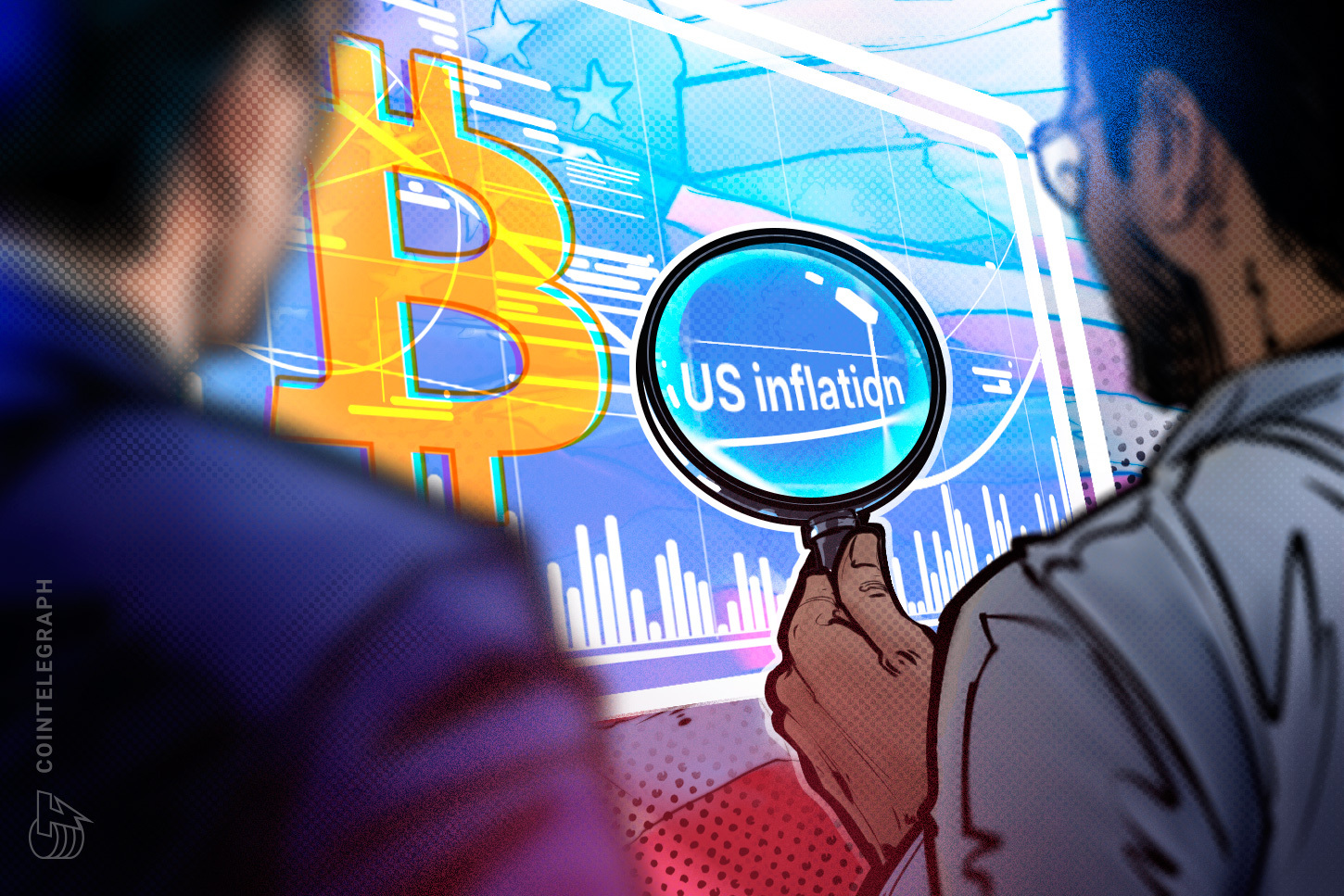
**Bitcoin’s Volatile End to July: Fed Decisions, Inflation, and Market Shifts**
Bitcoin is entering the end of July navigating a complex landscape of volatility catalysts, with the Federal Reserve’s response to U.S. inflation at the forefront of market concerns. The cryptocurrency, along with broader risk assets, is poised for significant movement as investors brace for key economic data releases and central bank commentary.
### Key Points to Watch
– **Federal Reserve’s Next Move:** The Federal Open Market Committee (FOMC) is set to deliver its latest interest rate decision on Wednesday, July 29. With U.S. bond yields spiking and markets pricing in a September hike, the Fed faces pressure to address persistent inflation.
– **Critical Inflation Data:** The June PCE (Personal Consumption Expenditures) inflation report, due shortly, is expected to provide clarity. After hitting a three-year high of 4.1% in May, any moderation could ease some Fed hike fears—but volatility remains likely.
– **Equity Market Uncertainty:** Signs of a shift in the equities uptrend have intensified focus on Bitcoin’s correlation with traditional markets. While recent data shows largely absent correlations, this could change amid geopolitical and macroeconomic turbulence.
– **Whale Activity Declines:** Inflows from Bitcoin whales to exchanges like Binance have dropped by 44% since mid-June, suggesting reduced large-scale selling pressure—but retail activity is filling the gap.
### Markets Divided on Rate Outlook
Markets remain split on the trajectory of U.S. interest rates. Geopolitical tensions, particularly developments in the Middle East, have added layers of uncertainty. Futures pricing currently reflects about a 31% chance of a rate hike at the July FOMC meeting, with September hikes viewed as more probable at 50%.
Even before the latest flare-ups in conflict, new Fed Chair Jerome Powell had maintained a relatively hawkish tone, emphasizing that inflation remains above the Fed’s 2% goal due to supply-side pressures—especially in energy sectors.
### PCE Inflation: A Key Inflation Barometer
The PCE index is closely watched for its implications on Fed policy and market positioning. June data has traders preparing for a potential deceleration from May’s elevated readings. The International Monetary Economics Network (IMEN) forecasts June PCE at 3.7% year-over-year—still historically high but below May’s 4.1%.
Such volatility has historically triggered sharp moves in Bitcoin; June’s release coincided with a dip to macroeconomic lows near $58,000.
### Bitcoin’s Loose Correlation with Equities
On multi-week and monthly timeframes, Bitcoin’s correlation with major equity indices has nearly vanished—currently near its weakest levels since March. Against the Nasdaq, correlations are particularly muted. However, analysts warn that sustained geopolitical shocks could quickly restore synchronized movements between crypto and traditional risk assets.
Despite this, U.S. corporate earnings have continued to beat expectations, with a large portion of the S&P 500 reporting EPS and revenue beats. Yet, with valuations historically high, market participants are cautious. The “Magnificent Seven” tech stocks saw a collective 5.3% decline last week, highlighting that even strong earnings may not prevent pullbacks in a rising rate environment.
### Price Action and Technical Outlook
Bitcoin briefly tested new local highs at $65,680, but remains in a familiar range. Technical analysis points to a critical battle around its 50-month exponential moving average (EMA). If this level fails, a deeper correction toward the 200-week simple moving average—currently near the 7,000 psychological level—could unfold.
Analysts note rising sell-side volume, warning that rejection at current resistance could trigger a sharper move lower.
### Binance Whale Inflows Cool
CryptoQuant data reveals that Bitcoin inflows from whales to Binance have fallen 44% since June 12. Retail inflows have also decreased, but at a slower pace—now running at roughly twice the level of whale activity.
This divergence suggests a shift in participation, with retail investors more actively moving BTC onto exchanges. Analysts view Wednesday’s Fed decision as a potential catalyst that could determine whether this trend continues or reverses.
—
### FAQ
**Q1: Why is the Federal Reserve so important for Bitcoin right now?**
A: The Fed’s interest rate decisions directly influence risk appetite and capital flows. Higher rates typically pressure speculative assets like Bitcoin, while dovish policy can boost demand.
**Q2: What is the PCE, and why does it matter for Bitcoin?**
A: The PCE is the Fed’s preferred inflation gauge. Moves in inflation data shift expectations for rate hikes, which in turn affect Bitcoin’s valuation as a non-yielding asset.
**Q3: How does equity correlation impact Bitcoin?**
A: When correlations are high, Bitcoin tends to move with major stock indices. If equities correct amid rising rates, Bitcoin could face similar pressure—even if its fundamentals remain intact.
**Q4: What do whale inflows indicate?**
A: Whale movements are often seen as a leading indicator of market sentiment. A sharp drop in exchange inflows may suggest that large holders are holding rather than selling, which can be bullish.
**Q5: Could Bitcoin break below key support levels?**
A: Yes. Analysts warn that if the 50-month EMA fails, Bitcoin may test the 200-week SMA around the $7,000 level, which would represent a 5% downside from current prices.
—
### Conclusion
Bitcoin’s end-July outlook is anything but simple. With the Federal Reserve ready to weigh in on rate policy, inflation data teetering on elevated levels, and technical setups testing critical moving averages, traders face a period rich with uncertainty. While reduced whale activity and diverging exchange flows offer some comfort, the broader macro environment remains a dominant force. How Bitcoin reacts to the upcoming FOMC decision and PCE release will likely set the tone not just for the month’s end, but for the weeks ahead.
