



**CLARITY Act Momentum Builds, But Senate Vote Before August Break Looks Unlikely**
The crypto industry is closely watching the CLARITY Act, a bipartisan bill designed to establish the first clear regulatory framework for digital assets in the United States. While support for the legislation is growing rapidly, Senate leadership has signaled that a final vote before the August recess is improbable, leaving the fate of the bill in limbo.
### CLARITY Act Support is Growing Fast
A coalition of over 200 crypto industry groups has thrown its weight behind the CLARITY Act, urging swift Senate action. Signatories include major advocacy organizations like the Blockchain Association, the Crypto Council for Innovation, and the Digital Chamber. In a letter to Senate leadership, the groups argued that clear and comprehensive regulations are essential for keeping innovation and investment in the United States.
The bill has also gained a significant law enforcement ally. The National Fraternal Order of Police (FOP), representing over 382,000 officers, recently endorsed the revised CLARITY Act. The organization stated that its “initial concerns have been satisfactorily addressed” and expressed a desire to work with legislators to pass the bill.
A key provision of the updated bill addresses a major concern from past market collapses, such as those of Celsius and Voyager. The new text ensures that customer assets remain separate and protected if a cryptocurrency exchange fails, preventing the loss of funds that users experienced during those bankruptcies.
### But the Votes are Not There Yet
Despite the growing momentum, passing the bill in the Senate remains a steep challenge. The CLARITY Act requires 60 votes to overcome a filibuster. With Republicans holding a 53-seat majority, at least seven Democrats would need to vote in favor for it to reach the president’s desk. Currently, that support is not present.
The political landscape is further complicated by the bill’s connection to President Donald Trump, who reportedly accumulated substantial wealth through crypto ventures, including the $TRUMP meme coin. Democrats have raised serious conflict-of-interest concerns, arguing that the president’s business interests should be scrutinized before entrusting him with market regulation. While Republicans have added ethics provisions to address these issues, Democrats argue the measures contain loopholes that grant too much power to the current administration.
Another point of contention is a “grandfather clause” that protects crypto assets created before an official takes office. This provision shields the $TRUMP coin, which launched just days before the previous administration. Critics argue this undermines the bill’s integrity.
### Time is Running Out
The legislative calendar is working against the bill. The Senate is scheduled to work for only one more week in August before a month-long recess for September 14th. After that, the focus shifts to budget and defense legislation, pushing the CLARITY Act to the back burner.
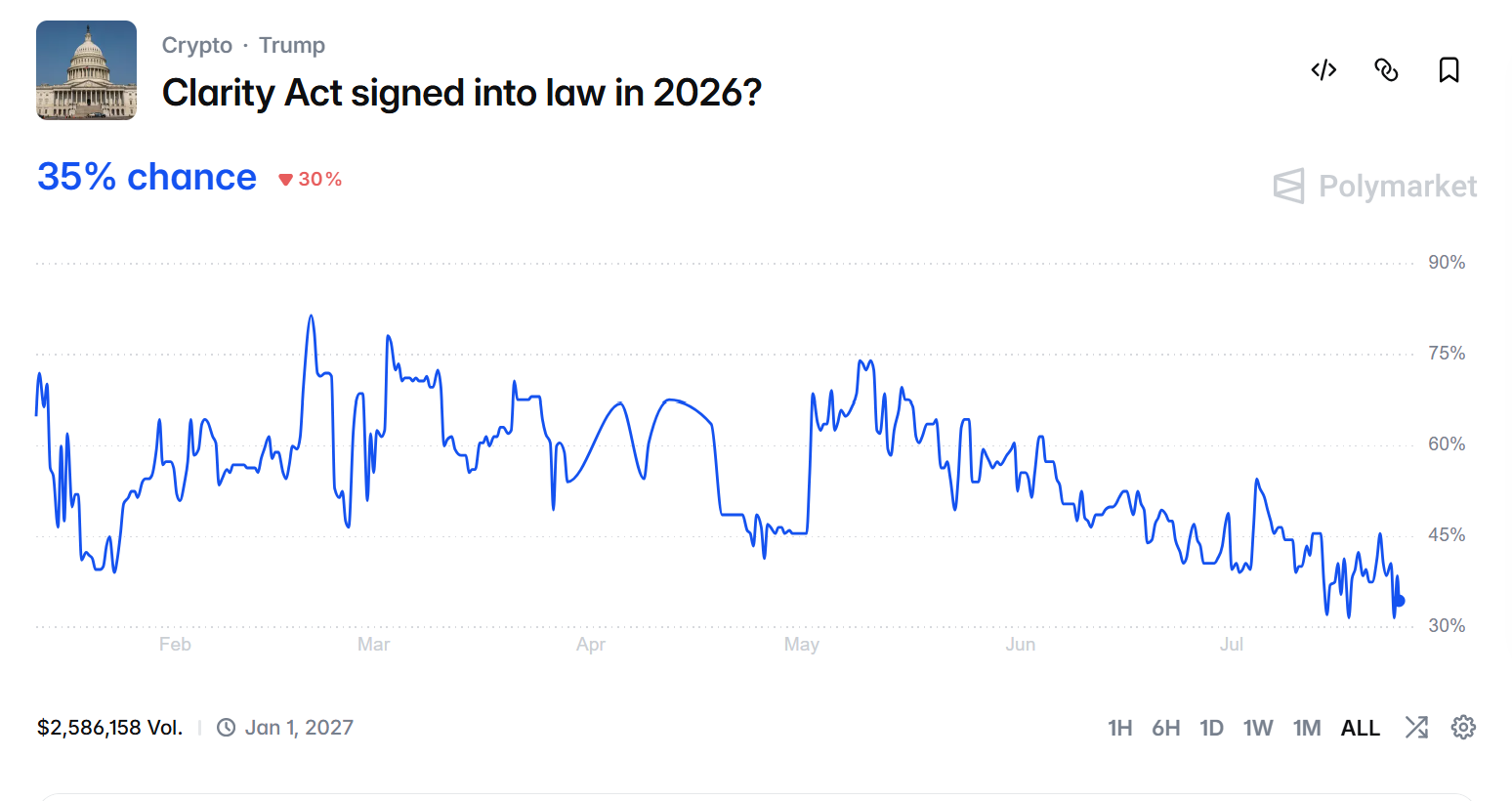
Senate leader John Thune acknowledged the timeline problem, stating he does not expect a final vote before the break. Market sentiment reflects the uncertainty, with betting odds on Polymarket dropping to around 37%, down from over 80% earlier this year. Research firm Galaxy also cut its probability estimate to 30%.
Some insiders remain cautiously optimistic, suggesting the bill’s best chance may lie after the November elections. The outcome will likely depend on whether the political winds shift and whether lawmakers can find a path forward before the window of opportunity closes.
***
### FAQ
**What is the CLARITY Act?**
The CLARITY Act is a bipartisan bill designed to create a clear regulatory framework for the cryptocurrency industry in the United States. It aims to define which digital assets are securities and which are commodities, and assign regulatory oversight to the appropriate government agencies, primarily the Commodity Futures Trading Commission (CFTC).
**Why is there a delay in passing the bill?**
The primary obstacle is securing the necessary 60 Senate votes to overcome a filibuster. With a 53-47 partisan split, the bill requires significant Democratic support, which has been hesitant due to political and ethical concerns surrounding the current administration’s involvement in the crypto market.
**What are the main concerns for Democrats?**
Democrats have raised conflict-of-interest concerns, particularly regarding President Trump’s financial holdings in crypto. They argue that giving regulatory power to the current administration presents a risk. Additionally, provisions like the “grandfather clause,” which protects existing assets like the $TRUMP coin, are seen as major flaws.
**What happens if the bill does not pass this year?**
If the bill stalls, the current regulatory patchwork will remain in place. This means future administrations could potentially reverse or alter the rules. Industry proponents fear this ongoing uncertainty will stifle innovation and drive investment away from the U.S. market.
### Conclusion
The CLARITY Act represents a pivotal moment for the U.S. cryptocurrency market. While it has garnered unprecedented support from industry groups and law enforcement, the path to becoming law is fraught with political hurdles. With the August recess approaching and key votes still missing, the window for passage this year is closing fast. The next few weeks will be critical in determining whether this landmark legislation becomes a reality or is delayed for another political cycle.
