



**Navigating the BIP110 Storm: A Miner’s Guide to the Current Landscape**
**Author:** Jason Hughes, VP of Development and Engineering at Ocean Mining
The Bitcoin network is currently embroiled in a significant debate surrounding the proposed BIP110. As a miner or someone involved in the ecosystem, the noise can be overwhelming, often filled with contradictory claims and high-stakes rhetoric. This article cuts through the hyperbole.
Drawing from an internal document originally intended for Ocean Mining’s own operations—and now published here—this piece provides a clear-eyed, data-driven perspective on BIP110. My goal is not to tell you what to think, but to equip you with the facts necessary to make your own informed decisions for your mining operations.
***
### The Current State of BIP110 Consensus
Let’s address the elephant in the room: the narrative that BIP110 is inevitable or on the verge of success is misleading. The data simply does not support it.
* **Not Inevitable:** BIP110 does not have a guaranteed path to activation. It can—and might—fail.
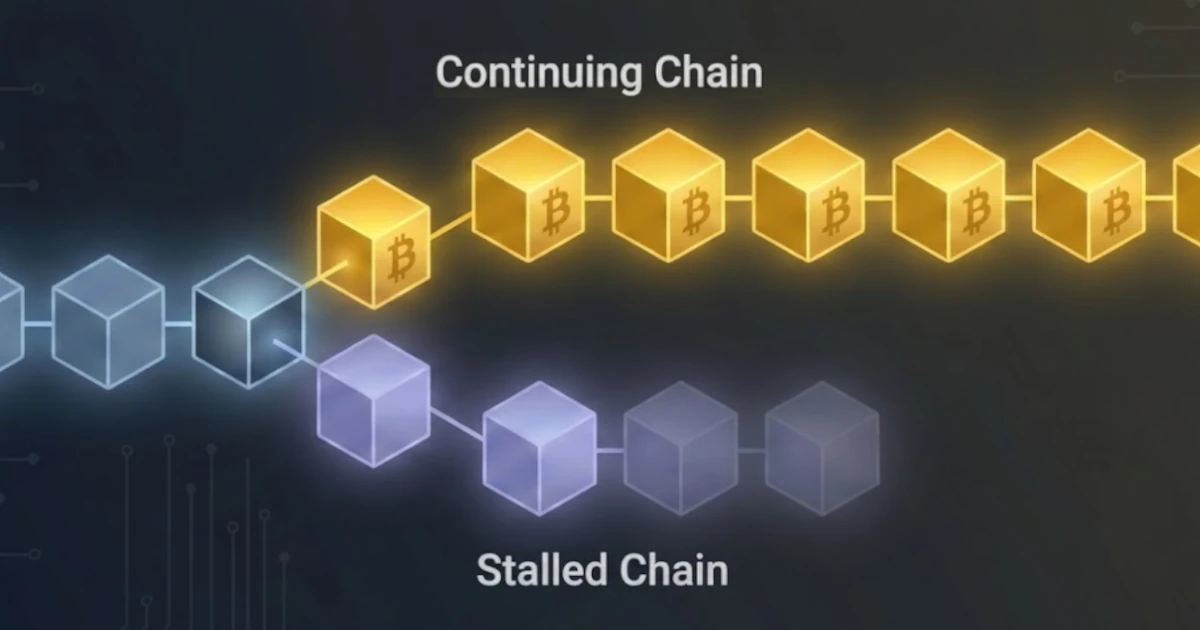
* **Risk of Chain Splits:** If miners adopt BIP110 while the broader network does not, it creates a scenario ripe for a chain split or fork.
* **Not “Mine Invalid Blocks”:** Miners who choose not to support BIP110 are not suddenly mining invalid blocks or acting maliciously. They are following the existing, consensus-backed rules of Bitcoin.
Crucially, the metrics show a lack of genuine consensus. Signaling support is one thing; having it enforced by a majority of nodes and hashrate is another.
—
### Key Facts and Context for Miners
To understand the debate, you need to look at the hard numbers:
**1. Signaling Support is Minimal**
* **Node Support:** Estimates vary, but even if we take the higher figures, the number of Bitcoin nodes signaling support for BIP110 falls far short of a majority. My own analysis suggests it is significantly lower. An often-cited figure is that only 0.6% of blocks over the past 60 days have signaled support. This stands in stark contrast to the environment that allowed SegWit to activate.
**2. The “Segwit Comparison” is Flawed**
Proponents sometimes point to the activation of Segregated Witness (Segwit) as a precedent. This comparison is inaccurate. Segwit activated because it had immense community and economic backing, with roughly one-third of the network’s hashrate already signaling support. BIP110 lacks this critical mass of buy-in, making a similar activation path impossible.
**3. The “UASF” Argument is Outdated**
The User-Activated Soft Fork (UASF) was a specific mechanism used to enforce the Segwit upgrade. It was effective because there was overwhelming miner buy-in. Applying that same model to BIP110, which lacks that support, would not work and is not a viable strategy.
**4. The Fork Point is Critical**
It’s important to understand the timeline. For miners using specific tooling (like DATUM on Ocean Mining), the cost of signaling is negligible *up until the fork point at block 961632*. After this block, the network will split, and miners will have chosen a side.
—
### Strategic Recommendations for Miners
Given this landscape, what should you do? My practical advice is straightforward:
1. **Signal Your Stance:** Clearly signal if you support BIP110. If you don’t support it, or simply don’t care, do not signal. Your signal is a data point for the network.
2. **Monitor the Network:** Closely watch the network’s behavior on and around block 961632. This is your decision-making deadline.
3. **Observe Major Pools:** If you see major pools, who have been non-signaling for a long time, suddenly switch to signaling, it’s a strong indicator of a strategic change. If that happens, you should monitor the situation and be prepared to switch to the chain with the greatest proof-of-work (the heaviest chain).
**The bottom line:** Only one outcome is possible. Either BIP110 succeeds and miners who didn’t adapt will be on a rejected chain, or BIP110 fails and miners who didn’t adopt it will be on the main chain. You must decide which outcome you prefer and act accordingly.
—
### FAQ
**Q: Is BIP110 guaranteed to activate?**
**A: No.** BIP110 is not inevitable. It requires genuine consensus, which it currently lacks. It can fail, and it can cause a chain split if miners adopt it without a majority of the network following suit.
**Q: Why is the Segwit comparison invalid?**
**A:** Segwit had widespread support from miners, users, and merchants, with about 1/3 of hashrate already signaling. BIP110 has a tiny fraction of support (around 0.6% of blocks), making it incomparable. The conditions for a UASF-style activation simply do not exist.
**Q: What does “mining an invalid block” mean for non-supporters?**
**A:** It’s a hyperbolic and inaccurate claim. Miners who follow the existing, non-BIP110 rules are mining valid blocks according to the current consensus. They are not “invalid” simply because they haven’t adopted a proposal that hasn’t reached consensus.
**Q: What is the “fork point” at block 961632?**
**A:** This is the specific block number where the BIP110 rules would be enforced *if* it had achieved majority support. For miners using certain software, this is the deadline to decide which chain to be on. If the majority hasn’t signaled by this block, the proposal is effectively dead, and the chain will continue without it.
**Q: Should miners signal early or wait?**
**A:** The data suggests waiting is a viable strategy. The premise that miners have “no incentive to signal until the last minute” is not supported by evidence. Early signaling helps coordinate upgrades smoothly, while last-minute signaling is chaotic and destabilizing.
***
### Conclusion
The BIP110 proposal is a solution in search of a problem, and its approach is fraught with risk and lacking the necessary consensus. As this article has outlined, the metrics show it is far from success. For miners, the path forward is clear: stay vigilant, base your decisions on data rather than hype, and act in your own best interest.
Do not be gaslit by either side of the debate. The Bitcoin network’s strength has always been its decentralized consensus. Don’t let a rushed and poorly-supported proposal undermine that. Make your own informed decision, and navigate the coming weeks with your eyes wide open.
You can read the original document in full here: [Link to Original Document].
