



**Robotic Bolt-Tightening: How 3D Vision and Force Sensors Are Transforming Assembly Lines**
In recent years, industrial robotics has evolved to handle tasks once deemed unsuitable for automation due to the need for extreme precision and human-like dexterity. One such example is tightening bolts on automotive assemblies—a process long considered too intricate for robots. According to a recent industry report, **robots are now capable of performing these high-precision tasks under the demanding conditions of car manufacturing**, thanks to advances in 3D vision systems and force sensing (Assembly Magazine, 2026).
The shift is particularly evident in automotive assembly lines, where repetitive and non-ergonomic tasks like installing rear axle dampers are prime candidates for automation. Traditionally, assemblers manually positioned the dampers and used handheld electric tools to tighten bolts—a process prone to human error and strain. Today, vision-guided robots equipped with advanced sensors perform these operations with consistent accuracy, improving quality and worker safety.
### The Challenge of Precision
The primary challenge in automating bolt-tightening lies in the robot’s ability to accurately locate and align with fastening points when vehicle positions vary slightly on the conveyor. This variability, caused by mechanical tolerances and vehicle weight, demands a sensing system that can adapt in real-time.
To address this, engineers turned to **3D vision systems**, which have seen significant improvements in processing speed, compactness, and algorithmic capability. These systems are less affected by ambient lighting and dirt—key advantages in industrial environments. Among the technologies evaluated, **laser triangulation** emerged as the most reliable, offering sub-millimeter accuracy even in uncontrolled conditions.
### Comparing 3D Vision Technologies
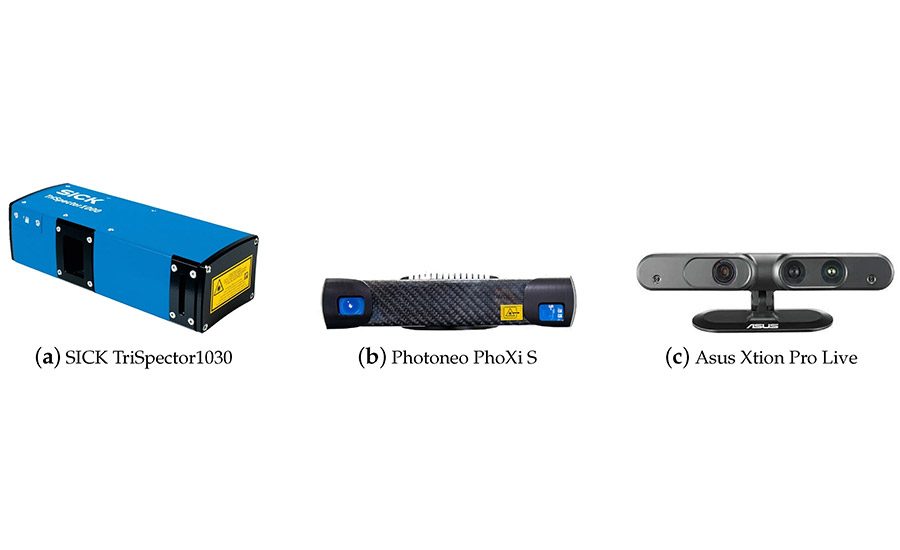
In a detailed comparative study, three sensors were tested for their ability to capture precise point cloud data of an axle damper attachment structure:
– **Sick TriSpector1030 (laser triangulation)**
– **Photoneo PhoXi S (structured light)**
– **Asus Xtion Pro Live (infrared structured light)**
The Sick sensor distinguished itself by delivering the highest accuracy, with a root mean square error (RMSE) consistently below 1 mm and over 90% inlier rates. Its performance was attributed to laser-line filtering and subpixel edge detection, which reduce noise and increase precision. While the Photoneo sensor performed well, the Asus unit lagged due to higher sensor noise and lower point cloud quality.
### Implementation on the Assembly Line
Based on these findings, the Sick sensor was selected for integration into a robotic fastening station. The system operates as follows:
1. The robot scans the vehicle without the damper to build a reference point cloud.
2. The damper is manually placed by an assembler.
3. The robot rescans the area, and the new data is aligned with the reference using the **iterative closest point (ICP) algorithm**.
4. Once alignment is validated, the robot calculates the exact transformation matrix and proceeds to tighten the bolts.
The entire cycle takes approximately **160 seconds**, demonstrating that precision and speed can coexist in automated assembly.
### Conclusion
The successful automation of bolt-tightening highlights a broader trend in manufacturing: **the convergence of robotics, 3D vision, and real-time feedback is enabling machines to perform delicate tasks with human-level reliability**. As factories continue to adopt smarter sensing technologies, robots will increasingly handle complex, ergonomic, and quality-critical operations—ushering in a new era of adaptive, autonomous assembly.
—
**Source:**
This article is based on the research paper summary published by *Assembly Magazine* on July 7, 2026. The original content details a collaborative study by the Institute for Systems and Computer Engineering, Technology and Science, and Europneumaq Industrial Solutions. For more information, visit [Assembly Magazine](https://www.assemblymag.com).
