



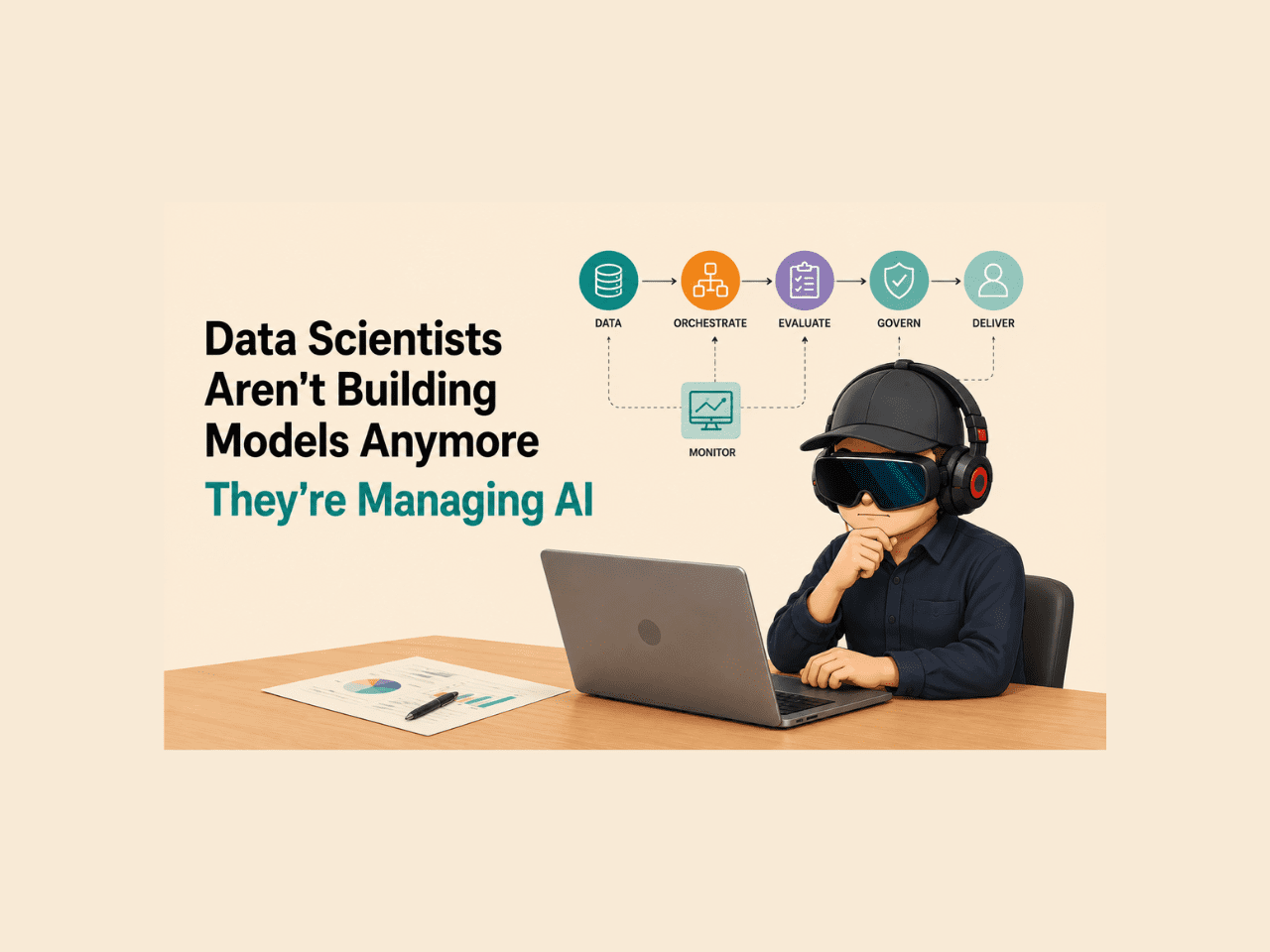
In the evolving landscape of AI deployment, data scientists are finding their roles shifting from model construction to system supervision and oversight. The transition is driven by the increasing complexity and integration of AI in enterprise environments. As of 2025 and 2026, job postings and salary data reveal a significant trend: professionals who can manage, integrate, and supervise AI systems are in high demand, commanding substantial wage premiums.
The new focus for data scientists includes orchestrating multi-agent systems, supervising autonomous agents, and ensuring the responsible deployment of AI models. These roles demand a blend of technical and managerial skills, such as MLOps, prompt engineering, and governance workflows. The proliferation of AI tools has automated many routine data tasks, pushing data scientists toward higher-level system management and strategic oversight.
With enterprises grappling with the challenges of scaling AI from pilot projects to production, the role of the data scientist has never been more critical. They are now the linchpins ensuring AI systems are reliable, compliant, and effective in real-world applications. For those looking to advance their careers, the emphasis is on acquiring skills that extend beyond traditional data science, embracing the complexities of AI system management and governance.
For a deeper dive into the specifics of these evolving roles and skills, you can refer to the original insights on [KDNuggets](https://www.kdnuggets.com/rosidi-data-scientists-becoming-ai-managers).
