



**The Deceptive Calm in Crypto Security: Why AI Scams Are Still Winning**
In the high-stakes world of cryptocurrency, the battle between security and fraud has reached a new intensity. As an entrepreneur and investor, I review countless pitches where teams promise their “real” traction will survive contact with the blockchain. My role is to determine which parts of those pitches hold up when scrutinized through the lens of blockchain technology.
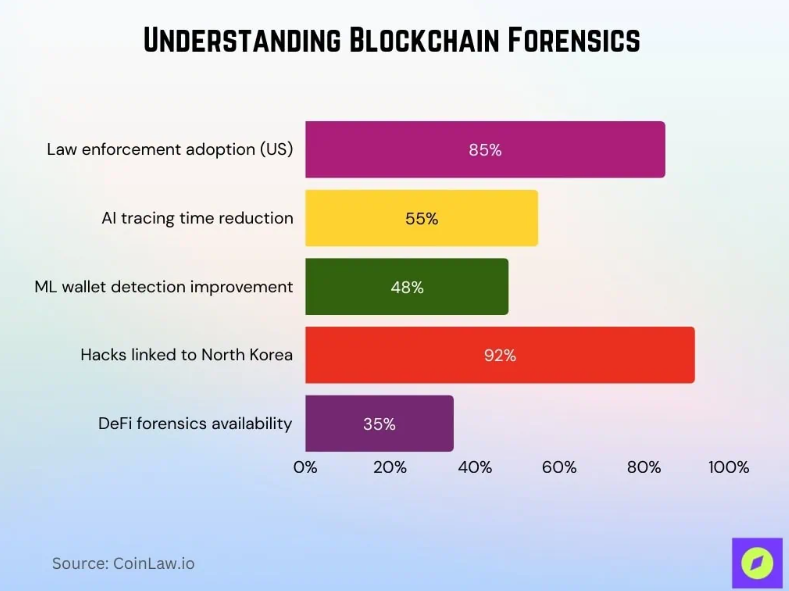
Based on current industry analysis, the detection side of this field has genuinely advanced. Platforms like Chainalysis, TRM Labs, and Elliptic have frozen or recovered an estimated **$34 billion** in illicit funds. More than **45 regulators** worldwide now use these tools as standard practice. Thanks to AI, newer generations of these tools do more than trace money after it moves—they claim to flag suspicious wallets *before* acting, scoring behavior against 50+ features and retraining daily. One vendor even claims **98% accuracy** across 14 million wallets, with rug-pull scanners integrated directly into AI trading agents.
On the surface, it appears crypto fraud is being contained. But appearances can be deceiving.
**The Numbers Behind AI Crypto Scams**
According to Chainalysis, total crypto scam and fraud-related losses for 2025 sit at roughly **$17 billion**, up from $9.9 billion the previous year. The FBI’s figure for crypto fraud over the same period is **$11.36 billion** in the US alone—a 22% year-on-year jump.
What’s particularly alarming is that Chainalysis found **AI-powered scams were 4.5x more profitable** than traditional ones. Scammers now use AI to manufacture fake support agents, fake investors, and trusted insiders at scale. Lior Aizik, co-founder and COO at crypto exchange XBO, warns that impersonation scams are increasing and becoming more sophisticated industry-wide.
The scale is staggering:
* **Impersonation fraud** posted **1,400% year-on-year growth**, with scammers using AI to run expensive, targeted cons on pre-profiled victims rather than cheap, high-volume spray-and-pray attacks.
* The **average payment size** jumped sharply from **$782 in 2024 to $2,764 in 2025**, a 253% increase.
* **76% of AI scams** are high-value and high-volume.
[Source: Chainalysis. Data visualization by BeInCrypto]
**Why Better Detection Keeps Losing the Race**
The harsh reality is that forensic tools are built for investigation, not prediction. For a recovery effort to begin, a crime must already have been committed. Even predictive models claiming to catch rug pulls before they happen are trained on yesterday’s scams—and tomorrow’s scam is being designed by someone who read the same training data.
This became clear in real-time with the FBI’s NexFundAI sting operation. The FBI created a fake token to catch market manipulators, and after the arrests were announced, someone cloned the exact smart contract and launched a copycat token, making **$127,000 in a single day** using the same tactics the FBI had just exposed in court documents.
Every disclosure that helps the defender also hands the attacker a working template—and attackers read faster than regulators patch.
**The Attack Side Just Got Cheaper and Faster**
You can see the same asymmetry in how little effort an attack now requires. Software developer Peter Steinberger built a popular open-source project allowing users to run an AI assistant on their computer with full system access via apps like Telegram, WhatsApp, and Discord.
After a rebrand due to a trademark dispute, **within minutes**, someone had hijacked his old GitHub and X accounts to launch and pump a token that reached a **$16 million market cap** before crashing over 90%. No malware, no stolen keys—just someone fast enough to exploit a gap in attention that no forensic tool was watching for. The tools weren’t watching because nothing illegal had happened yet.
**When the AI Agent Is the One Getting Rugged**
It’s not just humans who are vulnerable; many pitches I receive are for AI agents to trade on our behalf. These agents can lose money just as easily. A developer described an AI agent on Solana that bought a token which rugged **94%** after twenty minutes, costing the agent’s wallet **$12,000**.
Red flags were everywhere:
* The token had freeze authority enabled.
* The top 10 holders controlled 91% of the supply.
* The deployer had already launched three previous scam tokens.
Every one of those red flags was supposed to be checkable in seconds by the detection tools described earlier. But the agent didn’t check. It simply saw a token and a price and bought it—because nobody wired the safety layer to the decision layer. That’s the exact failure mode I now stress-test in every agent-based fund pitch.
**The Part No Tool Can Fix**
What worries me most is that some of this damage never touches a smart contract at all. I have a public profile, which makes me a target for cloning. In May, it was reported that a woman in Guelph, Ontario, lost **$14,000** to scammers after thinking she was speaking with YouTuber MrBeast about a crypto investment. She wasn’t. MrBeast has been fighting AI-generated videos using his likeness to push fake giveaways for years.
Forensic tools don’t flag these interactions, because nothing about them touches the blockchain until the money is already moving. The fraud happens in a video call, in a moment of trust. By the time a transaction exists for an analytics platform to score, the decision that costs the victim has already been made.
AI has gotten better at manufacturing that false trust faster than it has gotten at flagging it. And that’s where most of the **$17 billion** actually went.
**AI Crypto Scams: So Who’s Actually Winning?**
Neither side.
That’s the most honest answer I can give. Both forensic and predictive tools are real, and the recoveries are real. Dismissing the security advancements because fraud has also grown would be its own kind of dishonesty.
But “real and improving” isn’t the same as “ahead.” The 2025 data is clear: in dollar terms, offense has improved faster than defense.
If there’s one reason for that, it’s this: Detection tools mainly answer the question, “Is this wallet suspicious?”—and that question is only asked after someone decides to check.
Then there are cases like Guelph, where there’s no wallet to scan in the first place. AI has made those cases more common, which is why I’ve stopped treating AI as a selling point in any pitch and started treating it as the first thing I want to stress-test.
The blockchain can confirm a wallet’s history. It can’t confirm a phone call.
—
**Original Article Source:**
*Crypto Forensics Got Smarter, But AI Scammers Got There First.* (2026, June 2). BeInCrypto. Retrieved from https://www.beincrypto.com/crypto-forensics-got-smarter-but-ai-scammers-got-there-first/
