



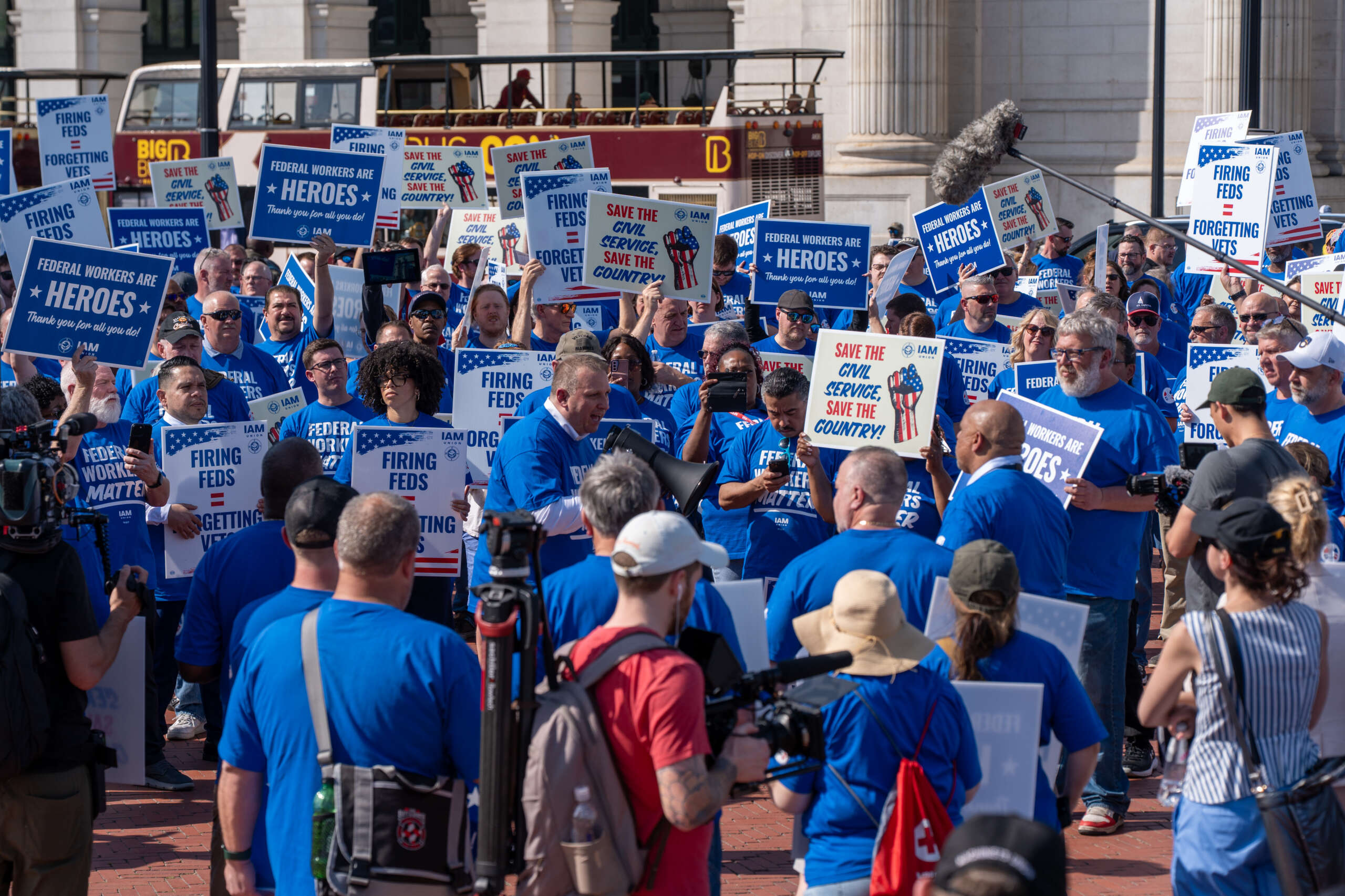
The Democrats’ latest amicus brief comes on the heels of an earlier request in the same court proceeding for a full-panel appeals court review.
Michele Sandiford
- Senate Democrats are pressing a higher court to overturn a ruling that upheld the terminations of two immigration judges at the Justice Department. Lawmakers caution that the Merit Systems Protection Board’s earlier decision could significantly expand the president’s authority to dismiss wide swaths of civil servants. The Democrats’ latest amicus brief follows an earlier call within the same case for a full-panel appeals court hearing.
- The Department of Veterans Affairs is delivering prosthetic limbs to veterans at a much faster pace. The VA reports that prosthetics are now reaching veterans in an average of 54 days—down from 94 days—after overhauling its purchasing procedures. Previously, every order needed a contracting officer’s approval, which added weeks of delay. VA Secretary Doug Collins waived this requirement for the overwhelming majority of prosthetic orders in April. Each year, more than 45,000 veterans depend on the VA for care related to major limb loss.
- The House’s version of the fiscal 2027 defense spending bill is advancing. A panel of lawmakers gave the $1.1 trillion package its initial approval on Thursday. Backers of the legislation say its record-setting total will modernize the U.S. military to better compete with China while the conflict with Iran persists. Key priorities in the bill include counter-narcotics operations, bolstering the defense industrial base, and a military pay increase of up to 7%. The bill now heads to the full House Appropriations Committee for review later this month.
- Federal agencies’ longstanding obligations to disclose workforce demographic data have now become voluntary. The Equal Employment Opportunity Commission announced that agencies are no longer required to provide breakdowns of employee race, gender, and ethnicity in their annual affirmative action reports. The EEOC’s chair argued that scrapping these requirements would cut red tape, boost efficiency, and reflect recent legal shifts. However, an EEOC commissioner who opposed the change cautioned that it would undermine agencies’ capacity to detect and tackle workplace discrimination.
- A proposed amendment outlined in the House Armed Services Committee chairman’s markup could deter technology firms from constructing data centers on military installations—undermining Army modernization goals and discouraging future private investment. The provision would prohibit the Defense Department from leasing its land to private companies for data centers unless they pledge not to incorporate components produced in China, Russia, Iran, or North Korea. Army leaders warn the amendment would impose a “federal land penalty”: companies that build data centers off-base wouldn’t be subject to the same restrictions. The Army noted that the domestic industrial base currently lacks the capacity to manufacture certain equipment essential for data centers.
- USDA workers facing relocation must now decide whether to stay put or make the move—with incentives available either way. Staff at the National Agricultural Statistics Service have until July 8 to choose whether to relocate to St. Louis or transfer to one of the agency’s regional offices. Regardless of the path they choose, employees qualify for financial incentives. According to the relocation notice, workers who agree to move and then remain at their new office for two years will receive a relocation bonus. The memo also notes that employees will have access to buyout packages and early retirement options.
- The Centers for Medicare and Medicaid Services is establishing a new office set to play a bigger role in how the agency delivers services across the healthcare landscape. The Office of Health Technology and Products (OHTP) will provide enterprise-wide leadership and oversight for CMS healthcare technology improvements, digital product development, and the modernization of platforms and services supporting all agency programs. CMS stated that OHTP, which will collaborate closely with the agency’s chief information officer, will spearhead the design, development, rollout, and operation of CMS digital products and platforms—including systems used by beneficiaries, providers, and states.
- New figures illustrate just how challenging the past year has been for small business government contractors. A report from Sen. Ed Markey (D-Mass.), ranking member of the Small Business Committee, shows that since January 2025—when President Donald Trump took office—agencies have cut spending with small business contractors by $47 billion. Data compiled by committee minority staff also reveals that more than 6,500 small firms have exited the federal marketplace over the past 15 months. The committee staff, who drew on publicly available data for the report, noted that every socioeconomic group has been affected by the Trump administration’s policies, with HUBZone and 8(a) programs experiencing more than a 25% drop in set-aside contracts.
- A measure barring companies from purchasing their own stock when they fail to meet Defense Department performance standards has been incorporated into the Senate Armed Services Committee’s fiscal 2027 defense policy legislation. The provision draws partly from a bipartisan bill that restricts executive compensation and stock buybacks. Industry groups have pushed back, arguing that any legislative attempt to enshrine elements of President Donald Trump’s executive order limiting stock buybacks would “turn a focused policy directive into a blunt and overbroad legal mandate.” The Committee moved forward with its version of the defense policy bill on Thursday. Sen. Elizabeth Warren (D-Mass.), who successfully inserted the provision into the Senate’s 2027 National Defense Authorization Act, declared it’s “time to stop contractors from prioritizing Wall Street over our national security.”
- Complimentary shopping bags could return to military commissaries if a new proposal in the House becomes law. The House version of the annual defense policy bill would repeal the Defense Department’s recent prohibition on single-use bags at on-base grocery stores. Most commissaries phased out disposable bags in 2024 as a cost-saving and environmental measure. The department briefly charged customers for single-use paper and plastic bags but abandoned the fee after just one month. Supplying single-use bags costs the department roughly $17 million annually.
Copyright
© 2026 Federal News Network. All rights reserved. This website is not intended for users located within the European Economic Area.
