



Stay updated with ZDNET: Mark us as a preferred source on Google.
Key points from ZDNET
- Power stations are generally kept aside for emergency situations.
- I continuously plug several into outlets, using them as no-break power sources.
- Keeping them plugged in at all times has many perks and prevents inconvenient surprises.
Most people think of portable power stations as grab-and-go backup gear. They pull them out when the electricity goes kaput or they head off to camp, then hook up whatever devices they need to stay powered.
But this reactive method can backfire. You might find your power station wasn’t topped off, you can’t locate the right cables, or you suddenly lose Wi-Fi and access to essential gadgets.
Also: I rely on Blink cameras around my house, and this 65% discount on a 5-camera set is tough to pass up
As someone who reviews smart home technology, I receive plenty of power stations for testing, so I’ve found inventive ways to put them to use. The bigger units are wired into my whole-house backup setup, while the compact ones serve as UPS units for gear that keeps my household running smoothly every day.
Below are three categories of devices I always leave plugged into a power station.
1. Modem and router
Heading into 2026, the very first thing I connected to a UPS was my internet modem and router. Growing up, we had a UPS hooked to every desktop computer at home to prevent a harsh shutdown whenever the power cut out — which happened often where I lived.
Today, our devices are portable — laptops, tablets, phones — and don’t need to stay plugged in constantly. The biggest disruption in my routine is suddenly losing my home Wi-Fi.
My spouse and I both work remotely and depend on a steady, dependable internet connection. Since blackouts happen fairly often where I live, I’ve set up a portable battery as a UPS for my modem.
Also: One simple router antenna tweak boosted my internet speed beyond what I anticipated
When the lights go out in a suburban or city area, cell networks get overloaded almost immediately as everyone’s devices jump off their home Wi-Fi at once. Keeping my Wi-Fi alive lets me stay productive for work and makes sure our kids can use their devices without interruption.
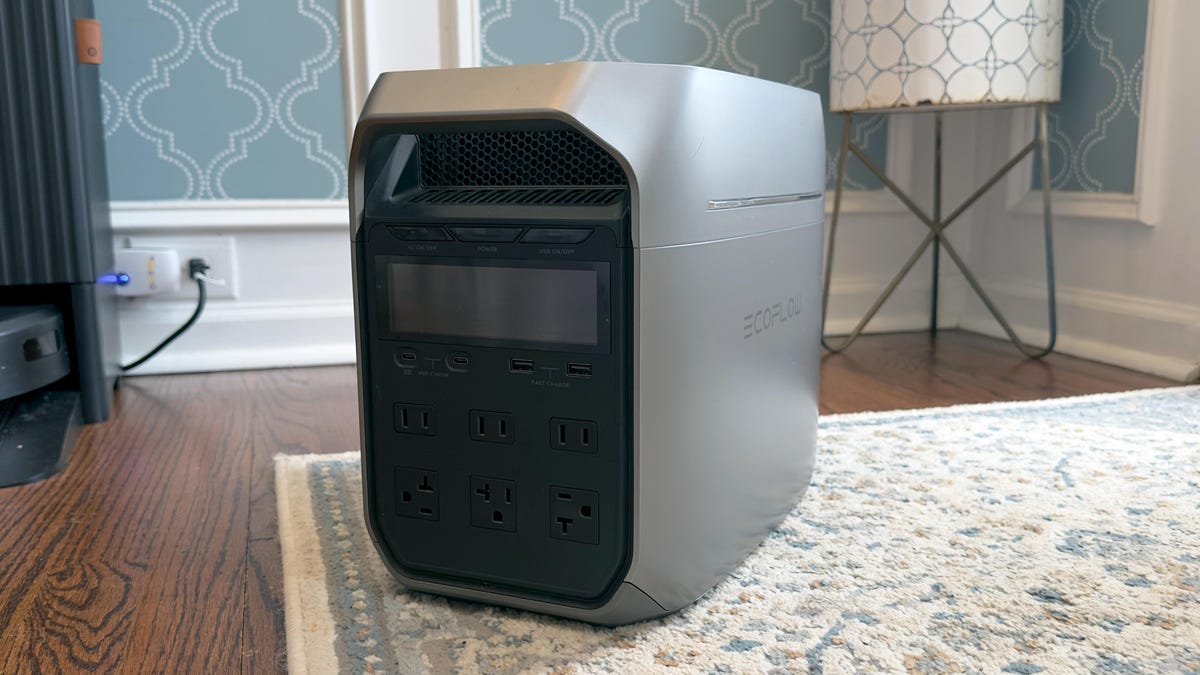
Because modems and routers draw very little power, a modest 1kWh battery can keep the Wi-Fi going for several days during a blackout. I personally use an EcoFlow River 3 Plus, which is quite compact at 286Wh, yet it can run my modem and router for an entire workday. An Anker Solix C1000 with a 1,056kWh capacity would handle the job perfectly and keep a modem and router running three times longer.
Beyond remote work, I also run a smart home with a whole-house backup system. While the system doesn’t need Wi-Fi to activate when the power drops, it does need an internet connection for remote control.
Also: Your iPhone is gaining improved Bluetooth tracking with iOS 27 — but there’s a trade-off
On a recent trip, I accidentally (and remotely) shut off the circuit powering my modem and router. That left me unable to check on my dog overnight through any of our cameras, so we had to cut the trip short and head back. My neighbor stopped by to look after the dog, but she couldn’t flip the circuit back on. If I’d had a UPS on my modem and router, I could have restored the circuit remotely since my connection would have stayed intact.
2. Refrigerator
Your fridge is probably the first thing you worry about when the power goes out, since nobody wants to throw out a fridge full of food. The good news is that today’s refrigerators consume only about 1–2kWh per day, which is surprisingly low for a major appliance.
The fridge is one device I suggest plugging into a portable battery that’s charged via solar panels, since it can run efficiently on one and trim $8–$20 off your monthly bill. That said, a portable power station is also a solid option for keeping your fridge going during an outage.
Also: I’ve been testing solar power at home for years — here are 12 myths you should stop believing in 2026
Before hooking your refrigerator up to a power station, it’s worth checking its specs. In addition to using 1–2kWh daily, most modern fridges pull between 100W and 300W while the compressor is active (which cycles on and off), though they can spike to 600W–1,500W at startup.
For a refrigerator, I’d suggest at least a 2,000Wh unit if your budget permits, to give you extra breathing room during extended outages.
The EcoFlow Delta 3 Max Series is an excellent pick, offering 2,048Wh capacity and 3,000W output. You could also look at more compact alternatives like the Anker Solix C2000, which matches that capacity and delivers 2,400W output.
Either of these batteries can run a full-size fridge for up to three days. A 1,024Wh battery can keep one going for as long as 16 hours.
3. Security cameras and systems
A blackout is exactly when you want your security cameras working at full capacity. No matter the cause, power outages bring uncertainty, and people tend to check on their property more — watching for storm damage, making sure family members get home safe, or just keeping an eye on things. Spending hundreds on a security system that goes dead the moment the power cuts is far from ideal.
Some systems include built-in backup that runs for a set number of minutes before powering down. Battery-powered cameras can help, but they still need a reliable network to stay connected. You can keep your network alive with a power station powering your router and modem, but your camera hub or individual cameras also need their own power source.
Also: The cloud vs. clouded leopard: America’s data center backlash on display at Nashville Zoo
Plugging your cameras and/or hub into a UPS guarantees you never lose surveillance coverage, but make sure you’re backing up the right components to keep the whole system operational. If you mostly use battery-powered cameras, focus on backing up the hub or base station, a PoE switch for wired cameras, or an NVR.
As a big fan of Eufy’s home security products, I’d point you toward the HomeBase 3 for local storage. If your hub goes down, your cameras can’t record new footage, motion detection may be limited, and remote access vanishes entirely.
You don’t need a massive battery for this at all. Something as small as an EcoFlow River 3 would keep these cameras online, thanks to its 3,000W output and 245Wh capacity.
