



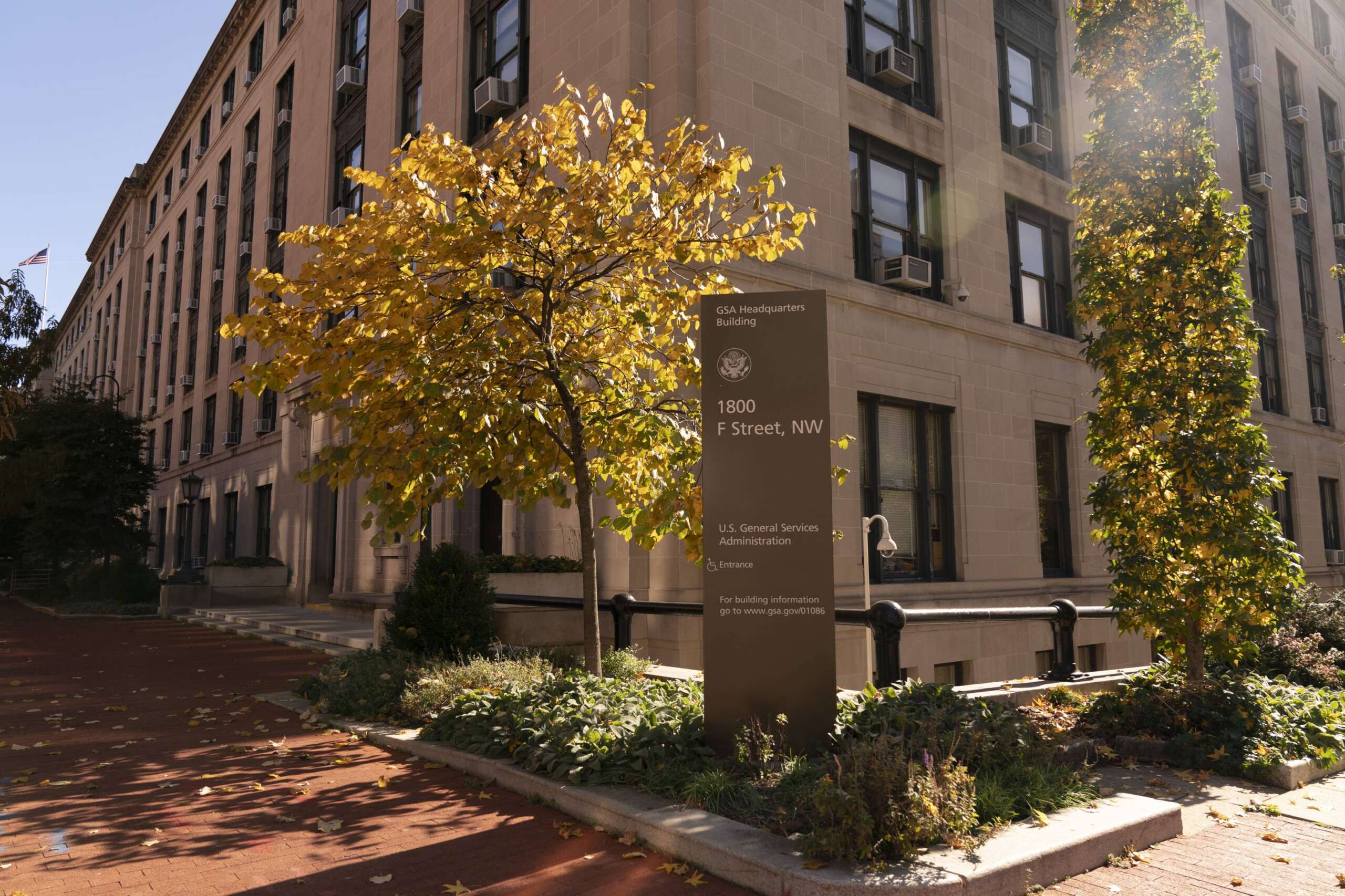
Not a single federal building listed in a government-wide database tracking average occupancy rates meets the minimum threshold that would protect them from being included in plans to consolidate government real estate.
However, the General Services Administration—the agency that serves as landlord for many federal organizations—is taking a more detailed look at the data it has gathered so far.
In March, GSA released its first comprehensive, government-wide overview of federal building utilization figures.
Under the USE IT Act, which former President Joe Biden signed into law during his final weeks in office, federal agencies are required to prove that their buildings achieve at least a 60% utilization rate—or else create plans to reduce their office footprint.
The USE IT Act mandates that the 24 largest federal agencies report their building utilization data to GSA.
The data released by GSA does not include the Department of Defense, which ranks among the biggest real estate holders in the federal government, with more than 700,000 facilities around the globe. It also excludes the U.S. Agency for International Development, which the Trump administration shut down last year.
To date, the data GSA has compiled shows that none of the 9,700 buildings in the database are hitting the minimum 60% utilization mark.
But Andrew Heller, acting commissioner of GSA’s Public Buildings Service, told members of the House Transportation and Infrastructure Committee on Tuesday that GSA is “not necessarily seeing an apples-to-apples comparison” in the data.
“The USE IT Act was really focused on total space, and so you’re counting things like auditoriums, conference rooms, libraries, spaces where people shouldn’t be reasonably expected to work during a given day,” Heller told the Subcommittee on Economic Development, Public Buildings, and Emergency Management.
Heller said the government-wide Federal Real Property Council, which GSA leads alongside the Office of Management and Budget, has formed an occupancy working group to examine this data and develop potential recommendations.
The Trump administration has pointed to underused office buildings as a reason for selling and consolidating agency headquarters throughout the Washington, D.C. metropolitan area.
The administration has unveiled plans to sell the headquarters buildings of the Agriculture Department and the Department of Housing and Urban Development.
The FBI is also vacating its headquarters building and moving to the nearby Ronald Reagan Building, which already houses office space for several other agencies.
The Education Department recently announced it will leave its headquarters, the Lyndon B. Johnson Building, by August and relocate employees to a building that previously housed USAID staff.
The Energy Department will vacate its headquarters, the James Forrestal Building, and move staff to the Education Department’s headquarters. Heller said GSA intends to sell the Forrestal Building.
“There’s been a significant amount of improvement on alignment across agencies over the last year, and I think you’re really seeing some of the benefits of that alignment come to fruition now,” he said.
Subcommittee Chairman Scott Perry (R-Pa.) said the USE IT Act has delivered the kind of data that Congress has been seeking for years. Since 2020, lawmakers have urged agencies that maintain largely empty office buildings to reduce their space.
“Congress has spoken: Agencies must let go of space if they fail to meet that threshold. The last thing we want are excuses, so finding solutions to any hurdles is critical,” Perry said.
Tim Hutchens, executive vice president for CBRE, estimated that roughly 65% of a typical federal office building’s square footage consists of actual office space. In a separate analysis, Hutchens said CBRE determined that only about 35% of the space in the FBI’s headquarters, the J. Edgar Hoover Building, is made up of offices.
Hutchens said that given the way the data is currently being gathered and interpreted, agencies would have no realistic path to meeting the USE IT Act’s occupancy targets.
“If you’re going to enforce the USE IT Act, you’re going to have to revise the way the data is collected,” Hutchens said. “Right now it’s being overcounted so significantly that none of the agencies can meet the test.”
In response, Perry suggested that agencies should perhaps set an even higher standard for federal building occupancy.
“Libraries, auditoriums, et cetera, aren’t going to be full all the time, but if we excluded them, then we’re looking at something more like 80%, right? Maybe that’s unrealistic,” he said. “This is hard to go to the general public and say you’re going to pay for these buildings, and 20% or 40% are going to be empty.”
Copyright
© 2026 Federal News Network. All rights reserved. This website is not intended for users located within the European Economic Area.
