



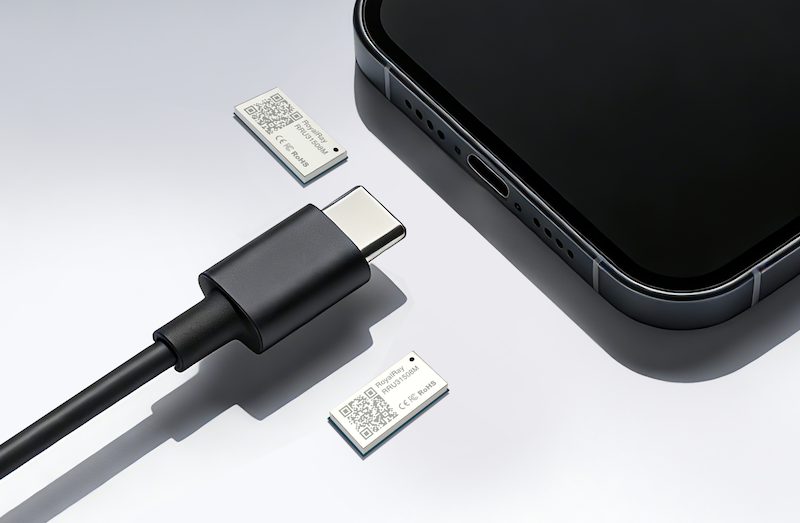
Key Takeaways:
- Royal Ray and Impinj have introduced the Ourea Series RRUx1508M, an embedded RAIN RFID module measuring just 15 × 8 × 2.9 mm. It comes with native Gen2X support and is designed for devices where space and power are limited.
- This globally approved module helps manufacturers quickly build RFID functionality into wearables, smart gadgets, medical devices, drones, and other IoT products—without losing reading reliability.
Royal Ray has unveiled what it describes as the tiniest embedded reader module on the market that supports Impinj Gen2X. The Ourea Series is set to make it easier than ever to bring RFID into next-generation mobile, wearable, and IoT applications—areas where every millilliwatt and square millimeter matter.
The drive to shrink RFID isn’t just about engineering bragging rights. Businesses increasingly need real-time item-level data across a broader range of devices—not just traditional handheld and fixed readers. This trend is pushing makers to build RAIN RFID directly into everyday tools, from networked weighing devices and durable handhelds to medical instruments, smart storage cabinets, and unmanned aerial vehicles.
The RRUx1508M, at a mere 15 × 8 × 2.9 mm, pushes chip-level integration almost to the breaking point—yet still delivers strong output power and full regulatory approval for worldwide use.
Impinj Gen2X Drives the World’s Most Compact Embedded RAIN RFID Module
Vikas Dhurka, senior director of product management for reader ICs at Impinj, confirms the chip carries worldwide certification, outputs up to 27 dBm of power, and includes the full suite of Impinj Gen2X enhancements.
“In terms of performance, the Ourea Series is leading-edge—something that would have seemed impossible just a few years back,” Dhurka told RFIDJournal.com. “RAIN RFID readers are now fitting into wearables, smartphones, intelligent shelving and storage units, embedded systems, drones, and autonomous robots that navigate warehouse aisles to locate items. Form factor has become a critical design factor.”
How the Ourea Series Merges Tiny Size, Global Approval, and Easy OEM Integration
At the core of the Ourea Series sits the Impinj E Family reader IC, selected for its modest power consumption and integrated system-on-chip design. The module can be soldered directly onto a motherboard and drops into place without complex installation, making the design process much simpler for device makers. According to Royal Ray, this method preserves strong read accuracy and properly tuned RF output—filling a long-standing gap between shrinking module size and maintaining dependable operation.
The module ships ready for deployment across the globe—a big advantage for manufacturers who want a single product version for markets worldwide. In the past, engineering teams had to navigate a maze of regulatory checks to get RFID approved in each region. Royal Ray states that the RRUx1508M carries full global certification, making rollouts far smoother for device companies.
“Pairing Impinj E Family reader ICs with Gen2X opens up a new tier of integration for embedded RFID,” said Yi Zou, CEO of Royal Ray. “By packing advanced reading performance into a small, energy-efficient package, we can shrink RFID further without losing any capability—and open the door to RAIN RFID in a whole new wave of products.”
RFID Capabilities for Wearables, Connected Devices, and IoT
Despite packing a long list of capabilities, the module’s standout addition is built-in Gen2X support—a protocol upgrade that increases read speeds, improves inventory counting efficiency, and enhances tag reading on difficult surfaces such as metal and liquid containers. Gen2X also adds authentication features that help combat counterfeiting by verifying tags are authentic.
“Gen2X capabilities are migrating from large, fixed readers into extremely compact modules,” Dhurka explained. “Businesses want to pick up tags from long distances, verify tag authenticity, and read tags more quickly—and all of that is now accessible through the complete Gen2X toolkit built into the Ourea module, which measures just 15 × 8 × 3 mm.”
Early adopters include wearable RFID readers, smart glasses, and vehicle-mounted terminals—applications where rugged, compact designs and high tag density are the norm. Shenzhen-based BlueReach is among the first companies to integrate the module. Its CEO, Able Yan, said the RRUx1508M delivers “a new degree of freedom for embedded RFID product design,” bringing Gen2X-level performance into devices that previously forced tough compromises on size or features.
Meeting the Surge in Demand for Real-Time Tracking
As RFID technology matures, customers want solutions that don’t eat up device space or drain batteries, yet still match the performance of fixed reader setups.
The Ourea module is designed to close that gap. Dhurka pointed out that for years, engineers working on embedded RFID faced a painful trade-off: shrinking the module size meant risking more electronic noise, shorter read ranges, or complicated certification efforts for different countries.
By tapping into the E Family architecture and Gen2X capabilities in a package nearly the size of a chip itself, Royal Ray aims to remove those obstacles—combining high read sensitivity, strong signal output, and broad protocol support in one module that’s certified for use worldwide.
Growing Momentum Behind Shrinking RFID
For device manufacturers, the benefit is shorter development time and more freedom in design. The module’s global certifications and straightforward integration can cut engineering effort and support rollouts across North America, Europe, and Asia using just one product variant.
The push toward smaller RFID isn’t accidental, Dhurka explained. The pandemic triggered a wave of spending on supply chain transparency and asset monitoring, and now enterprise customers want more widely distributed, real-time tracking woven directly into front-line work.
“We’ve gone from RFID readers that needed a whole cart to be wheeled in, to a solution nearly the size of the chip itself—and that kind of miniaturization unlocks entirely new categories of use,” Dhurka said. “The real breakthrough is taking something large and shrinking it steadily until it fits everywhere—and that’s exactly what Impinj and our partners keep achieving with RAIN RFID.”
