



The proposed legislation would cut financial support for the Smithsonian Institution, the National Gallery of Art, and the National Endowment for the Humanities.
Michele Sandiford
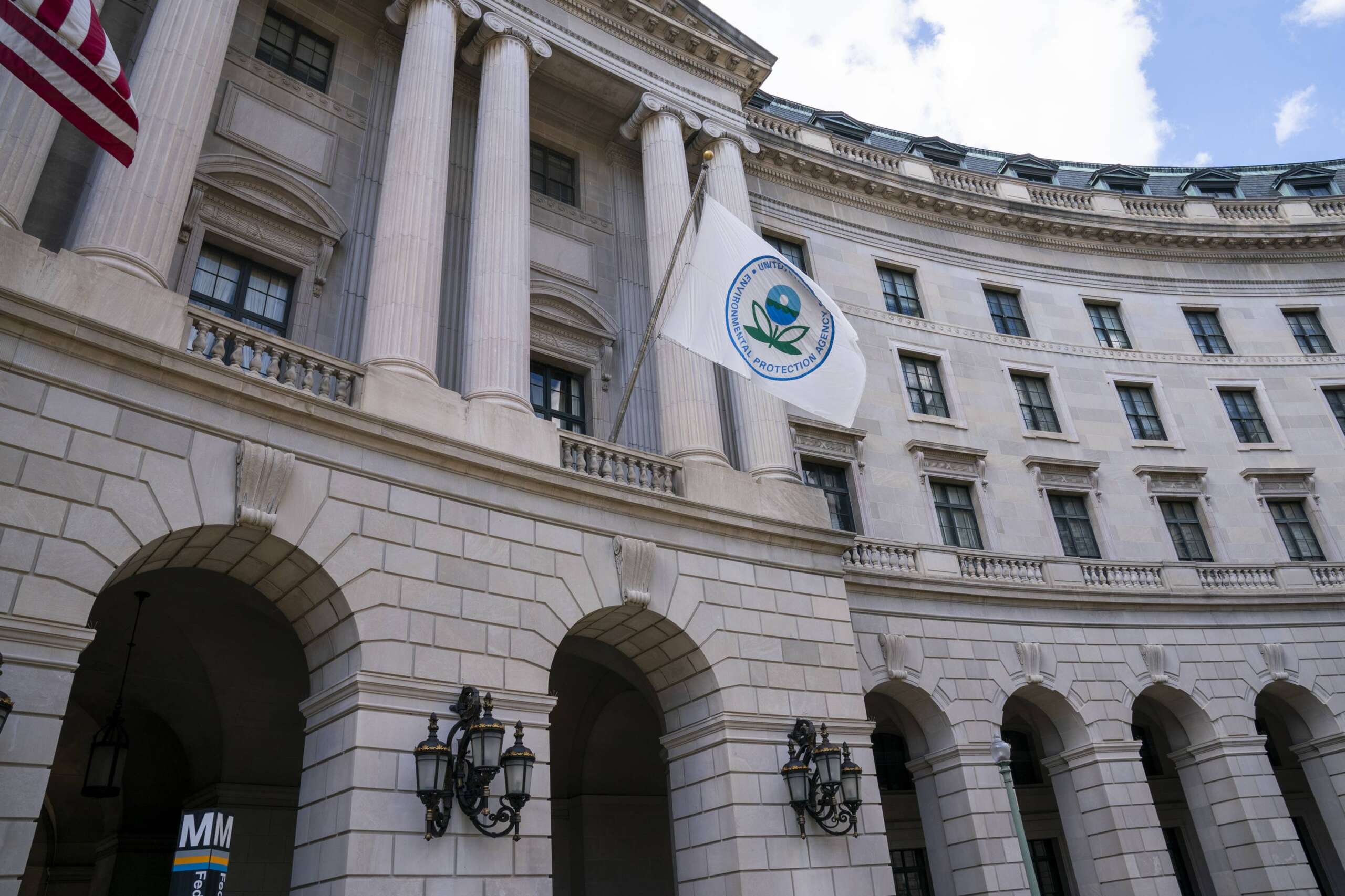
- The House Appropriations Committee is proposing a $1.8 billion, or 20%, cut to the EPA’s fiscal 2027 budget. As part of the Interior, Environment, and related agencies spending bill, lawmakers are simultaneously boosting the Interior Department’s funding by nearly $700 million. The bill also backs President Trump’s plan to consolidate Interior firefighting units and slashes funding for climate initiatives. Furthermore, it would reduce financial support for the Smithsonian Institution, the National Gallery of Art, and the National Endowment for the Humanities.
- Legislation to reinstate full benefits for certain injured veterans is advancing toward a House vote. Congressman Mark Takano (Calif.), the leading Democrat on the House Veterans Affairs Committee, initiated a discharge petition to compel a floor vote on the Major Richard Star Act. This bill aims to remove a current offset that prevents medically retired veterans from receiving their full retirement pay from the Department of Defense alongside their full disability pay from the VA. It has garnered support from a majority of House lawmakers.
- The White House has appointed Jay Hurst as the permanent Pentagon budget chief. Hurst has been serving in an acting capacity since August, and the Defense Department has lacked a permanent comptroller since January when President Donald Trump assumed office. Since taking on the role of acting Pentagon comptroller, Hurst has managed the rollout of the administration’s substantial $1.5 trillion defense budget request. Before his current position, Hurst served as the assistant secretary of defense for manpower and reserve affairs.
- GSA has onboarded another vendor for its OneGov program. Snowflake is now the 20th vendor to secure an enterprise-wide contract with the General Services Administration under its OneGov strategy. The AI and data company will provide its software and services at a reduced rate through the schedules program. GSA states Snowflake will lower its computer services prices by 20% and decrease its storage price by 26.67%. These discounted rates are valid through September 2027. GSA reports that the OneGov program has saved or helped agencies avoid over $1 billion in spending in the past year.
- Tulsi Gabbard, Director of National Intelligence, has submitted her resignation. Gabbard announced her decision on Friday via a letter shared on social media, stating her need to step down as her husband, Abraham Williams, fights a rare form of bone cancer. Gabbard, a former Democratic congresswoman from Hawaii, is the fourth Cabinet official to depart during President Trump’s second term. Her resignation is effective June 30.
- The top official for healthcare and insurance at the Office of Personnel Management is stepping down. Shane Stevens, OPM’s associate director of healthcare and insurance, announced on Thursday that he would be leaving his post. The OPM office manages major insurance programs for over eight million federal employees and their families. Stevens has held the politically appointed position leading that office since last summer. OPM has not yet named his successor.
- The House Appropriations Committee is trimming budgets for agencies covered by the Transportation and Housing and Urban Development, and other related agencies funding bill for fiscal 2027. The bill allocates just over $92 billion for these agencies, a decrease of approximately $10.7 billion, or 10.4%, from 2026. Key provisions in the bill include $22.7 billion for the Federal Aviation Administration, along with funds to recruit 2,300 air traffic controllers and modernize telecommunications infrastructure at the FAA. The bill also designates $6.3 billion for transportation infrastructure funding and $92 million for DOT cybersecurity infrastructure projects.
- Lawmakers are urging the Defense Department to commit to yearly audits of the TRICARE pharmacy contract. As the Defense Department begins planning for the next-generation TRICARE pharmacy contract, which would replace the current agreement managed by Express Scripts, lawmakers argue the Pentagon can no longer overlook what they describe as a significant conflict of interest where Express Scripts functions as both a pharmacy benefit manager (PBM) and operates its own pharmacies. In the interim, existing contracts should be “regularly audited and subjected to much greater transparency,” Sen. Elizabeth Warren (D-Mass.) stated recently. Congress has long criticized this arrangement, as Express Scripts provides pharmacy services to TRICARE members while also setting reimbursement rates for itself and all its competitors.
- Bipartisan lawmakers are working to cultivate biotechnology expertise within the federal workforce. A new House bill would mandate agencies to evaluate current and future workforce requirements in that sector. Lawmakers sponsoring the legislation assert there is a federal talent deficit in biotech research and manufacturing, and currently no unified strategy to bridge the gap.
- The Department of Health and Human Services is reducing cash awards for its highest-performing employees. HHS is redirecting a majority of its funds towards “special act” bonuses with less clearly defined eligibility criteria. The Office of Personnel Management states these special act bonuses are intended for employees who further the Trump administration’s objectives of government efficiency and eliminating fraud, waste, and abuse in government spending. According to internal communications, top-rated employees at the Centers for Disease Control and Prevention will see their bonus decrease from 4% to an average of approximately 2.5%.
Copyright
© 2026 Federal News Network. All rights reserved. This website is not intended for users located within the European Economic Area.
