



Follow ZDNET: Add us as a preferred source on Google.
ZDNET’s key takeaways
- Artificial intelligence and major tech companies continue to diminish individual privacy.
- Proton’s encrypted offerings are becoming more attractive to users.
- Proton CEO Andy Yen expresses concern about a future overwhelmed by unpredictable AI agents.
As the use of AI surges, worries about the technology’s impact on privacy and safety have grown alongside it, particularly during the past year.
AI has become a frequent tool in the hands of cybercriminals, making it far easier for malicious actors to harvest personal data. The technology also allows mass surveillance to be scaled to unprecedented levels. Autonomous AI agents like OpenClaw have repeatedly behaved erratically despite being adopted by major tech companies such as Nvidia and Meta, resulting in the exposure or deletion of sensitive data.
Also: Proton just rolled out a Google Workspace alternative – and it’s entirely encrypted
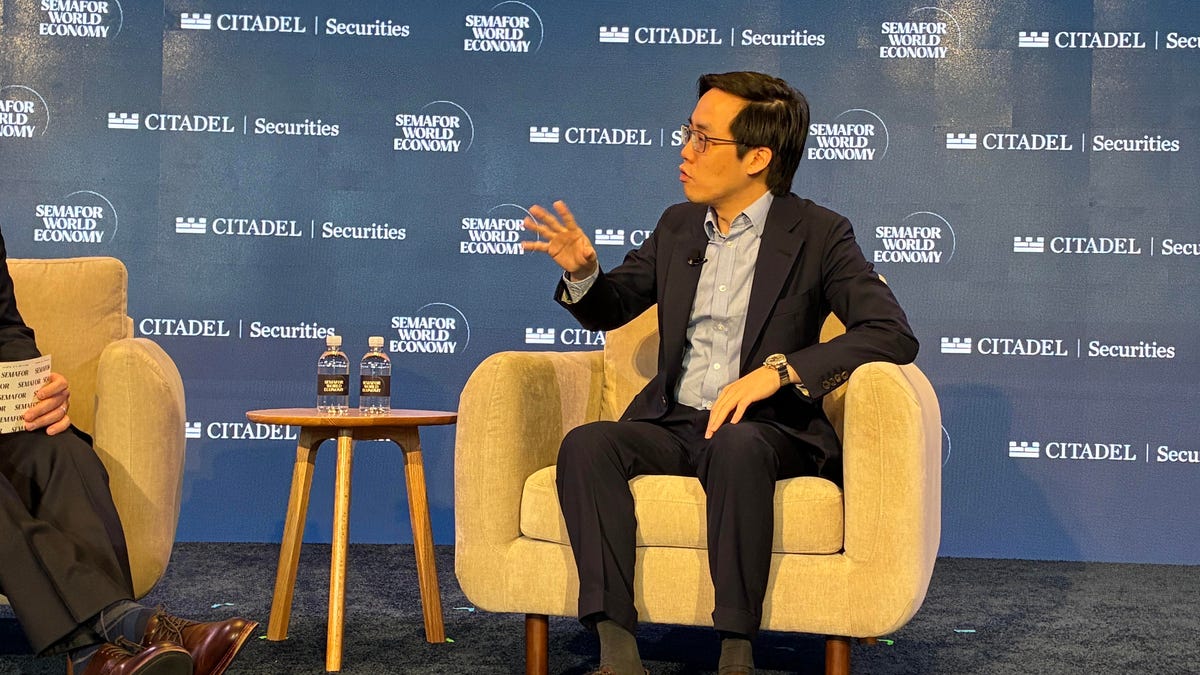
Earlier this month, I attended the Semafor World Economy event in Washington, D.C., where 500 chief executives came together with government officials to discuss the state of the global economy, including how AI is reshaping security and privacy. Andy Yen, CEO of Proton – known for its VPN and suite of private digital services – shared his perspective on the topic. I spoke with Yen after his panel to explore whether privacy and AI can realistically coexist, what the future holds, and why he believes Proton is well positioned to thrive.
Privacy among the general public
AI and privacy often exist in tension: the belief is that giving AI tools access to more data improves their performance, whether for businesses or individual users. This creates a direct conflict between practical implementation and comfort with risk. Despite this, adoption has surged over the past couple of years, including in highly sensitive areas such as healthcare.
Also: How to check what ChatGPT knows about you – and take back control of your data privacy
Since its launch in 2014, well before AI became a mainstream consumer tool, Proton has provided privacy-focused alternatives to products offered by tech giants like Google, Microsoft, and Meta. Still, Yen does not believe the growth of AI tools has fundamentally raised public awareness around data privacy. Instead, he sees the problem as a generational disconnect between understanding privacy risks and actually adopting technology.
“There are more people who genuinely value privacy but lack the technical knowledge to safeguard themselves,” he explained. “Then there’s the middle-aged group – and honestly, we’re probably the worst off because we don’t have our parents’ emphasis on privacy, yet we’re embracing all of this technology. So we’re both more uninformed and more vulnerable.”
That said, Yen remains confident that education can bridge this gap.
Also: 5 reasons you should share less with your chatbot (and how to undo past oversharing)
“The most effective way to protect someone is to educate them about the risk,” he said. “If the educational effort is handled correctly, then the rest will naturally fall into place.”
Beyond education, he believes the widespread lack of awareness is ultimately just a temporary phase.
“I think we need to view this within the context of long-term trends,” he said. “When we founded Proton in 2014, perhaps only one in ten people understood how Google and Facebook’s business models work. Today, it’s probably four in ten, and when OpenAI began running ads and pushing biased recommendations for revenue, that became visible to even more people – maybe seven in ten.”
For now, Yen thinks the youngest generation is the best equipped for the world AI is building, even though they may seem indifferent.
“Young people are the most informed – they understand how Google earns money, how advertising works, how the algorithms function – yet they appear not to care,” he said. “Between being uninformed and being indifferent, I’d rather have an audience that knows but doesn’t care, because indifference is something you can change.”
Also: This privacy-first chatbot is gaining momentum – here’s why and how to give it a try
Duck.ai, the chatbot from privacy oriented browser company DuckDuckGo, experienced a notable jump in web traffic earlier this year. While it hasn’t come close to catching up with industry leaders like ChatGPT and Claude, the uptick mirrors a broader pattern Yen said he’s observing at Proton, and reinforces his belief that a growing number of people will eventually migrate to privacy-first solutions.
“Lumo is Proton’s fastest-growing product right now,” Yen said, referring to the company’s encrypted chatbot. “That tells you something: people need AI, they rely on it every day, and it’s deeply embedded in modern life – but fundamentally, nobody fully trusts it. The chance to enjoy AI’s benefits while having a firm assurance that your conversations remain private going forward is a compelling proposition. Over time, more and more people will demand exactly that.”
AI’s greatest threat
However, the safeguards Proton provides are not unlimited. When I asked Yen what keeps him up at night regarding AI, he answered without hesitation: agents.
“You could have the most robust encryption available, but if you willingly grant an AI agent access to your Proton Mail on your device, and that agent malfunctions and publishes all your information online, Proton’s encryption won’t be able to protect you,” he cautioned. “That’s a fundamental limit to what we can do.” In theory, he noted, Proton could build its own agent designed to guard against these vulnerabilities, but no such project is underway at the moment.
Also: The permissions behind your AI Chrome extensions deserve a closer look – they may be spying on you
Yen views locally-run AI as one of the strongest approaches to tackling privacy risks. (Proton’s own Scribe AI writing assistant gives users the option to run entirely on their device.) Currently, it’s difficult to scale computing power on personal hardware, but he is confident that local AI will become far more practical in the coming years.
“If you compare today’s iPhone to the first smartphones from a decade ago, the processing power and storage capacity are vastly greater – and that trajectory will only continue,” Yen said. “Meanwhile, large language models won’t necessarily keep growing. In fact, we’re moving toward smaller, more efficient models that deliver comparable performance.”
Early intervention
One way to shield future generations from data privacy risks is to keep them entirely outside Big Tech’s ecosystem from the start. Yen said his top priority is protecting children, because that’s where he believes Proton can make the greatest difference. Last month, the company introduced an option allowing parents to reserve their child’s first email address with Proton, even before the child is born.
Also: Concerned about AI privacy? A new tool from Signal’s founder brings end-to-end encryption to your conversations
“For many people, the moment they start truly caring is when they become parents,” he said. “You face a choice: will you enroll them in Google’s ecosystem, with all the downsides and dangers that come with it, effectively locking them into a lifetime of being treated as a product exploited by Big Tech? Or will you take a different path and give them an entirely different beginning?”
For Yen, the timing of that choice is crucial.
“If I offer someone an alternative at age 40, after they’ve spent twenty years being exploited by Google, sure, better late than never – but I believe it’s far more impactful if we can give the next generation the strongest possible start from day one,” he said.
Can privacy-first AI compete at scale?
A future with less AI-driven data exploitation is perhaps only impactful if achieved on a massive scale.
Organizations such as Proton grapple with a fundamental question: how to convince everyday users and corporate clients that privacy matters enough to abandon traditional platforms and the attractive capabilities those systems provide. Consider personalization — one of artificial intelligence’s most powerful draws, which fundamentally depends on processing enormous volumes of data. Does this inherent reliance on data impose constraints on what encrypted AI can achieve or how effectively it can scale?
Yen acknowledged that performing calculations on encrypted data can be done efficiently, yet he pointed out that the key distinction between privacy-focused AI and the industry’s leading research labs ultimately comes down to expense.
“You can compare Google Workspace with Proton Workspace, and on the surface they appear roughly on par,” Yen explained, referencing his company’s newly introduced business productivity suite. “However, the reality is that our engineering effort is roughly tenfold greater, because encryption is layered on top of everything. This means higher costs and longer development timelines. But the end result is a superior experience for the majority of users, since their data genuinely stays protected.”
Also: Proton launches a Google Workspace alternative – and it’s fully encrypted
Privacy might translate into a better product, but the question remains — who absorbs those extra expenses? According to Proton’s official Workspace announcement, pricing stays competitive: the Standard tier runs from $12 per month (billed yearly) to $15 (billed monthly), while the Premium tier ranges from $20 per month (billed yearly) to $25 (billed monthly). The company also emphasized that it does not raise prices year over year or apply increases to current subscribers. When asked for further details, a Proton representative clarified to ZDNET that operational efficiencies help keep customer pricing low, even accounting for the elevated costs Yen described.
“I genuinely don’t see any fundamental technical roadblocks preventing us from reaching comparable performance levels,” Yen added. “It simply requires more time looking ahead, Proton’s premium products have clearly demonstrated that they deliver value worth the investment, based on our track record so far.”
“Our ability to operate without venture capital backing essentially proves that this business arrangement is likely far more scalable than most observers assume.”
