



At CNCF TAG Developer Expertise, we lately started exploring how Artificial Intelligence is transforming open-source development. The community response has been impressive — nearly half of our initial replies came in during the first week alone. This immediate engagement underscores how urgent this topic is and how strongly community members desire shared guidelines for AI-assisted development.
So far, responses from 133 participants account for nearly 100 distinct projects, giving us confidence that these findings reflect the broader cloud-native ecosystem rather than a narrow selection. This post offers an early look at our initial findings; a more thorough analysis will follow once we process additional data.
Who shared their input?
The feedback mainly represents the perspectives of people working directly on the code. Most respondents are code-focused contributors who concentrate on submitting changes, CI/CD pipelines, and infrastructure, while about 20% also handle key responsibilities such as release management and documentation.
How maintainers use AI: Tools and workflows
Today’s AI tools have moved well beyond basic web chatbots and are now deeply embedded in everyday routines. Nearly half of respondents regularly use AI assistants directly inside their IDEs or command-line environments.
In terms of specific tools, Claude Code and GitHub Copilot stand out as clear frontrunners. Notably, only a small fraction (around 10%) of contributors still rely on basic chatbots through manual copy-pasting. Meanwhile, a similar share of power users have already adopted “deep integration,” where AI is built directly into project automation for PR reviews and issue triaging.
Where AI delivers the biggest impact
Contributors report the most noticeable productivity gains in several key areas:
- Writing and refactoring code
- Improving documentation and debugging
- Understanding unfamiliar codebases
- Analyzing Pull Requests
The high ranking of “understanding the codebase” indicates that AI serves as a knowledgeable guide, helping developers work through the inherent complexity of large-scale projects.
The gap between actual AI use and formal policies
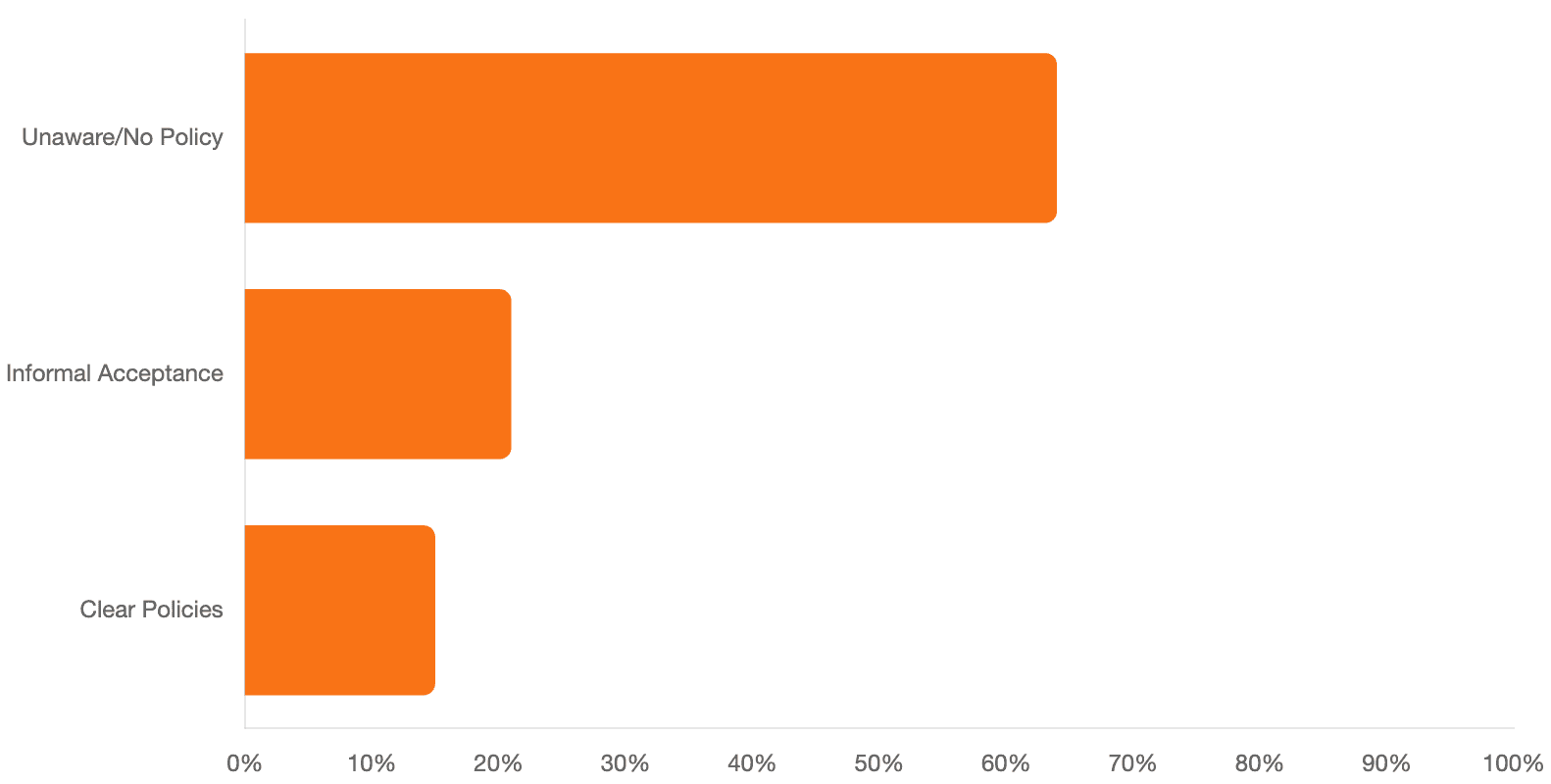
One of our most striking findings is the gap between how individuals use AI and what official project policies say. While personal AI usage is widespread, the adoption of formal guidelines has lagged significantly behind.
About two-thirds of respondents either were unaware of any AI-specific guidelines or confirmed that no formal policies exist in their primary repositories. Furthermore, the vast majority of projects make no mention of AI usage in their public documentation or contributing guides. While a handful of trailblazing projects are leading the way with clear policies, the ecosystem as a whole is still figuring out how best to govern automated code generation.
Community sentiment and code reviews
Despite the absence of formal rules, the overall attitude toward AI usage tends to be welcoming and permissive. Around one-third of contributors noted that AI usage is generally accepted. Conversely, only a very small minority (under 4%) reported that AI usage is explicitly banned in their environments.

This practical mindset extends to how maintainers handle AI-assisted contributions:
- A solid majority follow their standard review process without applying special filters
- More than a quarter of maintainers prefer a collaborative approach, asking contributors to refine AI-generated code to meet quality standards rather than rejecting it outright
- Only a tiny fraction automatically reject suspected AI-based PRs
Top concerns and the push for transparency
While the community feels positive overall, several valid concerns remain. Maintainers are particularly worried about:
- Security vulnerabilities
- License compliance
- The burden on reviewers caused by a potential wave of low-effort PRs
To address these risks, there is a strong shared desire for transparency. Over half of respondents believe that AI-assisted contributions should always require formal disclosure (such as an “AI-authored” tag). An additional 20% feel disclosure should be required in specific circumstances. This suggests that while maintainers are open to accepting AI-generated code, they need the visibility to adjust their review efforts accordingly.
Wrapping up
This first wave of data confirms that AI integration is not a passing trend — it has become a core part of the modern workflow. Going forward, the challenge for the cloud-native community will be balancing this new productivity with the high standards of security and manual oversight that enterprise-grade open source demands.
We’re not done yet! To make sure our final report truly reflects the diverse cloud-native landscape, we need your voice. The survey will remain open through Monday, May 18 (End of Day, Anywhere on Earth). If you haven’t shared your experience yet, we invite you to take the survey and help us build a more accurate and comprehensive picture of AI’s role in our community.
