



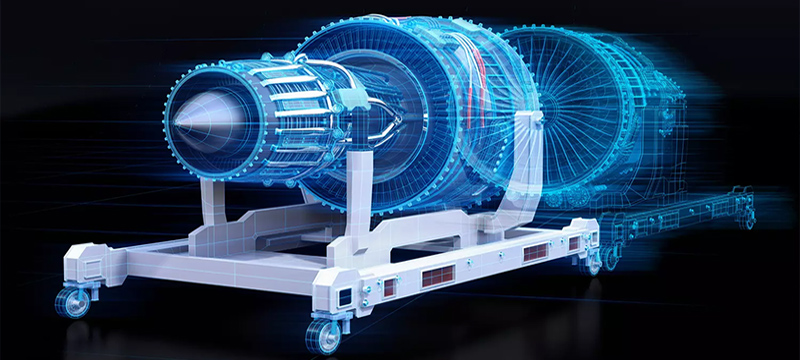
Digital Twins are rising as a vital layer within the Web of Issues (IoT) stack, bridging the hole between bodily belongings and digital intelligence. By combining real-time information ingestion with simulation and analytics, Digital Twins allow organizations to mannequin, monitor, and optimize advanced methods with a stage of precision that static dashboards can not present.
For IoT choice makers and designers, the worth of Digital Twins lies not solely in visibility however in actionable perception. As related gadgets generate growing volumes of information, the flexibility to contextualize, simulate, and predict outcomes turns into important to enhancing operations, lowering threat, and supporting data-driven decision-making at scale.
Key Takeaways
- Digital Twins create dynamic digital representations of bodily belongings utilizing real-time IoT information.
- They permit simulation, predictive analytics, and operational optimization throughout industries.
- Integration requires a mix of connectivity, information platforms, and modeling frameworks.
- Scalability, information high quality, and interoperability stay key technical challenges.
- Digital Twins are evolving towards extra autonomous and AI-driven choice methods.
What’s a Digital Twin?
Digital Twins are digital representations of bodily objects, methods, or processes which are constantly up to date utilizing real-time information from IoT gadgets. They mirror the state, conduct, and efficiency of their bodily counterparts, enabling monitoring, simulation, and optimization in a digital surroundings.
Inside the IoT ecosystem, Digital Twins act as a convergence layer between information assortment and superior analytics. Sensors and related gadgets feed telemetry right into a digital mannequin, which might then be used to research present situations, predict future states, and take a look at hypothetical eventualities with out impacting the bodily system.
How Digital Twins work
The structure of Digital Twins usually entails a number of interconnected layers, combining bodily gadgets, connectivity infrastructure, information platforms, and simulation engines.
On the edge, IoT sensors and embedded methods accumulate real-time information equivalent to temperature, stress, location, or operational metrics. This information is transmitted through connectivity applied sciences together with mobile IoT, LPWAN, Wi-Fi, or industrial Ethernet to cloud or edge computing platforms.
As soon as ingested, information is processed and saved inside IoT platforms or information lakes. The Digital Twin mannequin makes use of this information to copy the present state of the asset. Superior implementations combine physics-based fashions, machine studying algorithms, or hybrid approaches to simulate conduct and predict outcomes.
A typical workflow consists of:
- Knowledge acquisition from IoT sensors and gadgets
- Knowledge transmission by way of safe communication protocols
- Knowledge processing and normalization in IoT platforms
- Mannequin synchronization with real-time information
- Simulation and analytics for choice assist
In additional superior architectures, edge computing performs a task in lowering latency by processing information nearer to the supply, enabling close to real-time Digital Twins for time-sensitive purposes equivalent to industrial automation or autonomous methods.
Key applied sciences and requirements
The deployment of Digital Twins depends on a mix of applied sciences spanning connectivity, information administration, and modeling frameworks.
- Connectivity applied sciences: LTE-M, NB-IoT, 5G, LoRaWAN, Wi-Fi, and industrial protocols equivalent to Modbus or OPC UA.
- Knowledge protocols: MQTT, AMQP, HTTP/REST APIs for environment friendly information trade between gadgets and platforms.
- IoT platforms: Cloud-based or hybrid platforms for system administration, information ingestion, and analytics.
- Modeling frameworks: Instruments supporting physics-based modeling, simulation engines, and digital representations of belongings.
- Knowledge requirements: Initiatives such because the Digital Twin Definition Language (DTDL) and Asset Administration Shell (AAS) for interoperability.
- AI and analytics: Machine studying fashions used for predictive upkeep, anomaly detection, and optimization.
Interoperability stays a vital problem, as Digital Twins usually must combine heterogeneous information sources and legacy methods throughout industrial environments.
Foremost IoT use circumstances
Digital Twins are being deployed throughout a variety of industries, usually the place advanced methods require steady monitoring and optimization.
In industrial IoT, Digital Twins are used to mannequin manufacturing traces, machines, and full factories. They assist predictive upkeep by figuring out early indicators of apparatus failure and allow simulation of manufacturing adjustments earlier than implementation.
In logistics and asset monitoring, Digital Twins present real-time visibility into the placement and situation of products. They’ll simulate routing eventualities, optimize provide chains, and enhance stock administration.
Good cities use Digital Twins to mannequin city infrastructure equivalent to site visitors methods, utilities, and public transport networks. These fashions assist metropolis planners take a look at eventualities, handle congestion, and enhance power effectivity.
Within the power sector, Digital Twins are utilized to energy vegetation, grids, and renewable power belongings. They permit monitoring of efficiency, simulation of demand fluctuations, and optimization of power distribution.
Healthcare purposes embody Digital Twins of medical gadgets and even patient-specific fashions, supporting diagnostics, remedy planning, and operational effectivity in hospitals.
Extra use circumstances embody:
- Fleet administration and telematics optimization
- Constructing administration and sensible HVAC methods
- Oil and fuel infrastructure monitoring
- Aerospace system simulation and upkeep
Advantages and limitations
Digital Twins supply a number of operational and strategic benefits for organizations deploying IoT options.
- Improved visibility: Actual-time monitoring of belongings and methods.
- Predictive capabilities: Early detection of failures and efficiency points.
- Simulation and optimization: Capability to check eventualities with out impacting operations.
- Operational effectivity: Decreased downtime and improved useful resource utilization.
Nonetheless, the implementation of Digital Twins additionally comes with constraints and trade-offs.
- Knowledge high quality dependency: Inaccurate or incomplete information reduces mannequin reliability.
- Integration complexity: Connecting legacy methods and heterogeneous gadgets might be difficult.
- Scalability points: Managing Digital Twins for giant fleets of belongings requires important infrastructure.
- Latency constraints: Actual-time synchronization might be tough in distributed environments.
- Price concerns: Funding in sensors, platforms, and modeling instruments might be substantial.
Organizations should steadiness these elements when evaluating the enterprise case for Digital Twins.
Market panorama and ecosystem
The Digital Twins ecosystem spans a number of layers of the IoT worth chain, involving a various set of stakeholders.
System producers play a foundational position by embedding sensors and connectivity into bodily belongings. Connectivity suppliers guarantee dependable information transmission throughout mobile, LPWAN, or non-public networks.
IoT platform suppliers supply the infrastructure for system administration, information ingestion, and analytics. These platforms usually combine with cloud companies and edge computing options to assist scalable deployments.
Software program distributors and system integrators deal with constructing Digital Twin fashions, integrating information sources, and deploying simulation environments tailor-made to particular industries.
Requirements our bodies and business alliances are working to enhance interoperability and outline widespread frameworks, which is vital for scaling Digital Twins throughout sectors.
The ecosystem continues to be evolving, with growing convergence between IoT platforms, AI frameworks, and simulation applied sciences.
Future outlook
Digital Twins are anticipated to evolve towards extra autonomous and clever methods, pushed by advances in synthetic intelligence, edge computing, and connectivity.
The combination of AI will allow extra correct predictive fashions and automatic decision-making, lowering the necessity for human intervention in sure operational eventualities.
Edge computing will play a bigger position in enabling low-latency Digital Twins, notably in industrial environments the place real-time responsiveness is vital.
Standardization efforts are seemingly to enhance interoperability, permitting Digital Twins to scale throughout multi-vendor environments and complicated ecosystems.
In the long run, Digital Twins could prolong past particular person belongings to symbolize total systems-of-systems, equivalent to provide chains, cities, or power networks, enabling extra holistic optimization.
Often Requested Questions
What’s a Digital Twin in IoT?
A Digital Twin is a digital mannequin of a bodily asset or system that’s constantly up to date utilizing real-time information from IoT gadgets, enabling monitoring, simulation, and optimization.
How do Digital Twins differ from conventional monitoring methods?
In contrast to static dashboards, Digital Twins incorporate simulation and predictive capabilities, permitting organizations to check eventualities and anticipate future outcomes.
What industries profit most from Digital Twins?
Industries with advanced operations equivalent to manufacturing, power, logistics, and sensible cities profit considerably from Digital Twins because of their want for real-time optimization.
What are the principle challenges of implementing Digital Twins?
Key challenges embody information integration, making certain information high quality, scalability, and the price of deploying and sustaining the required infrastructure.
Are Digital Twins depending on cloud computing?
Whereas many Digital Twins depend on cloud platforms, edge computing is more and more used to allow low-latency processing and real-time purposes.
