



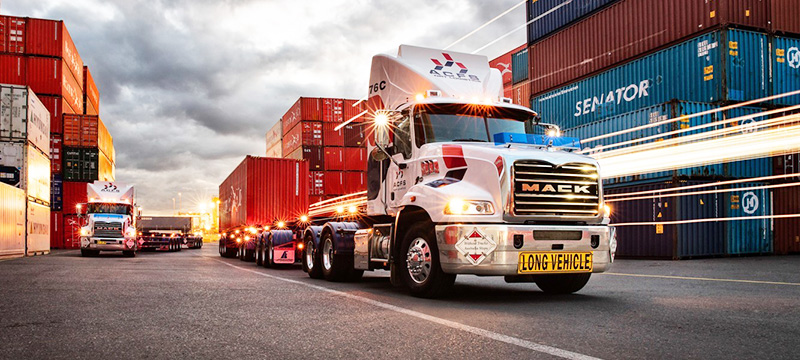
Street transport has lengthy been the lifeblood of the economic system—it strikes items, connects provide chains, and allows large-scale commerce. Over the previous dozen or so years, the change we’ve seen within the trade isn’t only a gradual enchancment, however a leap to a better stage. This transformation just isn’t solely organizational and cultural however, above all, technological—firms are studying to make use of new instruments and design processes to leverage them absolutely. New applied sciences are subsequently undoubtedly altering street transport so quickly and so considerably that, to maintain up with the modifications, one should keep abreast of all the newest developments at the moment. Let’s see, then, how new applied sciences are reshaping street transport.
Digitization of transport processes—from paper to real-time knowledge
The transition from paper to digital documentation is not only a change within the medium of data, however a change in work fashion. Within the analog model, many processes relied on handbook entries, phone preparations, and workers’ recollections. Within the digital mannequin, as an alternative of “being in someone’s head” or in printed kind, data turns into knowledge that may be processed, analyzed, and tracked in actual time. The result’s that selections are not based mostly on guesswork however grow to be predictable and measurable.
The important thing components of digitization value realizing at the moment are the transport administration system (TMS), integrations with buyer and provider techniques, and digital transport paperwork.
In observe, a TMS is a device that lets you plan orders, assign autos, management prices, and analyze efficiency. For the operations staff, the TMS is a spot the place your entire order success cycle is seen: from the second of loading via to supply affirmation. This makes it attainable to shortly establish bottlenecks, measure on-time success charges, and optimize schedules.
Digital transport paperwork and automatic billing are the subsequent sensible step. As an alternative of sending paper paperwork, operators transmit scans or digital knowledge that go straight into accounting and warehouse techniques. This permits sooner order closure, less complicated billing, and diminished susceptibility to human error. For firms, this implies shorter cost cycles and fewer disputes arising from unclear documentation.
The enterprise advantages of digitization might be damaged down into three fundamental areas: These advantages are sometimes seen inside the first few months after implementing easy options, and additional positive factors emerge as they’re built-in and expanded.
- operational financial savings ensuing from diminished handbook labor and route optimization,
- improved customer support high quality, as cargo standing data is accessible instantly,
- a greater basis for strategic selections, as historic knowledge permits for development evaluation and demand forecasting.
Synthetic Intelligence and Machine Studying in Transportation Optimization
Synthetic Intelligence and Machine Studying are not simply buzzwords in trade experiences. In observe, they’re a set of analytical methods that enable patterns and forecasts invisible to the bare eye to be extracted from massive datasets.
Within the context of street transport, these applied sciences most frequently function a “decision-making assistant”—they assist predict demand, optimize routes, and detect anomalies, somewhat than utterly changing human judgment.
One of many easiest but most sensible functions is demand forecasting. Primarily based on historic orders, seasonality, knowledge on buyer promotions, and climate situations, an AI mannequin can predict when there will likely be increased demand for particular transport classes. This permits higher useful resource planning, earlier engagement of subcontractors, and minimization of the chance of inadequate automobile availability.
One other instantly noticeable profit is dynamic route planning. Conventional planning relied on fastened schedules and inflexible assumptions about journey time. Machine studying fashions can account for real-time site visitors situations, loading delays, driver breaks, and different disruptions to suggest routes that decrease complete value or time. Because of this, firms can reply extra shortly to occasions and scale back empty runs.
Synthetic intelligence can be used to enhance gasoline effectivity. Analyzing drivers’ driving kinds, engine knowledge, and street situations permits for the identification of habits that improve gasoline consumption and the suggestion of particular corrective actions. In observe, this has a twofold impact—direct gasoline financial savings and improved security via the correction of dangerous driver behaviors.
We should not overlook about predictive upkeep—that’s, predicting breakdowns. Machine studying fashions analyze alerts from automobile sensors, service historical past, and operational parameters to detect early indicators of an impending malfunction. This permits for scheduling upkeep at a handy time, avoiding pricey downtime and surprising breakdowns on the street.
The Position of Individuals within the Period of Automated Selections
It’s value noting immediately that synthetic intelligence works greatest as a device to help, not exchange, folks. Fashions can suggest optimum options based mostly on knowledge, however it’s the operations staff that should consider them via the lens of enterprise danger, buyer relationships, and the specifics of the cargo. The success of the implementation subsequently, is dependent upon synergy: the algorithm offers steerage, whereas people present context and make the ultimate resolution.
The Web of Issues (IoT) and telematics – good autos and linked fleets
Only a dozen or so years in the past, a fleet supervisor needed to depend on telephone calls with drivers and sporadic experiences to seek out out the place their autos have been. At the moment, a single look on the display is sufficient to see the present location of each truck, gasoline stage, driver’s driving fashion, and even the cargo temperature. That is how the mix of the Web of Issues (IoT) and telematics works—applied sciences that kind the “nervous system” of contemporary street transport.
IoT is an idea during which units (sensors, transmitters, GPS modules, beacons) are linked in a community and consistently transmit knowledge. In logistics, which means each automobile, trailer, and even pallet can “speak”—sending details about its standing and site. Telematics, then again, is the tactic of amassing, transmitting, and analyzing this knowledge in actual time. The mix of those two areas permits firms to realize full management over their fleet, scale back prices, and improve security. Fashionable manufacturers have been utilizing such options for a very long time. For instance, street transport with AsstrA offers such knowledge.
In observe, options based mostly on IoT and telematics might be divided into a number of fundamental teams. The advantages of those applied sciences are tangible. Above all, they allow decision-making based mostly on info somewhat than assumptions. They streamline communication between departments, improve fleet security, and permit for higher value administration. Importantly, firms do not need to implement advanced techniques immediately—even fundamental telematics options can ship seen leads to a short while.
- Actual-time automobile monitoring techniques – GPS trackers can help you see a automobile’s actual location, velocity, stops, and route. This isn’t only a matter of monitoring, but in addition of planning – you’ll be able to dynamically reply to site visitors jams, detours, or sudden modifications in orders.
- Car situation sensors – monitor engine temperature, tire stress, oil stage, and battery voltage. This knowledge is transmitted to a central system, which might provide you with a warning to irregularities and recommend upkeep earlier than a breakdown happens.
- Driver conduct monitoring – telematics analyzes driving fashion, corresponding to acceleration, braking, and idling. This permits fleet managers to implement eco-driving coaching packages that scale back gasoline consumption and enhance security.
- Environmental and cargo sensors—enable for monitoring the transport situations of delicate items, corresponding to meals or medicines. The system can mechanically notify the operator if the permissible temperature or humidity is exceeded.
Automation and autonomous autos – a brand new dimension in street logistics
Automation is among the most fascinating but controversial tendencies in transportation growth. Till lately, autonomous vehicles appeared like a imaginative and prescient straight out of science fiction, however at the moment, exams of such autos are happening on many continents. It is very important perceive, nevertheless, that automation doesn’t imply the rapid substitute of drivers with robots. Moderately, it’s a gradual course of involving the introduction of more and more superior driver-assistance techniques.
To raised grasp the dimensions of those modifications, we will distinguish three ranges of automation in street transport.
- Assistive automation (ADAS techniques)
These are options that help the driving force of their day by day work. They embrace automated emergency braking, lane-keeping help, site visitors signal recognition, and adaptive cruise management. Their function is to boost security and driving consolation.
- Semi-autonomous options
These embrace applied sciences corresponding to “platooning,” or driving in organized convoys, the place the lead truck guides the column and subsequent autos mechanically keep distance and velocity. This reduces gasoline consumption and improves site visitors movement.
- Full autonomy
Nonetheless within the testing part, however getting nearer to actuality. On this mannequin, autos are able to navigating roads independently, speaking with different street customers (V2X—Car-to-Every part techniques), and responding to altering situations in actual time.
The advantages of automation embrace, above all, improved security (elimination of human error), higher effectivity (discount of empty runs and higher route utilization), and decrease working prices. Automation additionally helps scale back transit instances via smoother and extra predictable automobile operation.
Information Safety and Cybersecurity within the Period of Linked Fleets
With digitization and the more and more widespread use of the Web of Issues, a brand new and intensely vital space has emerged—knowledge safety. Till lately, transportation was dominated by purely bodily challenges: automobile breakdowns, supply delays, and street situations. At the moment, cyberattacks, knowledge breaches, and unauthorized entry to fleet techniques pose an equally actual menace.
Fashionable vehicles, geared up with dozens of sensors, GPS modules, communication techniques, and cellular apps, generate huge quantities of knowledge. This can be a useful supply of information—but in addition a possible goal for cybercriminals. A knowledge breach involving routes, automobile places, or cargo statuses can pose an actual menace not solely to an organization’s status but in addition to the security of its clients.
To counter this, increasingly organizations are implementing complete cybersecurity insurance policies. Key components of those insurance policies embrace: Cybersecurity in transportation is a subject that can solely develop in significance.
The extra interconnected the world of fleets and knowledge turns into, the higher the significance of accountable data administration. Firms that deal with knowledge safety as an integral a part of their enterprise technique will acquire not solely safety but in addition a belief benefit—a forex whose worth within the B2B market is continually rising.
- knowledge segmentation and encryption,
- software program updates and gadget management,
- certification of suppliers and expertise companions,
- worker training.
The way forward for street transport will subsequently be hybrid—on the one hand, automated and analytical, on the opposite nonetheless closely depending on human expertise, empathy, and relationship administration abilities. New applied sciences should not meant to interchange people, however to provide them higher management, higher instruments, and a broader context for decision-making.
For firms, this implies one factor: to stay aggressive, an excellent fleet and skilled drivers are not sufficient. They need to construct digital competencies, put money into knowledge, and be taught to make use of expertise as a enterprise associate. As a result of within the new world of logistics, it isn’t these with essentially the most vehicles who will win, however those that can greatest perceive and make the most of the data these vehicles generate.
