



By Marc Kavinsky, Lead Editor at IoT Enterprise Information.
Identiv has expanded its ID-Protected vary of HF/NFC tags, including extra tamper-evident and tamper-proof configurations geared toward product authentication, interference detection, and lifecycle traceability utilizing customary NFC readers and smartphones.
In linked packaging, the arduous half isn’t getting a tag to scan. The true problem is establishing belief in the mean time of interplay: can the model, the distributor, or the top consumer decide whether or not an merchandise is real, whether or not the pack has been opened, and whether or not the identifier itself has been copied or moved to a different product?
Identiv is leaning into that drawback with an growth of its ID-Protected product household, a portfolio of superior HF and NFC tags designed to assist product authentication, tamper detection, and safe traceability. The corporate positions the expanded vary for purposes spanning prescribed drugs, healthcare, retail, meals and beverage, electronics, and good packaging.
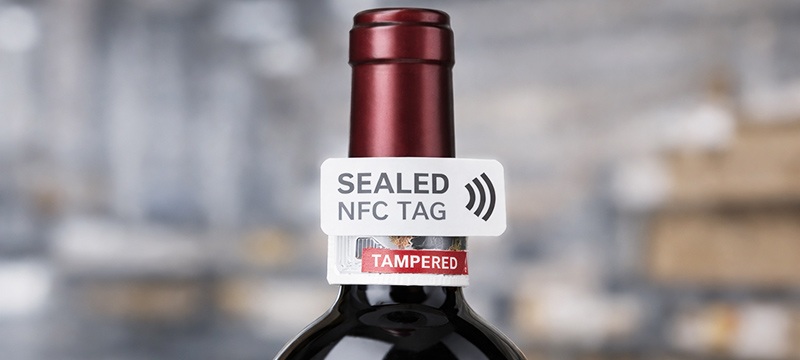
The portfolio now covers each tamper-evident NFC labels—meant to detect and file package-opening occasions—and tamper-proof tags constructed with destructible antennas to stop elimination, reuse, or product refilling. Identiv additionally says choose configurations assist encrypted authentication utilizing high-security NFC chips, focusing on cloning and extra subtle counterfeiting strategies.
What’s distinct right here: “tamper” is engineered into the tag, not bolted onto the workflow
Loads of distributors speak about digital product passports and item-level id, however Identiv’s emphasis is on coupling NFC id with bodily state change on the label itself. In sensible phrases, ID-Protected is supposed to make packaging integrity machine-readable: as soon as a package deal is opened or tampered with, the tag registers an irreversible state change—akin to a damaged antenna or altered electrical sign—signaling the product has been compromised.
That method issues as a result of it reduces reliance on exterior controls which are simple to bypass (for instance, visible seals) or arduous to implement constantly throughout world logistics. With the tamper mechanism embedded within the NFC label/tag design, the “proof” travels with the merchandise and will be checked wherever the availability chain has NFC learn functionality.
Digital id, cloud linkage, and the operational trade-offs
Identiv says every ID-Protected tag is encoded with a singular id and will be linked to cloud-based programs, making a digital twin of the product. Stakeholders can scan the tag by way of manufacturing, logistics, and distribution to substantiate authenticity and confirm the product stays unopened.
One implication for IoT resolution architects is that NFC-based verification shifts the belief boundary towards the endpoint. As a result of ID-Protected is designed to work with customary NFC-enabled smartphones or readers, authenticity and tamper checks will be distributed to extra actors—warehouse employees, subject technicians, retail associates, and even customers—with out deploying specialised scanning {hardware}. The flip aspect is that the backend have to be designed for high-frequency, event-driven lookups and clear exception dealing with when a tag reviews a compromised state, particularly in returns and guarantee workflows the place disputes are frequent.
The place Identiv is aiming: fraud patterns past easy counterfeits
Identiv frames ID-Protected as a response to counterfeiting, diversion, and product fraud. The corporate explicitly calls out grey market diversion, guarantee and returns abuse, and refilling and resale fraud—use circumstances the place a primary distinctive ID is commonly inadequate as a result of a real identifier will be harvested and replayed if the label is detachable or reusable.
By pairing encrypted authentication (in choose configurations) with tamper-proof, destructible antenna designs, the product line is designed to lift the price of assault in two methods: it goals to make cloning tougher on the chip degree and reuse tougher on the bodily degree. That mixture is a extra concrete safety posture than “serialization alone,” which usually solely proves that an ID exists—not that it nonetheless belongs to the unique merchandise and pack.
Proof of market match: luxurious wine good packaging
Identiv says the merchandise are already deployed in an NFC-based anti-counterfeiting good packaging resolution for luxurious wine producers and collectors, developed with ZATAP and Real-Analytics. Whereas the announcement doesn’t present deployment volumes or efficiency metrics, it does sign that ID-Protected is being utilized to classes the place provenance and unopened situation are central to worth—and the place authentication is commonly carried out at a number of factors within the lifecycle, together with after sale.
What OEMs, integrators, and types ought to take from this
For packaging converters and OEMs, the expanded set of configurations—with choices throughout chip varieties, reminiscence capacities, and kind components—suggests Identiv is attempting to fulfill software constraints moderately than forcing a one-label-fits-all SKU. System integrators, in the meantime, will deal with how “irreversible state change” is represented in software program: mapping that state to quarantine actions, returns eligibility, or recall processes is the place most deployments succeed or stall.
For manufacturers and enterprises, the sensible worth is in tightening the suggestions loop between the bodily pack and the digital file. If carried out effectively, NFC-based tamper and authenticity checks can flip sporadic spot inspections into routine, distributed verification—with out altering how individuals work an excessive amount of—as a result of the reader is commonly already in a pocket.
Andreas Walsner, World Vice President Gross sales, Identiv, mentioned:
“Trust in physical products can’t be assumed anymore – it has to be verified. ID-Safe brings together secure NFC-based identity, tamper detection, and tamper-proof design to enable companies to confirm authenticity and product integrity at any point in the lifecycle, anywhere those interactions occur.”
