



Comply with ZDNET: Add us as a most well-liked supply on Google.
ZDNET’s key takeaways
- New White Home coverage steering needs to override most state AI legal guidelines.
- Proposed federal laws is essentially light-touch, worrying some states.
- Researchers are nonetheless dissatisfied with federal approaches to AI security.
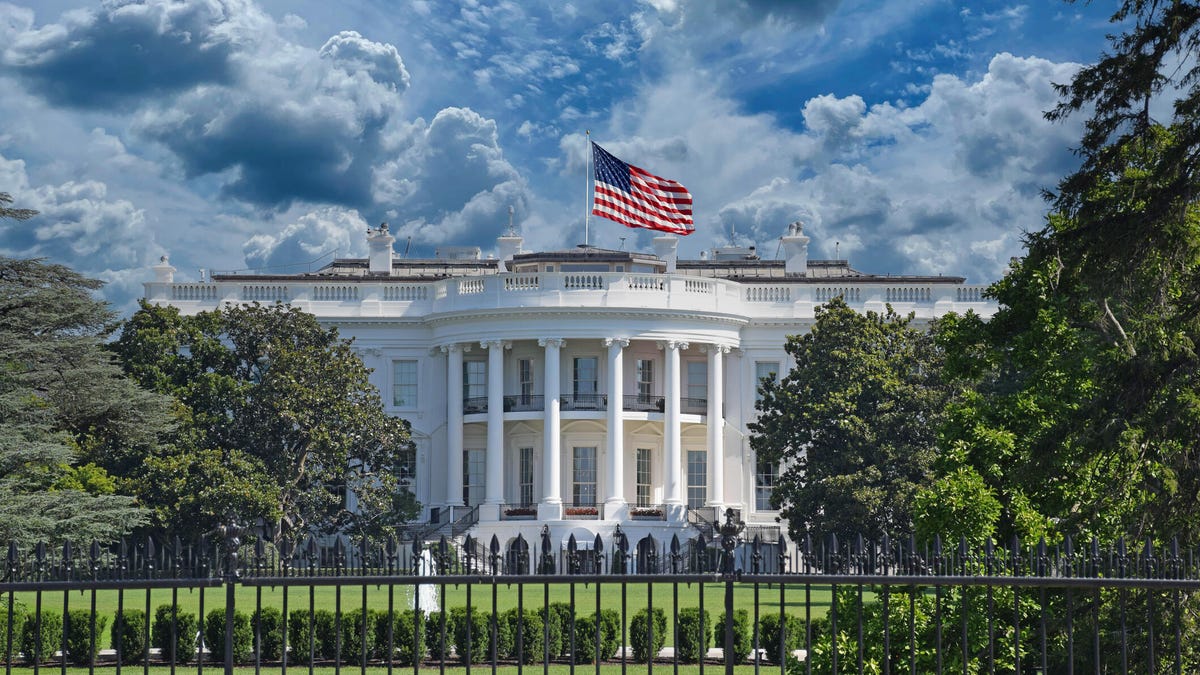
On Friday, the Trump administration launched new coverage steering for Congress on how AI must be federally regulated, as soon as once more reviving the decision to hamper state AI legal guidelines.
After a failed try to restrict state AI laws this previous summer season, the administration resumed its efforts with a December government order and an ensuing AI Litigation Job Power targeted on curbing state legal guidelines it feels would restrict aggressive improvement.
Additionally: 5 methods guidelines and rules will help information your AI innovation
This is what the brand new framework needs Congress to do, an outline of essentially the most important state AI legal guidelines already in impact, and why consultants suppose they matter.
What the steering suggests
Consistent with this administration’s strategy to date, the brand new steering — which we have been ready for because the AI Motion Plan this summer season — goals to maintain federal AI regulation minimal whereas nonetheless overriding a number of state AI legal guidelines.
Within the absence of federal regulation addressing many states’ issues about AI, native payments have cropped up throughout the nation. The Trump administration and AI corporations argue that state legal guidelines create an inconvenient regulatory patchwork that stymies innovation. They apply the identical argument to AI security regulation, particularly on the federal stage, saying it slows improvement, harms jobs within the tech sector, and cedes floor within the AI race to international locations like China.
Consultants I’ve spoken with disagree that security is antithetical to progress.
Additionally: Trump’s AI plan says quite a bit about open supply – however this is what it leaves out
The framework says that state legal guidelines should not “act contrary to the United States’ national strategy to achieve global AI dominance.” Meaning not permitting states to “regulate AI development, because it is an inherently interstate phenomenon with key foreign policy and national security implications.”
It additionally means that states should not be allowed to “penalize AI developers for a third party’s unlawful conduct involving their models,” which targets the still-murky space of legal responsibility round mannequin misuse.
Some potential motion, although: On the federal stage, the framework calls on Congress to codify a pledge by AI corporations to cowl the rising vitality prices of knowledge facilities.
Permitting some state protections
Nonetheless, sure components of the framework enable state legal guidelines to override federal legislation, together with for upskilling workforces with AI instruments and in faculties.
The framework wouldn’t preempt state zoning legal guidelines governing the place knowledge facilities and different AI infrastructure will be constructed, and would enable states to make use of AI at their discretion for “services they provide like law enforcement and public education.” In follow, that might imply vastly completely different integrations of AI in policing and faculties that adjust throughout the nation. Given early issues about AI in policing and its potential civil rights violations, that is notable.
Additionally: China’s open AI fashions are in a lifeless warmth with the West – this is what occurs subsequent
The framework would enable states to maintain legal guidelines that tackle fraud and defend shoppers. It will additionally let states implement their very own little one safety legal guidelines in relation to AI, together with laws round AI-generated little one sexual abuse materials (CSAM) and privateness.
Limiting state oversight
The try by Congress this previous summer season to ban states from passing AI rules for 10 years would have withheld broadband and AI infrastructure funds from states that didn’t comply. The moratorium was defeated in a landslide, quickly preserving states’ rights to legislate AI of their territory. That is partly why it is unclear whether or not this new name for restrictions on state legal guidelines may have bipartisan help.
“Federal HIPAA requirements allow for states to pass more stringent state healthcare privacy laws,” knowledge safety lawyer Lily Li, who based Metaverse Regulation, informed ZDNET. “Here, there is no federal AI law that would preempt many of the state laws, and Congress has rebuffed prior efforts to add federal AI preemption to past legislation.”
Additionally: AI will speed up tech job progress – former Tesla president explains the place and why
On December 11, President Trump signed an government order stating a renewed intention to centralize AI legal guidelines on the federal stage to make sure US corporations are “free to innovate without cumbersome regulation.” The order argues that “excessive State regulation thwarts this imperative” by making a patchwork of differing legal guidelines, a few of which it alleges “are increasingly responsible for requiring entities to embed ideological bias within models.”
On January 9, the Division of Justice introduced an AI Litigation Job Power “whose sole responsibility shall be to challenge State AI laws” which are inconsistent with a “minimally burdensome national policy framework for AI.”
Nonetheless, Li doesn’t anticipate the AI Litigation Job Power to considerably impression state regulation, at the least in California (extra on that state’s legislation beneath).
“The AI litigation task force will focus on laws that are unconstitutional under the dormant commerce clause and First Amendment, preempted by federal law, or otherwise unlawful,” she informed ZDNET. “The 10th Amendment, however, explicitly reserves rights to the states if there’s no federal law, or if there’s no preemption of state laws by a federal law.”
SB-53 and the RAISE Act
Earlier this 12 months, first-of-their-kind AI security legal guidelines in California and New York — each states well-positioned to affect tech corporations — went into impact. This is what two of the nation’s most formidable state AI legal guidelines at present cowl.
California SB-53, the brand new AI security legislation that went into impact on January 1, requires mannequin builders to publicize how they will mitigate the largest dangers posed by AI, and to report on security incidents involving their fashions (or face fines of as much as $1 million if they do not). Although not as thorough as beforehand tried laws within the state, the brand new legislation is virtually the one one in a extremely unregulated AI panorama. Most not too long ago, it was joined by the RAISE Act, handed in New York on the finish of December, which has similarities to the California legislation.
The RAISE Act, as compared, additionally lays out reporting necessities for security incidents involving fashions of all sizes, however has an higher high-quality threshold of $3 million after an organization’s first violation. Whereas SB 53 mandates that corporations notify the state inside 15 days of a security incident, RAISE requires notification inside 72 hours.
Additionally: Nvidia needs to personal your AI knowledge middle from finish to finish
SB 1047, an earlier model of SB 53, would have required AI labs to safety-test fashions costing over $100 million and to develop a shutdown mechanism, or kill swap, to regulate them ought to they misbehave. That invoice failed within the face of arguments that it might stifle job creation and innovation, a typical response to regulation efforts, particularly from the present administration.
SB 53 makes use of a lighter hand. Just like the RAISE Act, it targets corporations with gross annual income of greater than $500 million, a threshold that exempts many smaller AI startups from the legislation’s reporting and documentation necessities.
“It’s interesting that there is this revenue threshold, especially since there has been the introduction of a lot of leaner AI models that can still engage in a lot of processing, but can be deployed by smaller companies,” Li informed ZDNET. She famous that Gov. Gavin Newsom vetoed SB-1047, partially, as a result of it might impose growth-inhibiting prices on smaller corporations, a priority additionally echoed by lobbying teams.
Additionally: Fearful AI will take your distant job? You are secure for now, this research reveals
“I do think it’s more politically motivated than necessarily driven by differences in the potential harm or impact of AI based on the size of the company or the size of the model,” she mentioned of the brink.
In comparison with SB-1047, SB-53 focuses extra on transparency, documentation, and reporting than on precise hurt. The legislation creates necessities for guardrails round catastrophic dangers: cyber, chemical, organic, radiological, and nuclear weapon assaults, bodily hurt, assault, or conditions the place builders lose management of an AI system.
Extra protections – and limits
California’s SB-53 additionally requires AI corporations to guard whistleblowers. This stood out to Li, who famous that, in contrast to different components of the legislation, that are mirrored within the EU Act and which many corporations are subsequently already ready for, whistleblower protections are distinctive in tech.
Additionally: Why you may pay extra for AI in 2026, and three money-saving tricks to attempt
“There really haven’t been a lot of cases in the AI space, obviously, because it’s new,” Li mentioned. “I think that is a bigger concern for a lot of tech companies, because there is so much turnover in the tech space, and you don’t know what the market’s going to look like. This is something else that companies are worried about as part of the layoff process.”
She added that SB 53’s reporting necessities make corporations extra involved about creating materials that might be utilized in class-action lawsuits.
Gideon Futerman, particular tasks affiliate on the Middle for AI Security, would not suppose SB 53 will meaningfully impression security analysis.
“This won’t change the day-to-day much, largely because the EU AI Act already requires these disclosures,” he defined. “SB-53 doesn’t impose any new burden.”
Additionally: Cloud assaults are getting quicker and deadlier – this is your greatest protection plan
Neither legislation requires that AI labs have their fashions examined by third events, although New York’s RAISE Act does mandate annual third-party audits on the time of writing. Nonetheless, Futerman considers SB 53 progress.
“It shows that AI safety regulation is possible and has political momentum. The amount of real safety work happening today is still far below what is needed,” he mentioned. “Companies racing to build superintelligent AI while admitting these systems could pose extinction-level risks still do not really understand how their models work.”
The place this leaves AI security
“SB-53’s level of regulation is nothing compared to the dangers, but it’s a worthy first step on transparency and the first enforcement around catastrophic risk in the US. This is where we should have been years ago,” Futerman mentioned.
No matter state and federal rules, Li mentioned governance has already turn out to be the next precedence for AI corporations, pushed by their backside traces. Enterprise clients are pushing legal responsibility onto builders, and traders are noting privateness, cybersecurity, and governance of their funding choices.
Additionally: OpenAI’s rumored ‘superapp’ might lastly remedy one in all my largest points with ChatGPT
Nonetheless, she mentioned that many corporations are simply flying below the radar of regulators whereas they will.
“Transparency alone doesn’t make systems safe, but it’s a crucial first step,” Futerman mentioned. He hopes future laws will fill remaining gaps within the nationwide safety technique.
“That includes strengthening export controls and chip tracking, improving intelligence on frontier AI projects abroad, and coordinating with other nations on the military applications of AI to prevent unintended escalation,” he added.
