



The wearables market has advanced quickly over the previous decade, transferring far past easy step counters and sleep trackers. As {hardware} matures and gadgets turn out to be extra succesful and reasonably priced, the actual battleground is shifting to software program, AI, and person expertise.
One firm positioning itself on the coronary heart of this shift is CUDIS, a sensible ring and AI-powered well being platform based in 2023 and already gaining traction amongst each athletes and on a regular basis customers.
In a current dialog with IOT Insider, CUDIS CEO Edison Chen shared how the corporate is reimagining wearables – not simply as devices that gather knowledge, however as the inspiration of a brand new well being ecosystem that connects customers, athletes, and coaches round personalised wellbeing.
“We are not just here building a wearable brand or AI hardware,” Chen mentioned. “We are trying to build a new health ecosystem that can connect all the dots and help the user and athletes live a healthier and smarter life.”
A sensible ring with an AI well being coach
On the core of CUDIS is a great ring paired with an AI-powered app. The ring tracks sleep, coronary heart price, stress, and sports activities efficiency, very similar to different high-end wearables. However CUDIS has made two strategic design decisions that set it aside.
First, the app is usable even with out the ring. Customers can obtain the CUDIS app, entry a variety of features, and start their well being journey with out committing to {hardware}. Those that do buy the ring unlock deeper monitoring and superior options – however the barrier to entry stays intentionally low.
“We want more people to take one small step at a time to get themselves into the health journey without blindly spending on something new,” Chen defined.
Second, the CUDIS app is constructed round an AI “coach agent” designed to transcend merely reporting numbers again to customers. Chen is crucial of the everyday wearable expertise the place an app tells you what you already really feel: “Sometimes we have bad sleep, and we wake up and the app tells us, ‘Oh, your sleep score is like 50.’ But actually, that’s something we already know. So, what’s next?”
For CUDIS, the “next” is a personalised steering layer. The AI coach interprets knowledge and interprets it into concrete actions – whether or not that’s adjusting coaching depth after a poor night time’s sleep, recommending restoration methods, or serving to a person keep on with a diet plan.
The platform is designed notably with younger adults in thoughts: individuals who work full-time, usually prepare of their spare time, and want to remain wholesome whereas avoiding accidents that would disrupt their livelihood.
Over time, CUDIS goals for the coach agent to turn out to be a sort of digital well being butler: dealing with small, on a regular basis choices round wellbeing, corresponding to complement routines, hydration, and even ordering your most well-liked espresso by way of native supply companions. The concept is to scale back “decision fatigue” and unlock psychological power for the larger decisions in life.
CUDIS connects perception to motion by way of its broader ecosystem:
- Rewards system: customers earn Well being Factors (HP) by way of constant monitoring and wholesome behaviours
- CUDIS Retailer: Well being Factors will be redeemed for dietary supplements, wellness merchandise, and providers. Accomplice areas embody gyms, restoration studios, and wellness manufacturers throughout the US, Korea, Japan, Singapore, and Malaysia
- Group & challenges: weekly challenges, month-to-month bio-age initiatives, and group packages encourage accountability. Greater than 250,000 group members throughout 103 nations help long-term engagement
Constructing with athletes – and for everybody
CUDIS is uncommon amongst early-stage wearable manufacturers in how deeply it has aligned itself with skilled sport. CUDIS is the official companion of UCLA Athletics. Notable athletes have adopted the ring, together with excessive leap competitor Naomi Metzger, American rower Kate Knifton, German observe and subject athlete Karolina Pahlitzsch, {and professional} rugby participant Sam Bannett.
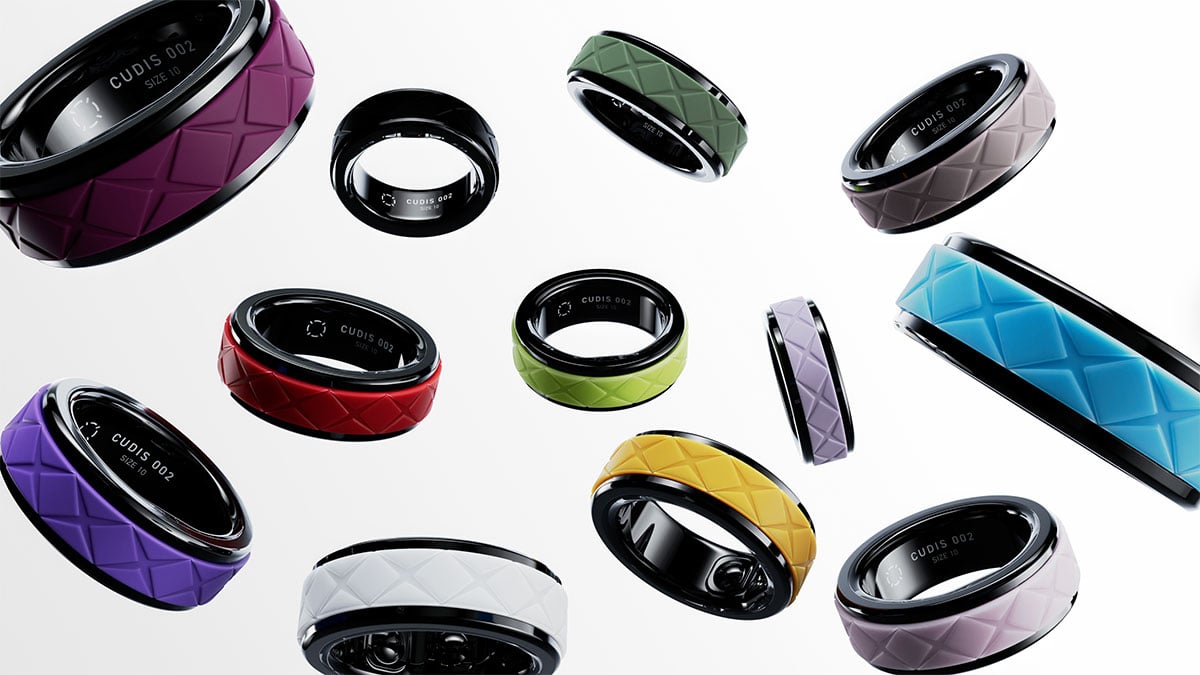
“CUDIS is the first tracking tool I genuinely enjoy wearing,” mentioned Pahlitzsch. “I hardly notice it during training or while sleeping, and I love that I can change the colours to match my different tracksuits. Beyond that, it gives me the insights I need to improve, not just as an athlete, but as someone committed to living a healthy lifestyle.”
However Chen is evident that CUDIS isn’t just for elite performers. He himself doesn’t describe himself as an athlete, simply somebody who loves sport and desires to remain wholesome – precisely the sort of on a regular basis person the product is designed for.
The connection with athletes is partly philosophical and partly strategic. CUDIS desires to raise extra than simply champions, acknowledging the sacrifices made by skilled athletes at each stage.
In return, athletes share experience in coaching, diet, and restoration, which CUDIS integrates into its AI techniques and content material, passing that information on to customers at scale.
The place the wearables market is headed
Trying forward, Chen believes that the long-term differentiation in wearables is not going to be primarily about {hardware}.
“In the long run, hardware won’t be the only challenge,” he mentioned. “When we come to the quality of manufacturing and microchips, everybody can get to the same level.”
As a substitute, he expects competitors to centre on software program, AI, and the power to uncover and remedy actual, usually neglected person issues – from loud night breathing to emphasize administration and past.
Trend and design may also play an more and more essential function. CUDIS is already betting on this, with a number of collections and a brand new sporty collection launching in 12 colors, with plans to develop to dozens extra. Chen notes that in conventional jewelry, greater than 60% of things bought are rings; he believes sensible rings will observe an identical trajectory as soon as customers are provided extra selection and higher aesthetics.
At this time, sensible rings are nonetheless a small slice of the worldwide wearables market – only a few million models bought yearly in contrast with a whole lot of thousands and thousands of smartwatches and bands. However Chen is satisfied that can change.
As chips get smaller and intelligence strikes from screens into objects and equipment, CUDIS is positioning itself to be greater than a tool maker. It desires to be the connector: between customers and coaches, between athletes and followers, and between well being knowledge and real-world advantages corresponding to rewards, merchandise, and providers.
If Chen’s imaginative and prescient performs out, the way forward for wearables might look much less like a dashboard of numbers and extra like a personalised, always-on well being companion – quietly serving to folks make higher choices, keep away from burnout and damage, and stay longer, more healthy lives.
Pre-orders for the CUDIS Sporty Sequence ring open on twenty sixth February on Kickstarter, with restricted early-bird pricing. The ring will retail for $399 and requires no month-to-month subscription.
