



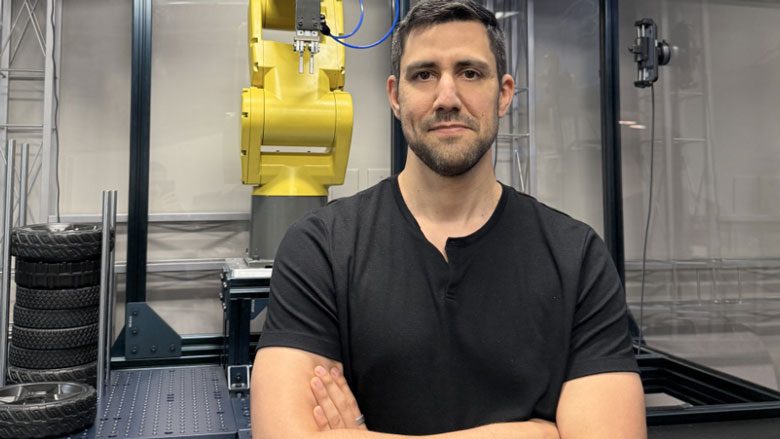
Telit Cinterion’s Dr. Linir Zamir discusses how Synthetic Intelligence is transferring nearer to the manufacturing unit ground via edge-based methods that maintain information on website and allow quicker decision-making. He explains how industrial IoT platforms can join legacy tools, normalize machine information and help AI “agents” that assist detect early indicators of failure, information fault restoration and cut back downtime.
ASSEMBLY: As we speak we’re speaking about how Synthetic Intelligence is transferring nearer to the manufacturing unit ground. Telit Cinterion supplies Web of Issues and edge-to-cloud options used throughout industrial, automotive, healthcare and infrastructure environments. On the middle of that’s deviceWISE, an industrial IoT platform designed to attach machines, normalize information from various kinds of tools, and allow real-time resolution making on the edge, quite than pushing every part to the cloud. Constructing on that basis is the deviceWISE Intelligence Suite, which provides AI-driven inspection analytics and autonomous agent capabilities. The concept is to maneuver past merely connecting property to enabling factories to see issues earlier, make choices domestically and reply quicker as situations change. We’re joined at this time by skilled Dr. Linir Zamir. Welcome, Physician.
ZAMIR: Thanks a lot.
ASSEMBLY: Now, for those who would not thoughts, please introduce your self to our viewers. Inform us a bit about your pc science background, something you’d wish to share.
ZAMIR: So I’ve, such as you talked about, a Ph.D. in pc science centered totally on autonomous methods, a variety of AI, even earlier than it was cool. And yeah, I have been with Telit for the previous 5 years now, and dealing on among the thrilling stuff we now have that’s designed for industrial settings and find out how to implement AI.
ASSEMBLY: Inform us slightly bit in regards to the deviceWISE Intelligence Suite.
ZAMIR: It mainly permits us now, inside Telit, to convey AI capabilities proper right down to the manufacturing unit ground and to have the ability to do issues that have been by no means doable earlier than. And now we are able to implement very subtle AI instruments proper on the sting, and every part is monitored and managed by deviceWISE. And primarily, it connects the manufacturing unit to a mind that may flip a related manufacturing unit right into a extra autonomous one, so that you’ve the view of the entire manufacturing unit, and you can also make choices. You may perceive what is occurring through brokers, which is a time period that I believe so many individuals perceive these days. So you’ll be able to convey the brokers to the manufacturing unit to help the operators, the manufacturing unit managers, any degree of government that you simply may need. Everyone can profit from having such a layer, a elementary layer, that may monitor and see every part within the manufacturing unit, and in addition give you info and evaluation and a lot extra. And that is primarily the deviceWISE Intelligence Suite, and as I discussed, it is all managed and goes via the deviceWISE core, so that you’ve this large management over every part, or view over every part.
Searching for fast solutions on meeting and manufacturing subjects?
Strive Ask ASM, our new sensible AI search instrument.
Ask ASM
ASSEMBLY: There’s additionally NVIDIA integration, which, to my understanding, is definitely fairly an enormous deal for producers on the meeting line.
ZAMIR: DeviceWISE integrates and speaks to so many OT gadgets, robots, PLCs, any meeting half that you simply may need in a manufacturing unit. DeviceWISE can join, can management, can learn the information. So since AI primarily is powered by information, the pure subsequent step of evolution for deviceWISE is that this AI integration. And as I discussed earlier than, up till lately, the expertise was not there by way of the potential – the sting capabilities. Solely lately, persons are speaking increasingly more about bodily AI, which means the way you convey AI onto the sting, into robotics. Now it is a lot simpler to allow that AI software program and {hardware}—and we leverage it. We’re partnered with NVIDIA, so we now have a really shut relationship with them, and we’re discussing with NVIDIA the capabilities, among the newest applied sciences which can be obtainable, and we’re implementing these inside our deviceWISE Intelligence Suite. There’s a massive profit to utilizing very subtle instruments from NVIDIA, comparable to Cosmos that’s particularly designed for industrial settings. We’re implementing Omniverse (simulation/digital twin workflows), which is one other idea that many factories at the moment are beginning to undertake. And yeah, it has been an incredible journey to this point alongside NVIDIA, and it helps us convey our prospects a lot extra worth now that we now have these capabilities, these edge capabilities. And for the {hardware}, we see the Spark DGX – which is the newest edge machine. It’s so highly effective that we are able to now run so many brokers, agentic AI, proper there on the sting. And as you recognize, factories not often wish to launch any information outdoors of their 4 partitions, proper? They wish to maintain every part contained. So having this functionality now is a big profit that we are able to provide to our prospects.
ASSEMBLY: Attention-grabbing level… Have you ever acquired suggestions on that specifically?
ZAMIR: Yeah, undoubtedly. No manufacturing unit we work with needs to share any of the information outdoors, you recognize. So undoubtedly, having the ability to present it to the factories—they gave us nice suggestions, and it forces us to suppose rather more about how can we leverage the sting. What can we convey to the sting that individuals have, up to now, needed to depend on the cloud? So yeah, we heard nice issues so removed from completely different factories.
ASSEMBLY: What kind of suggestions are you getting concerning early indicators of detection for high quality points on the CNC machines, robots, workstations… Give me some real-world examples that you simply’re really listening to from producers, please.
ZAMIR: Yeah, nice query. So, you recognize, factories have to be tremendous correct. When you will have an meeting line, for instance, even the slightest change with the placement of an element can now trigger a sequence impact that may trigger the entire line to cease. Now we learn a lot information via deviceWISE [that this can be avoided]. We even have what known as a time-series evaluation, and we now have brokers monitor that information 24/7, and examine the information to the [conditions] on the road. And based mostly on these, now we are able to perceive and [the AI] can cause as to when an element goes to interrupt and be capable of detect small modifications in temperature, in torque. The brokers are fine-tuned by a large quantity of knowledge that we now have collected via the years—so now you can have these brokers learn the information and let you know, “Oh, this pin that you have, it might break within a week or so.” So as a substitute of ready for it to interrupt, after which you could cease the road, cease manufacturing, and you’ll lose a lot cash due to that, now you’ll be able to simply substitute that small half in a matter of minutes, and there you will have it. So you’ll be able to return to manufacturing very quick.
ASSEMBLY: Assist me, for those who would, wrap my mind round passive connectivity versus what deviceWISE brings to the manufacturing unit ground.
ZAMIR: Whenever you drive your automobile and you’ve got some warning mild, you would wish to drive your automobile to the storage or get it mounted and have an individual test it and let you know, “Oh, the issue is this and that.” [That’s passive connectivity.] So as a substitute of getting that, now you’ll be able to consider [what we offer] as driving a automobile that may repair itself, or let you know precisely what steps you could take as a way to repair it. When you will have so many various elements in a manufacturing unit, and one in all them faults for no matter cause, you will get some error code, after which the operator may must undergo pages and pages of documentation to know the error, after which perceive the trigger. It may be so many various issues, after which it might have to be mounted, which is downtime, value… There’s so many downsides of getting this technique of operation. So utilizing the Intelligence Suite as a substitute of going via this lengthy course of, now, when you will have, for instance, a fault in one of many robots, the agent already has the error code, and it could actually undergo the documentation of that particular robotic, or PLC, or no matter unit, after which can learn precisely what may need brought on the error. That is one factor. One other factor is we place a digicam that may see the robotic, after which, utilizing, like I discussed earlier than, Cosmos, for instance, or some subtle foundational mannequin, we are able to now see what occurred, and it could actually perceive—it could actually see the error. So it could actually now perceive what brought on the problem. And now, as soon as it is aware of these completely different inputs, it could actually additionally cause and act upon it and say, “Okay, now I can resolve it.” It is aware of the robotic. It is aware of find out how to talk. And that is the highly effective a part of deviceWISE, in order that, with the assistance of deviceWISE, the agent can now perceive and know what steps have to be taken as a way to convey this operation again to regular as quick as doable. And it is a large win for any producer.
ASSEMBLY: So it is form of like a puzzle, the place earlier than you had a bunch of scattered items, however now you are bringing all of them collectively.
ZAMIR: Precisely. That is precisely proper. Particularly in manufacturing, and it’s true for nearly any business. But when you concentrate on manufacturing, the place you will have completely different robots from completely different corporations, you will have completely different elements, you will have completely different individuals, various kinds of factories. So all these various things are completely different items of this massive puzzle. So now we now have this single mind entity that may oversee every part and might mix a few of these completely different puzzle items collectively, such as you mentioned. In order that’s very true.
[In] manufacturing, the place you will have completely different robots from completely different corporations, you will have completely different elements, you will have completely different individuals, various kinds of factories. So all these various things are completely different items of this massive puzzle. So now we now have this single mind entity that may oversee every part and might mix a few of these completely different puzzle items collectively.
ASSEMBLY: You may put all of the items collectively proper there on the manufacturing unit ground with out having to take them elsewhere, assemble the puzzle and convey it again. That is actually helpful. Diving deeper into the dialogue on brokers, what are some duties that brokers can be utilized for on the manufacturing unit ground and supply us with some real-world examples, for those who would?
ZAMIR: Yeah, that is the core of what we do with the Intelligence Suite. I like that. So the very first thing is, what I mentioned earlier, with fault restoration. So when you will have a defective half in your manufacturing unit, you’ll be able to instantly perceive what occurred and find out how to repair it. That is one factor that I described. One other very compelling instance is SOP—commonplace working process—which might primarily assist operators act in a sure approach and construct issues in a sure order, one after the opposite. For instance, the 1st step, step two, step three. You’ll want to take the bolt from the primary location, put it within the second location, then it’s important to tighten it in a sure approach, then it’s important to convey a 3rd half. So you will have these procedures that you could comply with. We are able to have a digicam or an agent that may monitor and assist the operator, however in a pleasant approach. It is not like 24/7 monitoring of the individual, however it’s ensuring that the operator is performing correctly and within the correct order of issues. And this is essential for producers, as a result of once more, there’s a variety of human error which may occur, and now you will have this agent that may be certain that every part is ok.
One other instance is that if the operator just isn’t certain about the precise torque setting, then they will speak to an agent, speak to the AI, and it could actually inform them—it has the data of all of the manufacturing unit elements. It may inform them, “Oh, you need to set it to this.” Or it could actually even mechanically do this. And one factor that I do wish to emphasize is that the Intelligence Suite is designed to boost the operator. So we’re serving to the operator make higher choices, serving to them have entry to a lot extra information. They’ll simply ask a query to the agent, and the agent instantly can present the operator with the knowledge required. It may assist with a set of procedures that the operator must take. So once more, the important thing phrase is enhancing the operator.
ASSEMBLY: That is a really attention-grabbing matter you convey up, and I am very excited to dive deeper into that on the following episode that we now have you. And that is the place we’ll speak about how AI and human operators can work collectively in manufacturing settings. However to wrap up this dialog at this time, I simply wish to perceive how deviceWISE traces up with legacy methods that a variety of producers have. How does deviceWISE work with methods which may have been round for an extended, very long time…
ZAMIR: I believe you simply pinpointed one of the vital worthwhile advantages of deviceWISE, as a result of deviceWISE has all of the integrations and talks natively to so many elements within the manufacturing unit. It talks to all of the completely different robots no matter their AI capabilities. [The big takeaway is] having the ability to now speak on a local degree [to the various parts of the factory] or get the information, and translate that, utilizing deviceWISE, into smarter information, and run it via completely different brokers that may now perceive and cause. And we are able to mainly convey AI very near the robotic or to the part, so you will get all the information. And it may be easy, it doesn’t should be subtle, however we are able to nonetheless add this AI layer that’s proper on high of it, that may see, after which can perceive. It would not should be a wise machine. And that is, once more, what deviceWISE does. We’re integrating all of the completely different elements that you’ve, and have all of them now run via this funnel of AI that may course of and perceive and discover connections, like, “Oh, this robot moves in a certain way, and I have the PLC that shows me different data points, and I can see the temperature change.” So you will have a higher-level understanding of the complete manufacturing unit. And it would not matter if in case you have, I might say, “not-smart” elements. So we have seen factories which have the identical part for the previous 20 years, proper? The identical elements for the previous 20 years, even typically the identical individuals for the previous 20 years. So this sector of producing has a lot information, and it simply makes a lot sense to take all the knowledge {that a} manufacturing unit can have and now use that and improve that manufacturing unit with AI. It simply makes a lot sense for thus many causes. So yeah, it’s extremely thrilling, undoubtedly in all of the work with the factories that we have performed.
